Week 4

Project file 1
Project file 2
Project file 3
Project file 4
Project file 5
Live Demo

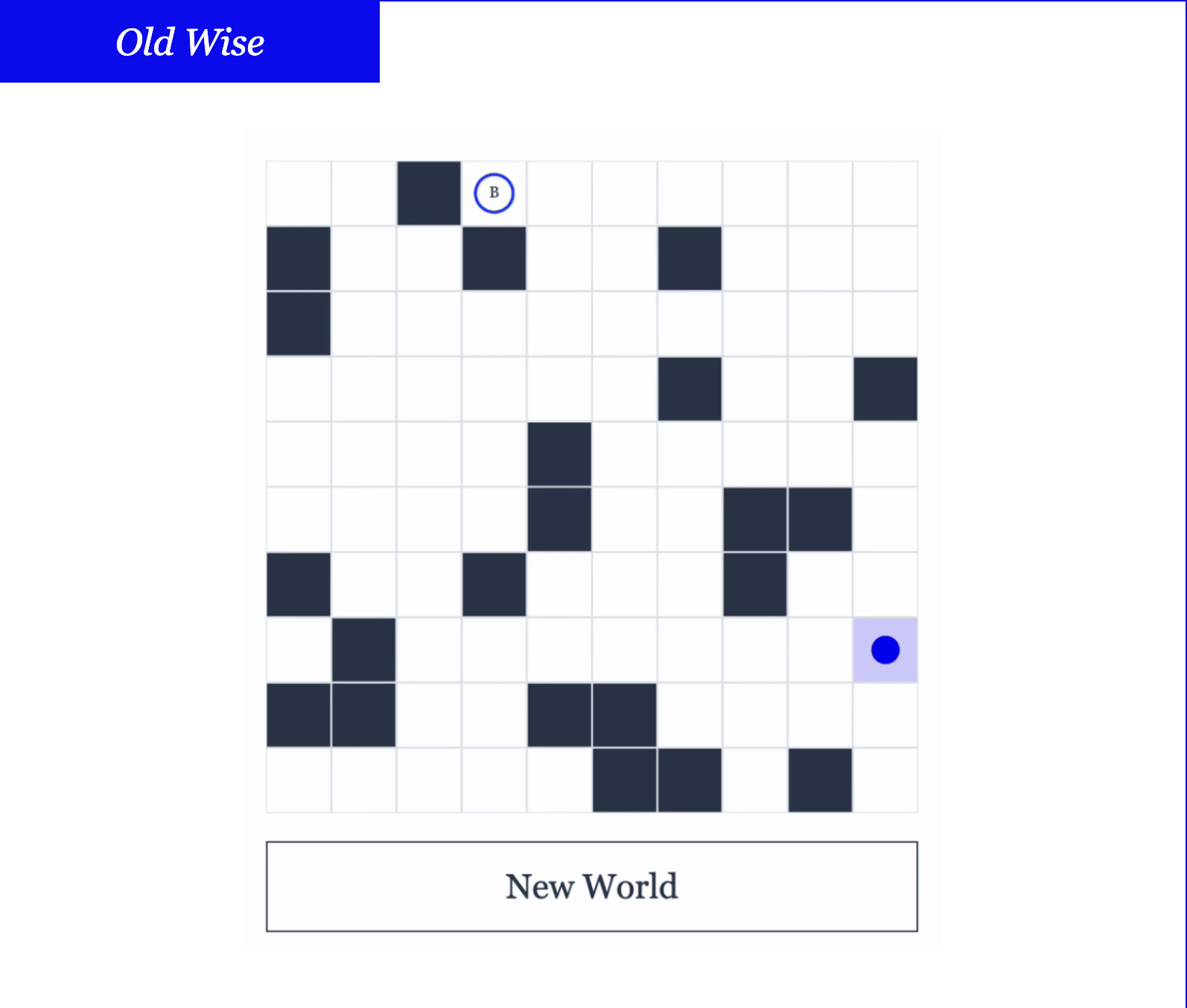
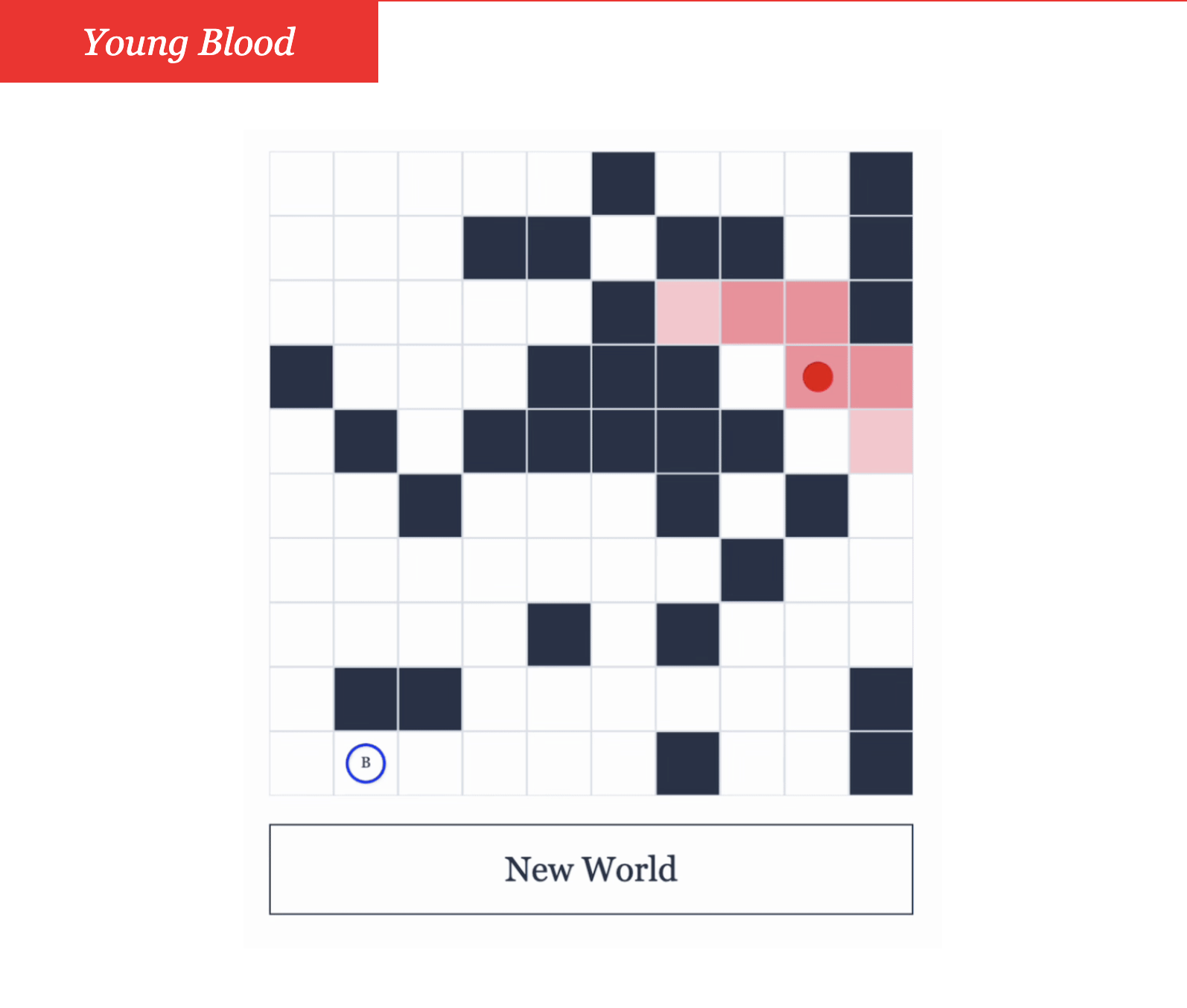
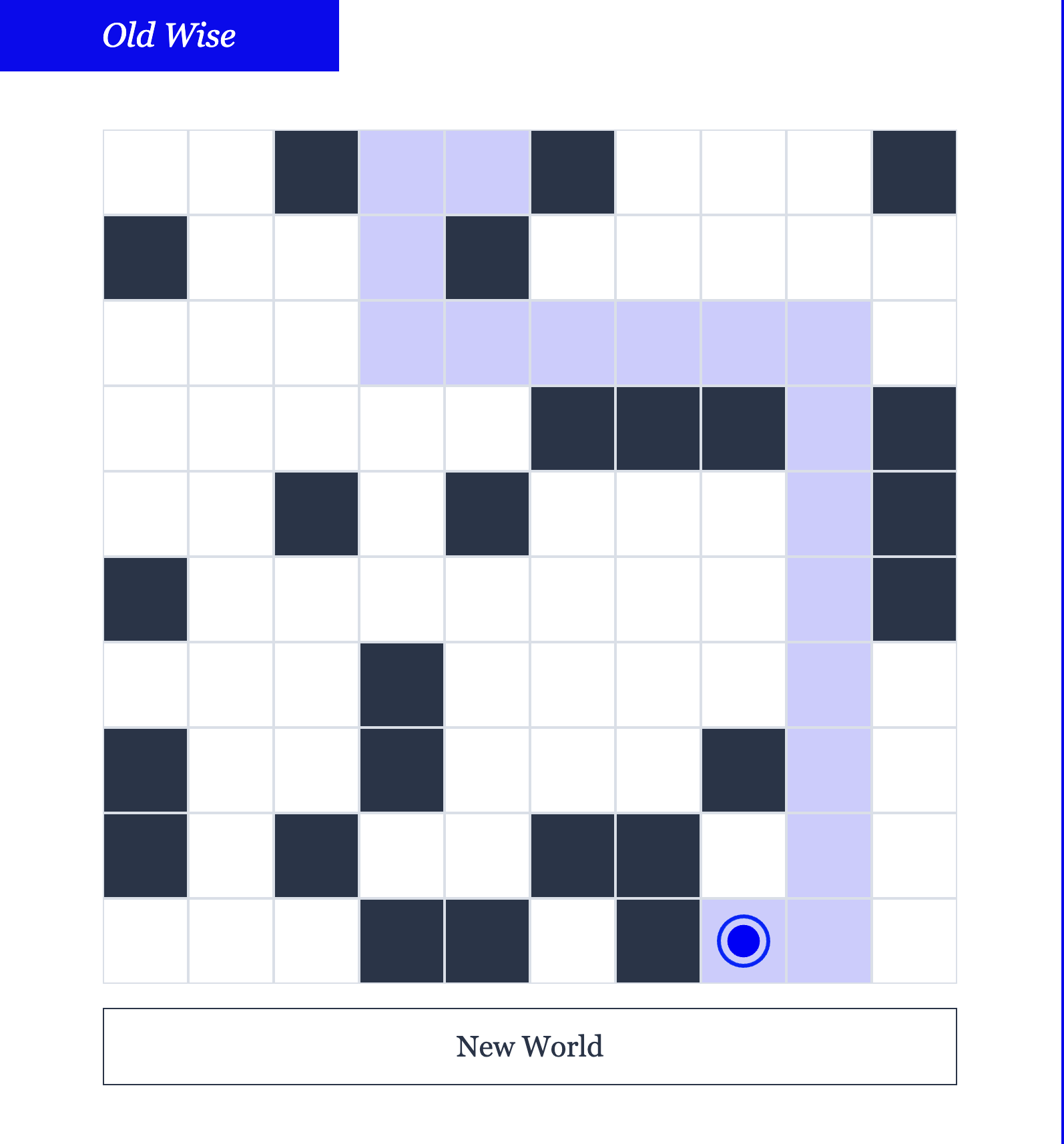
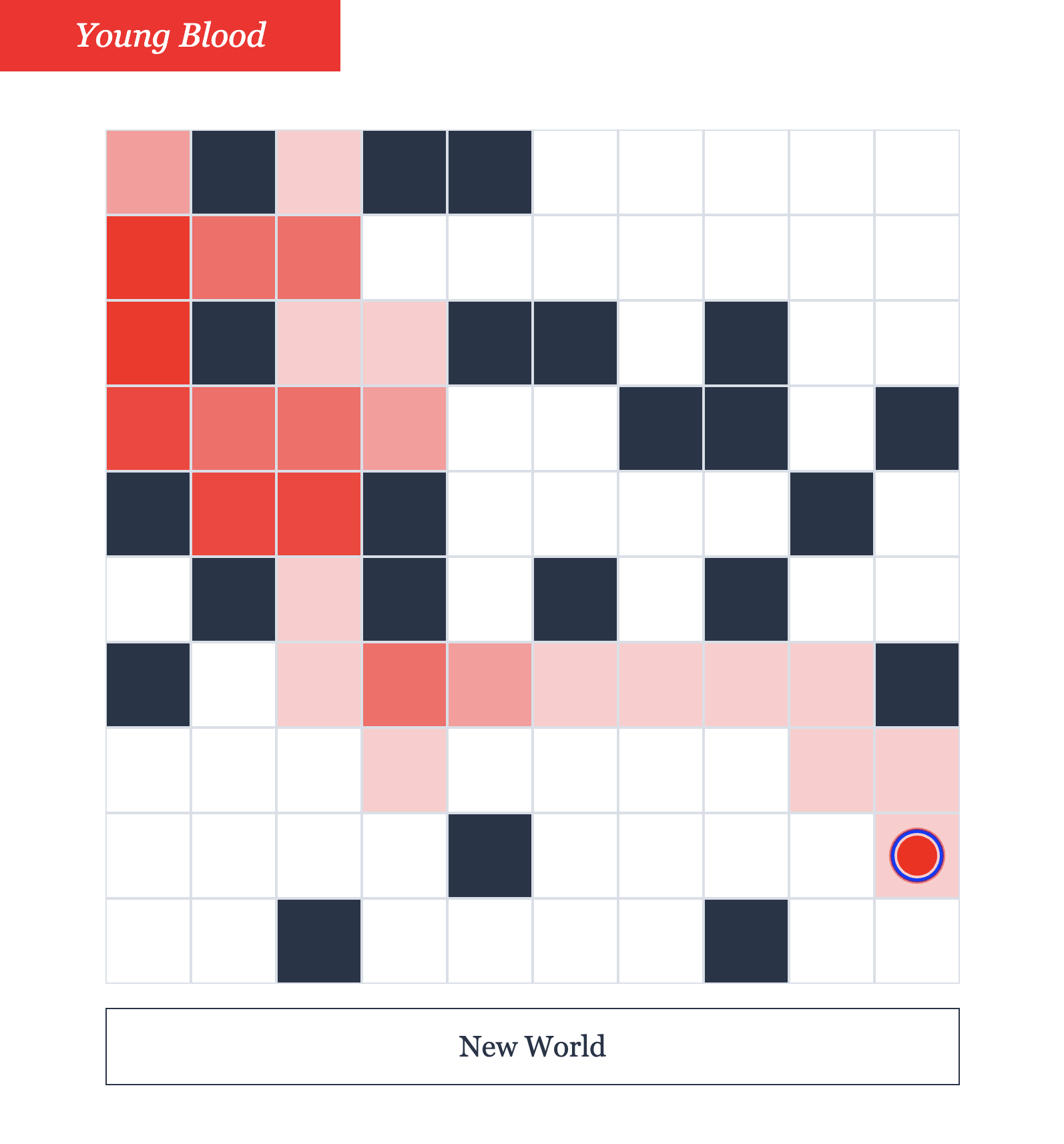
Two travelers chase the same destination. Oldwise knows the shortest path, but every careful step seems to cost a breath; every few moves, he has to rest. Youngblood races ahead, bumps into walls, doubles back, and leaves a messy trail of second guesses. They share one map, yet seem to have two very different minds. When the race ends, the winner may surprise you—but winning is only part of the puzzle. Which one is intelligent? Which one is more intelligent?

Credits & References

chatgpt 5.6 sol
Week 2

Project file 1
Project file 2
Project file 3
Project file 4
Project file 5

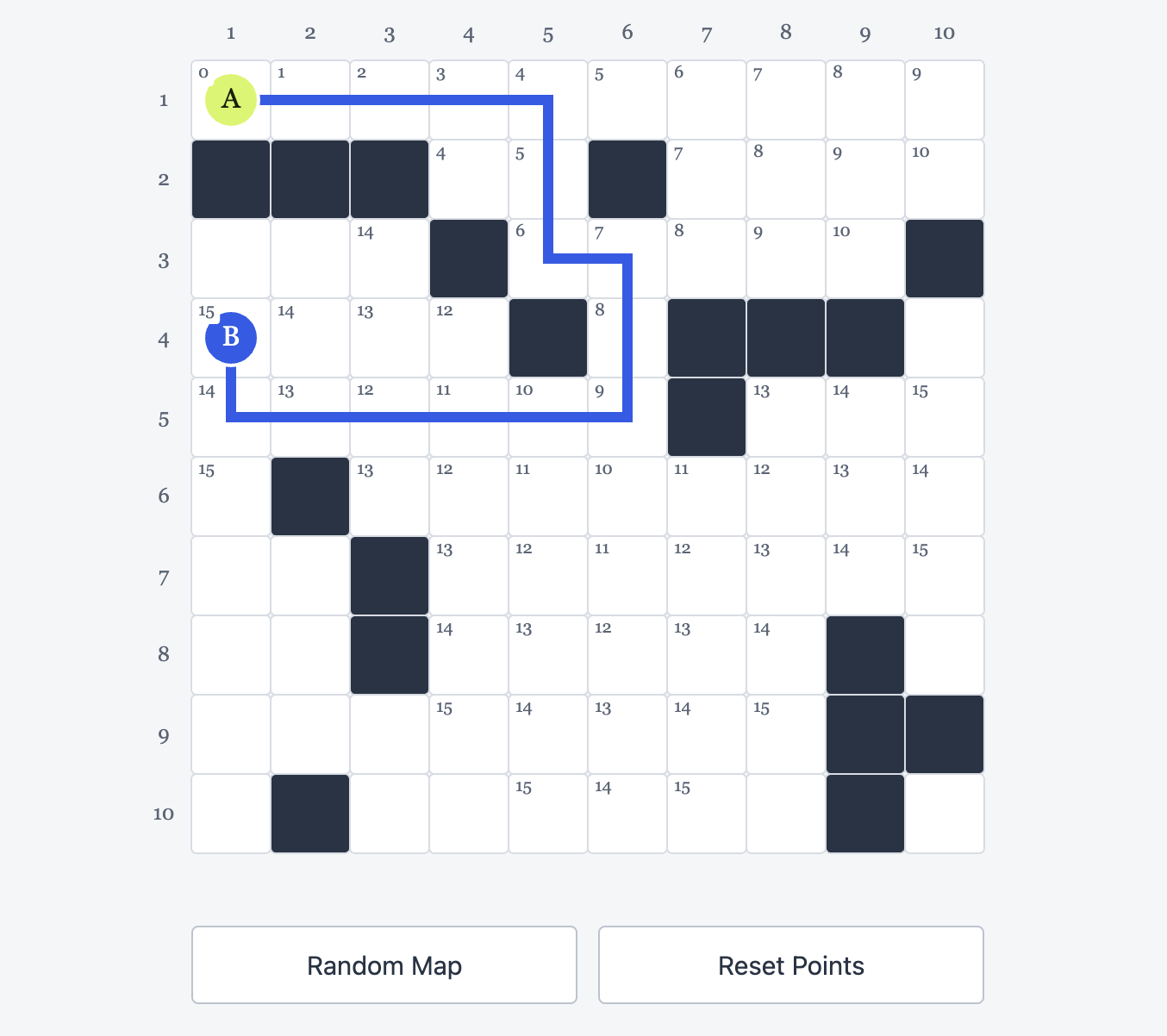
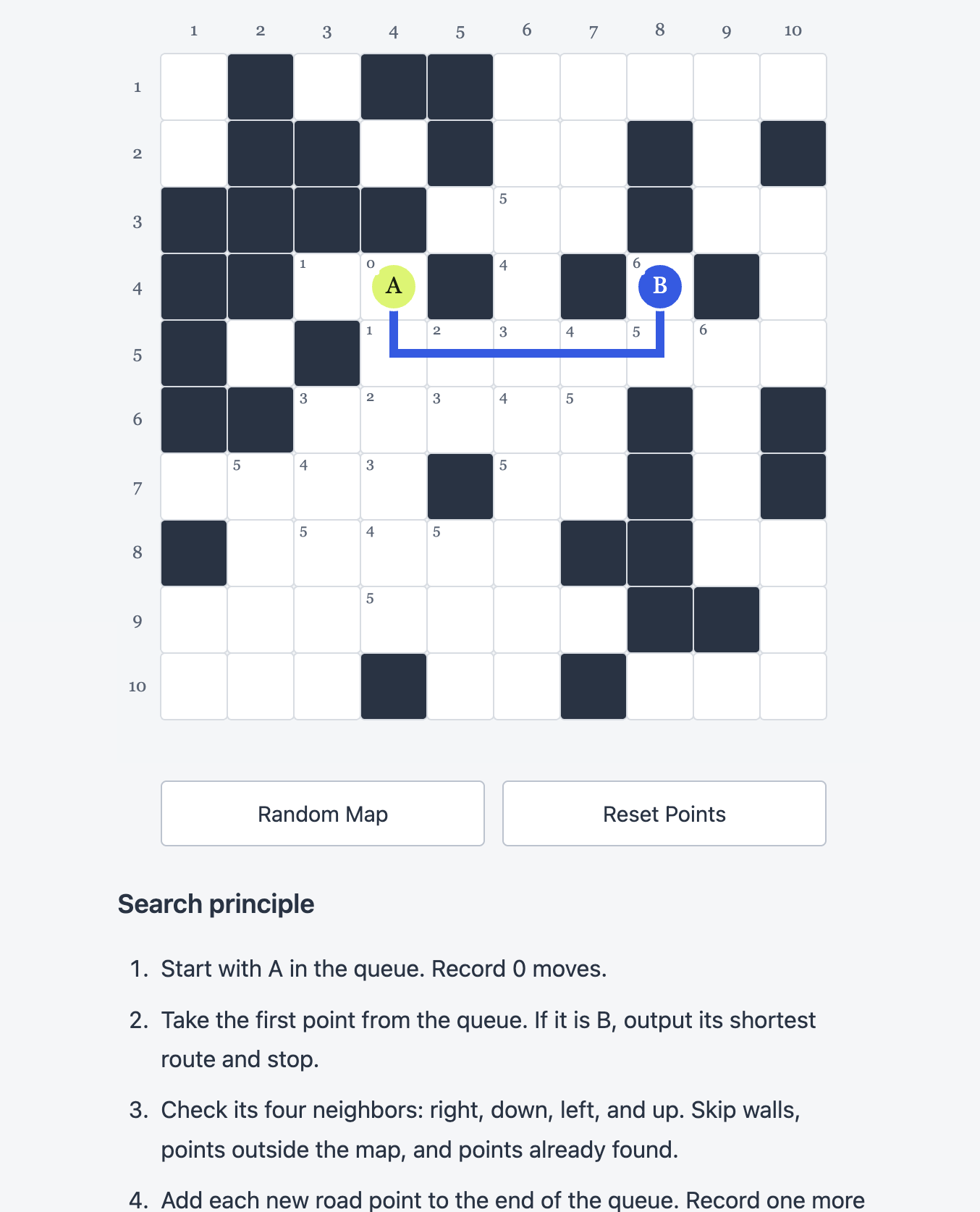
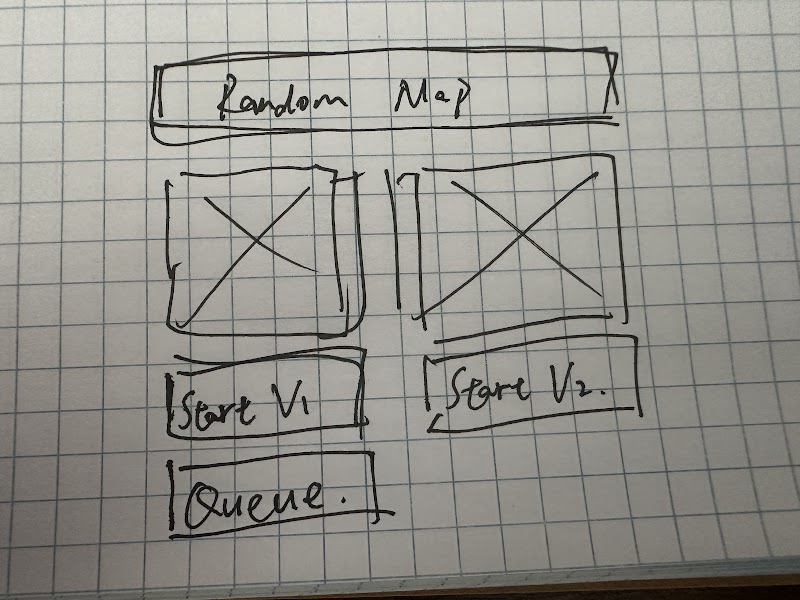
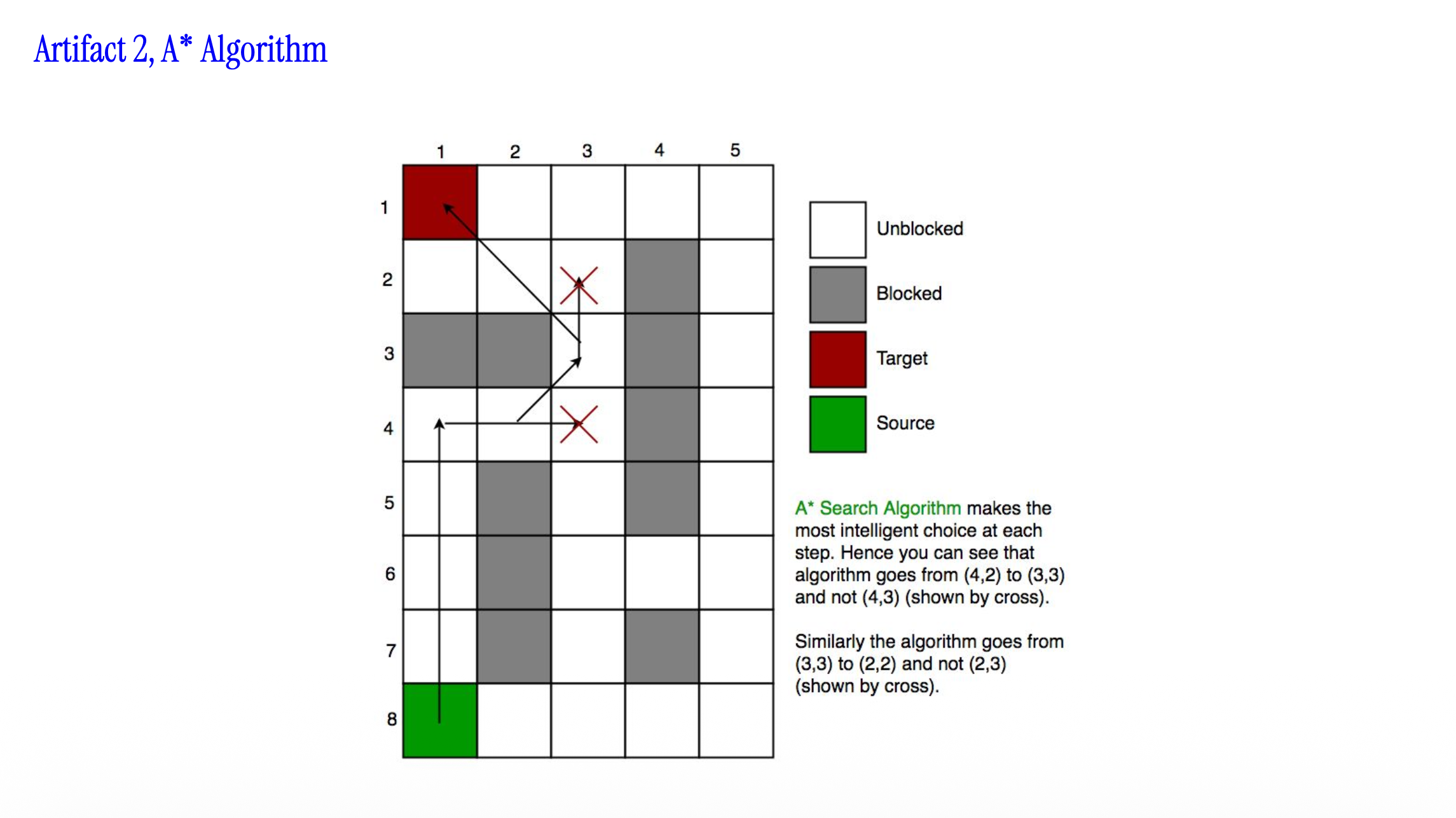
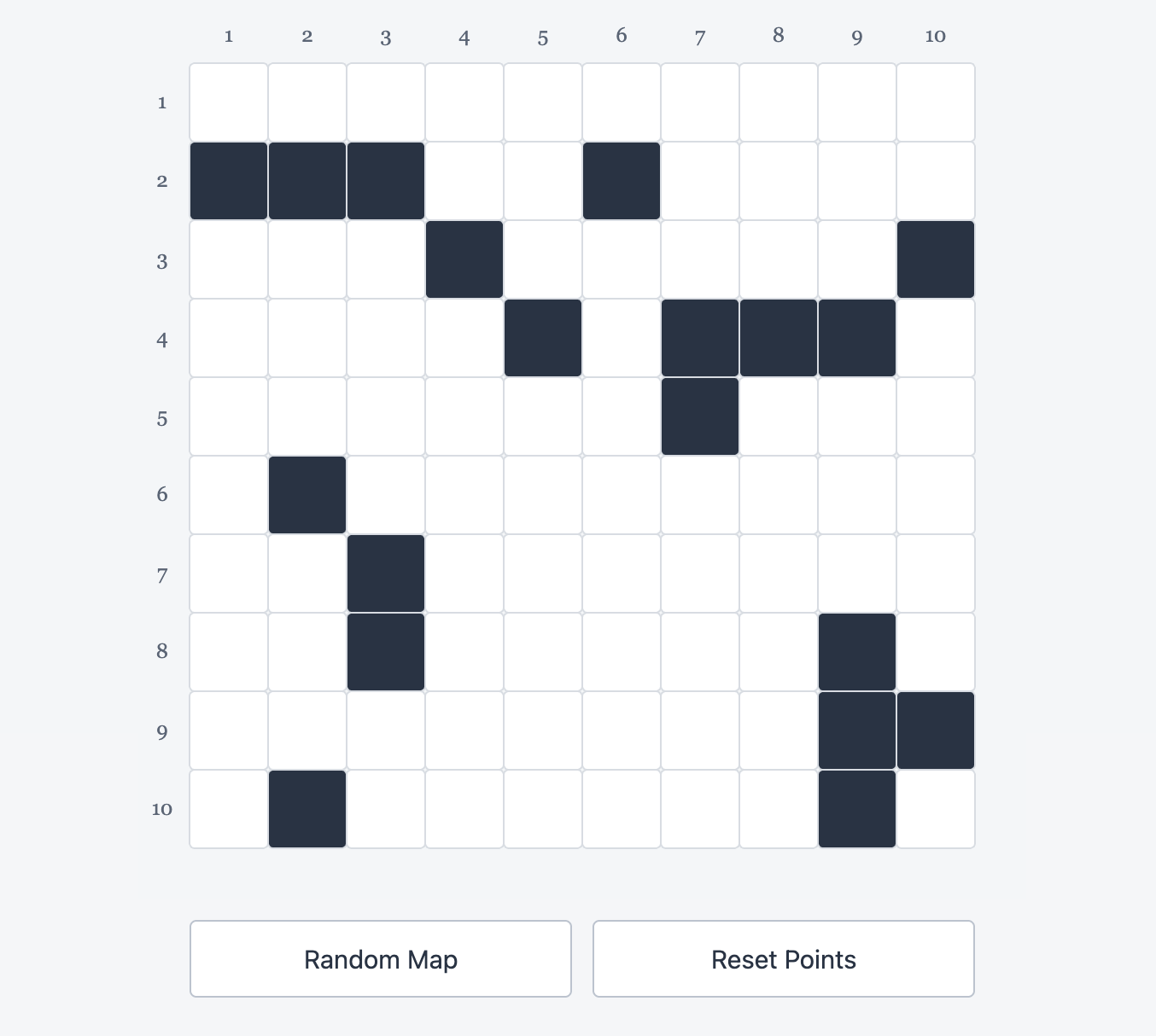
This project is a simplified pathfinding model inspired by Google Maps. It uses a 10 × 10 grid made of roads and walls. After the user selects a starting point and an endpoint, a breadth-first search checks nearby road squares one by one until it finds the shortest route. The numbers on the grid show how many moves each checked square is from the starting point. Users can also generate random maps to observe how different arrangements of roads and obstacles affect the result.

Credits & References

Chat-GPT 6

Week 3

Project file 1
Project file 2
Project file 3
Project file 4
Project file 5

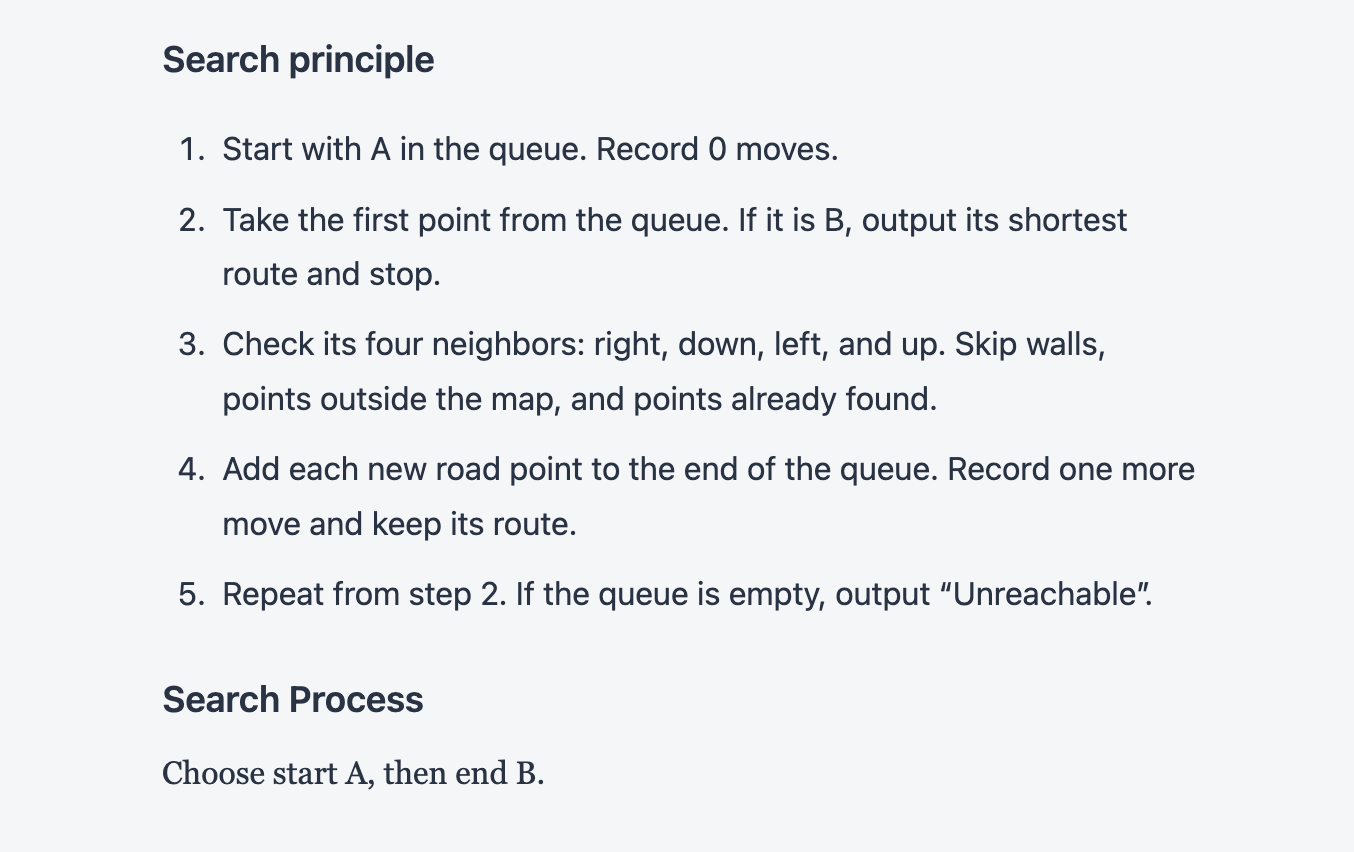
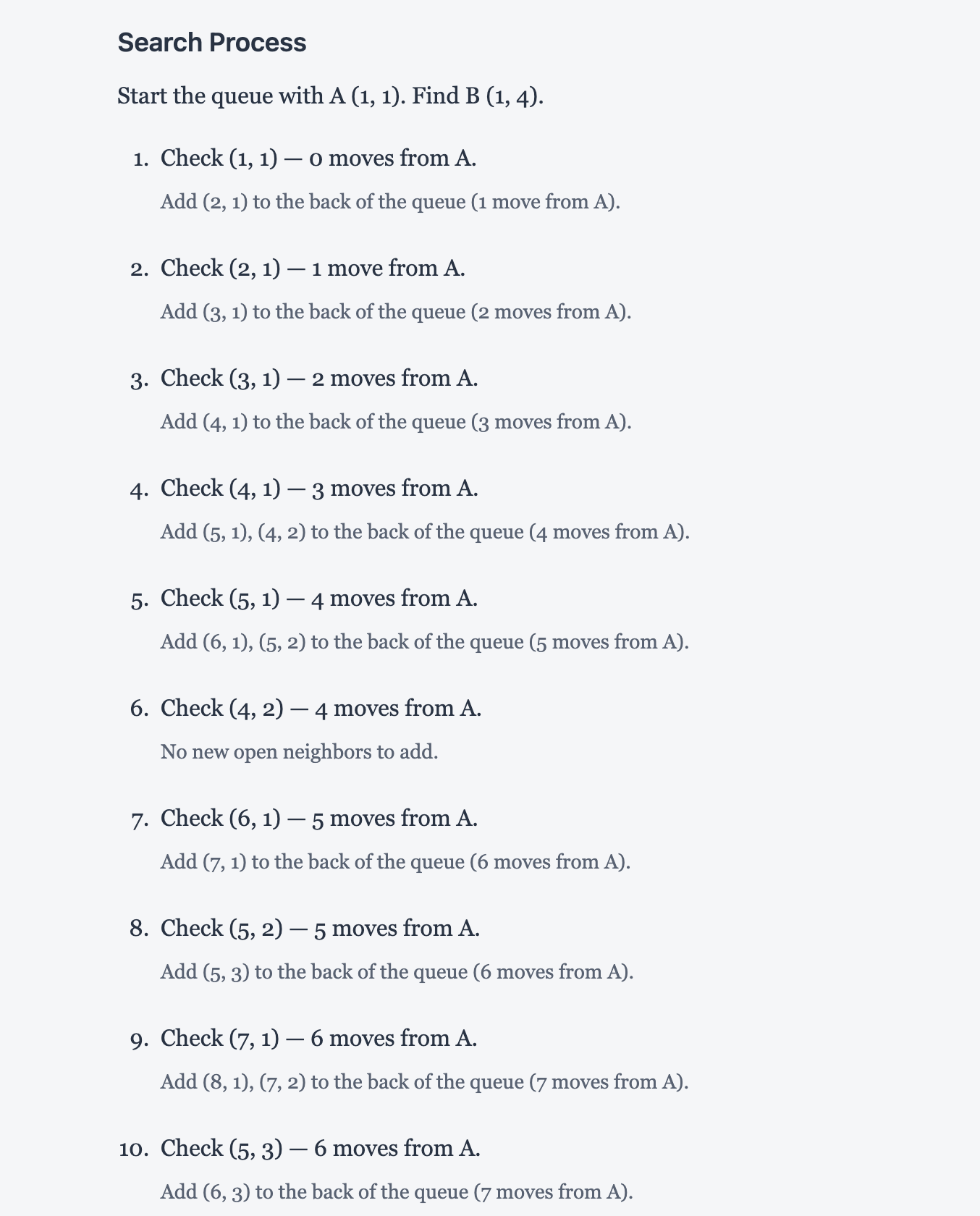
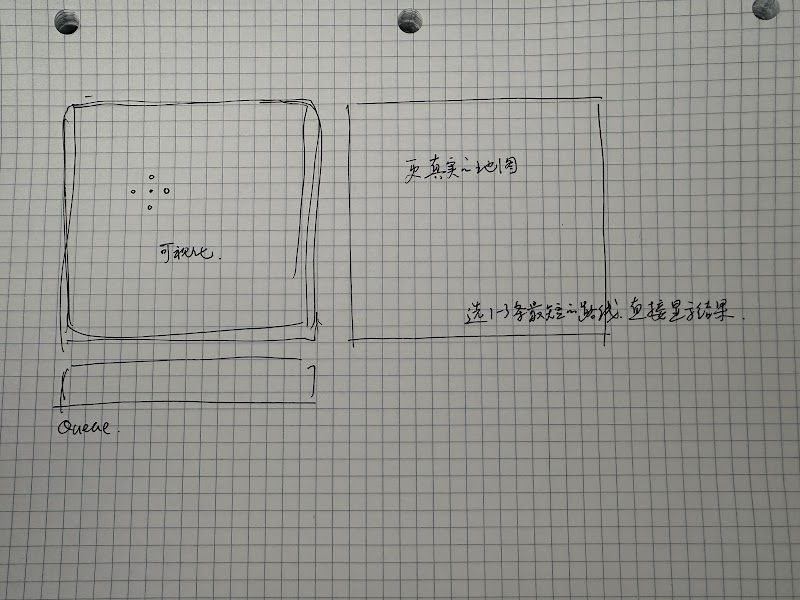
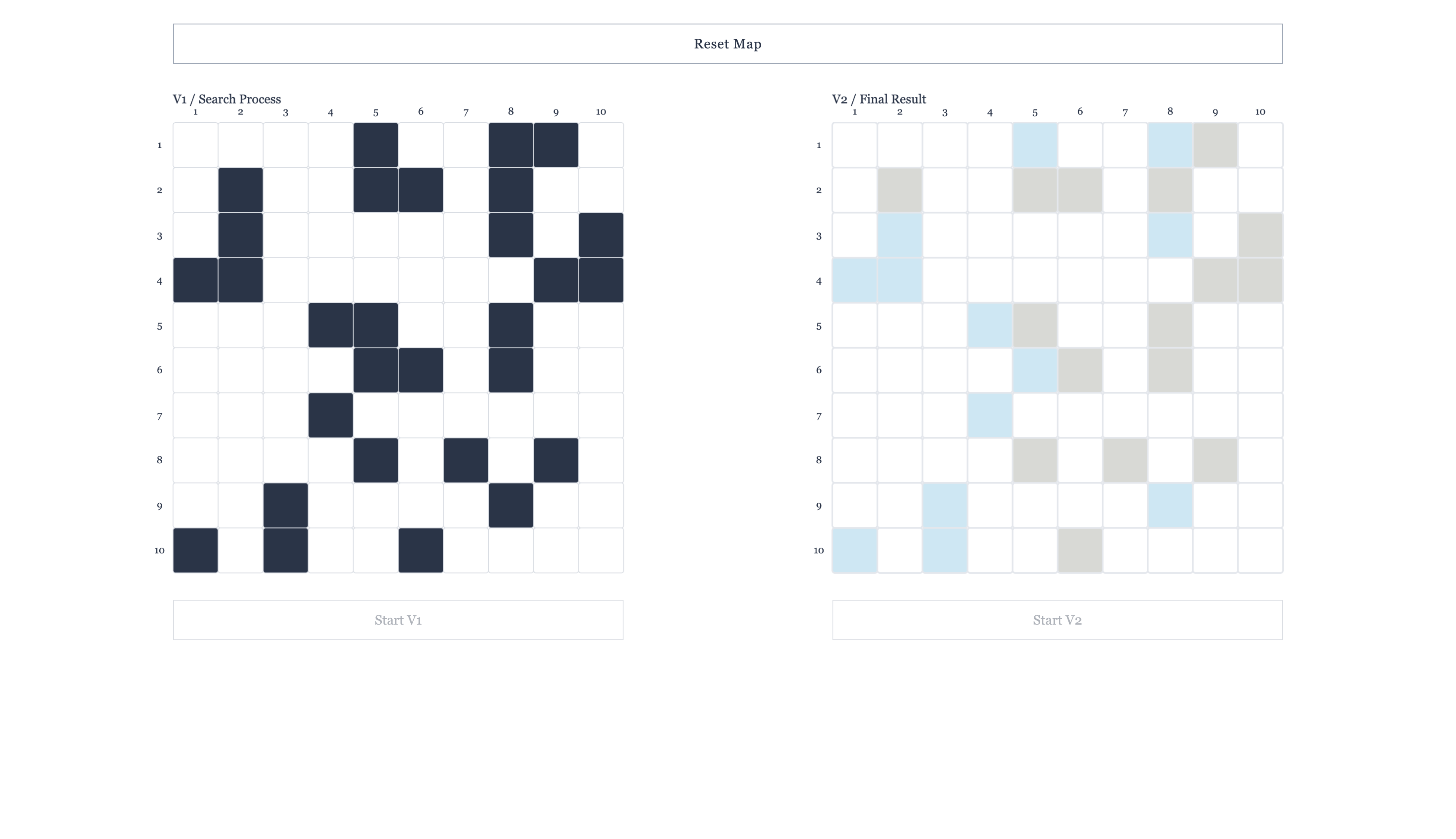
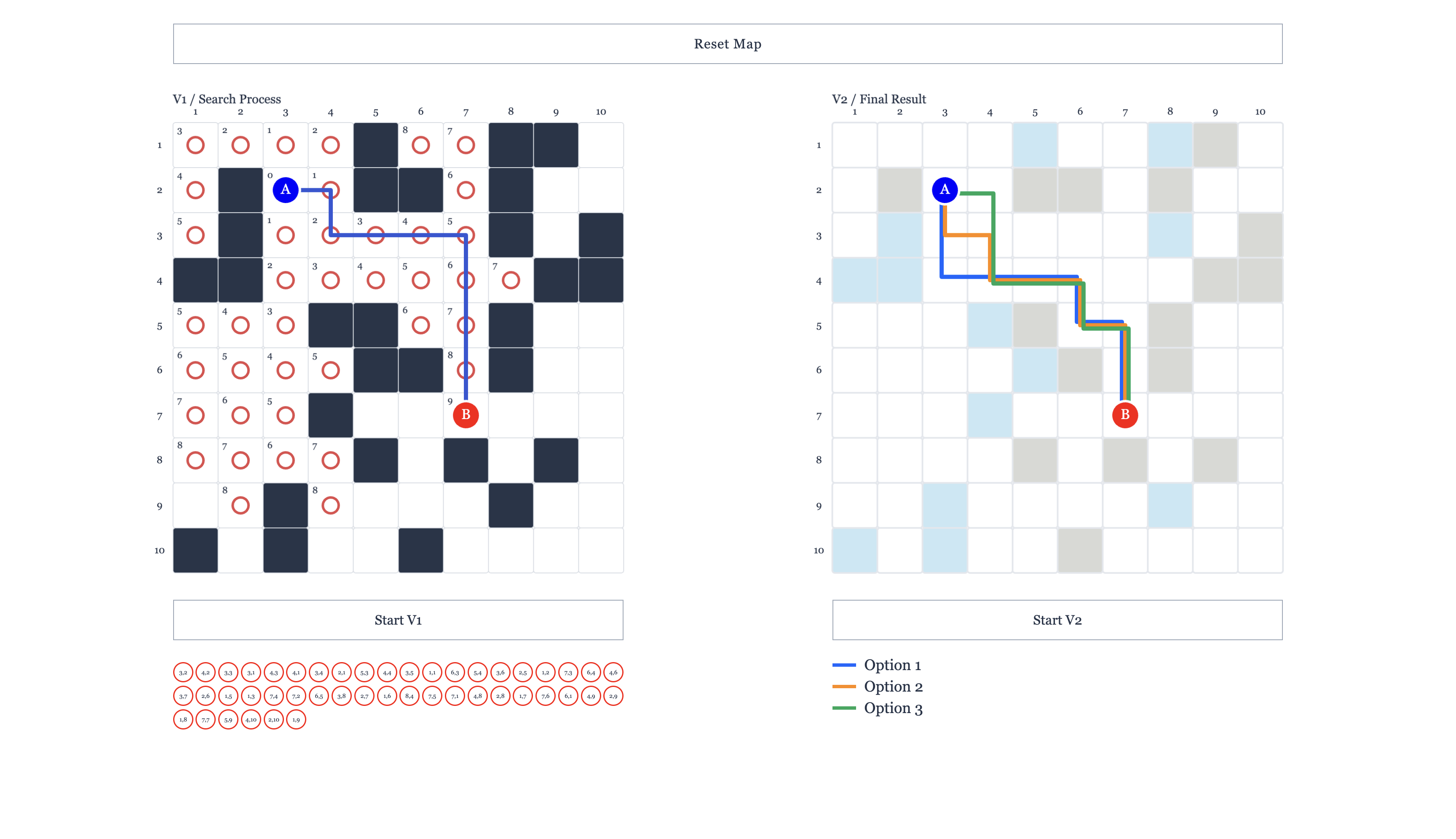
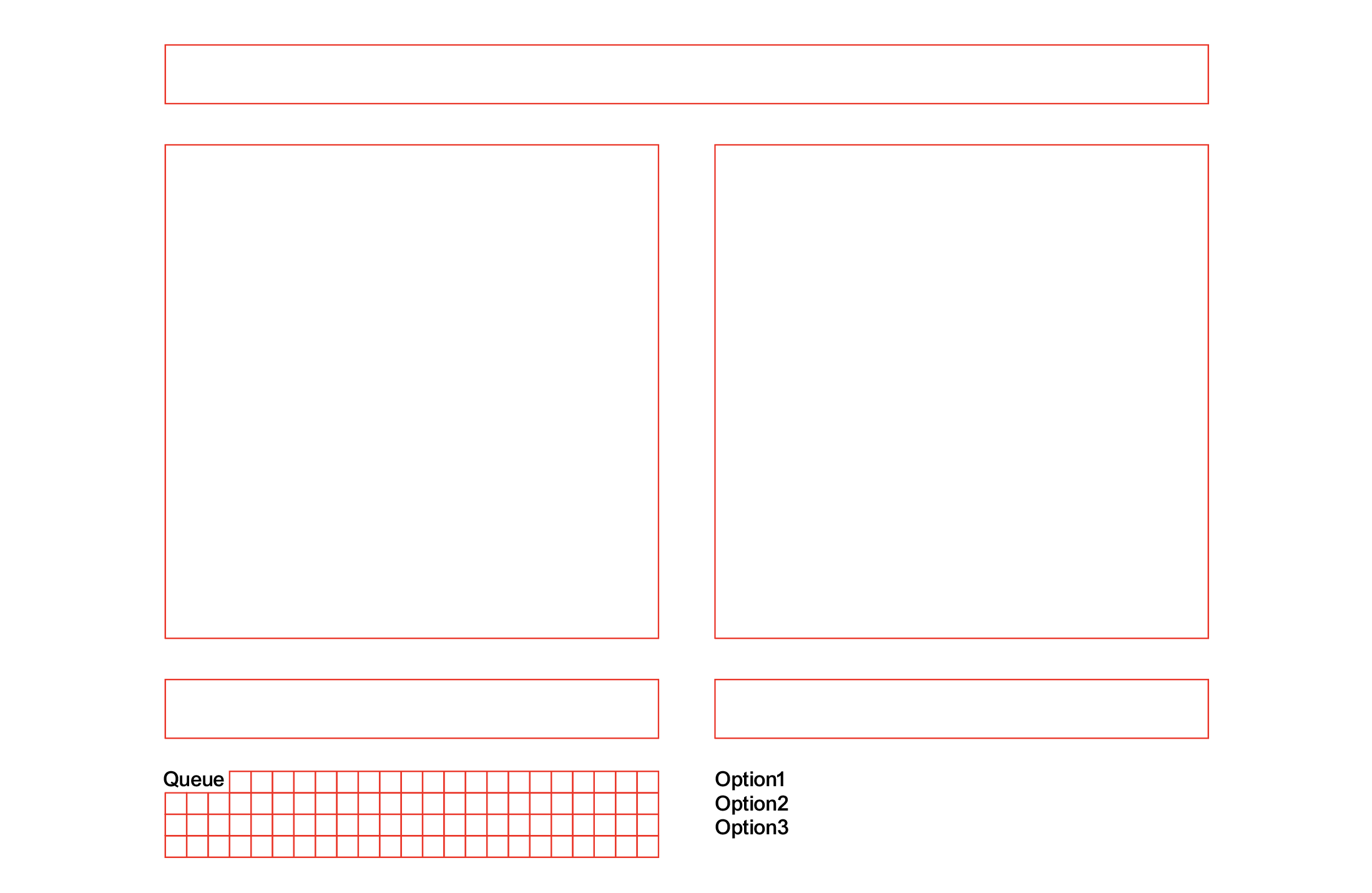
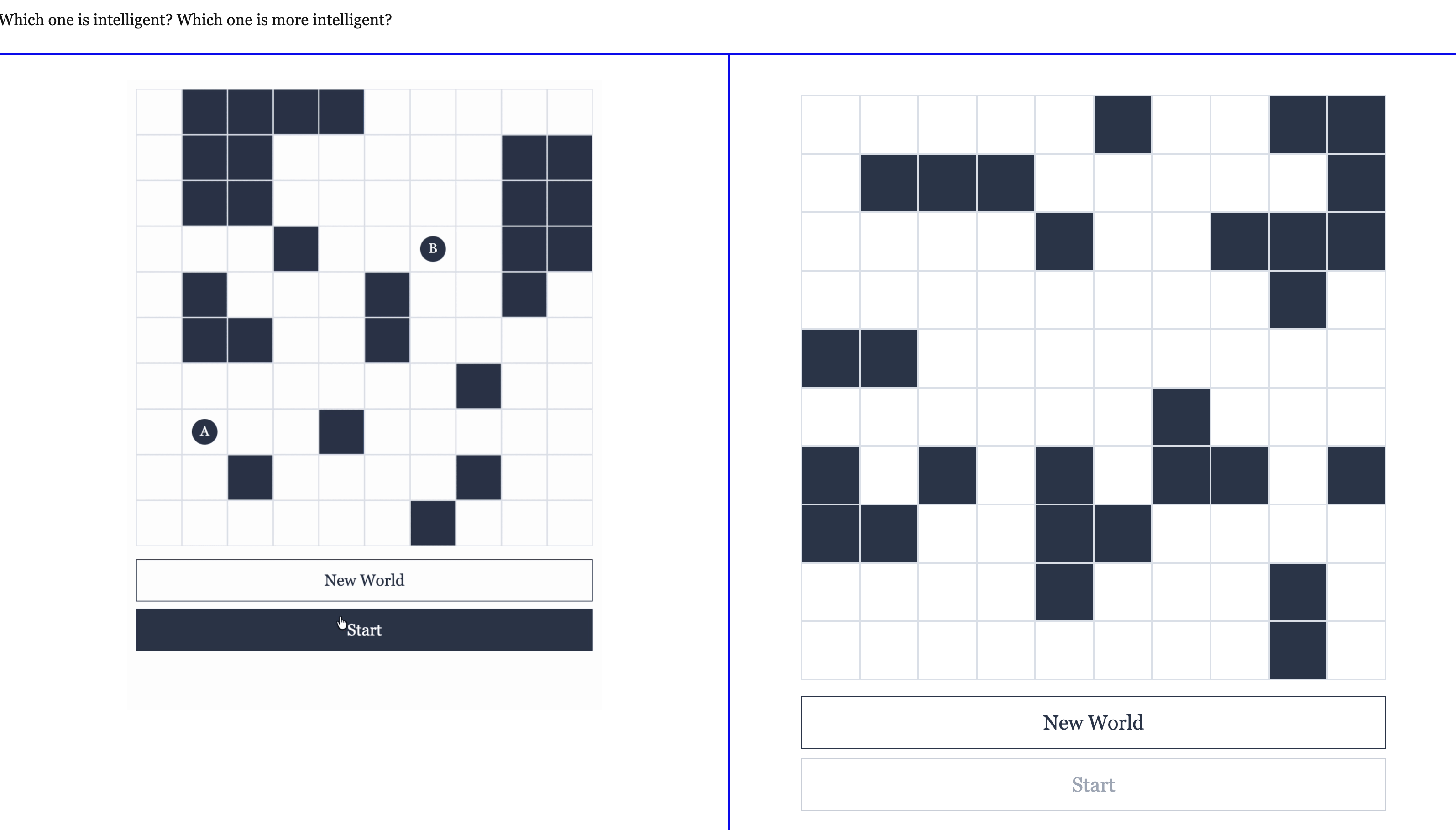
V2 presents two contrasting versions of the same pathfinding system. The first version visualizes how the algorithm searches the map step by step, showing each checked point and the changing queue. The second version hides the calculation process and directly presents up to three shortest route options. Together, they compare seeing how a decision is made with only seeing its final results.

Credits & References

Chatgpt 5.6 sol

Week 1

Project file 1
Project file 2
Project file 3
Project file 4
Project file 5

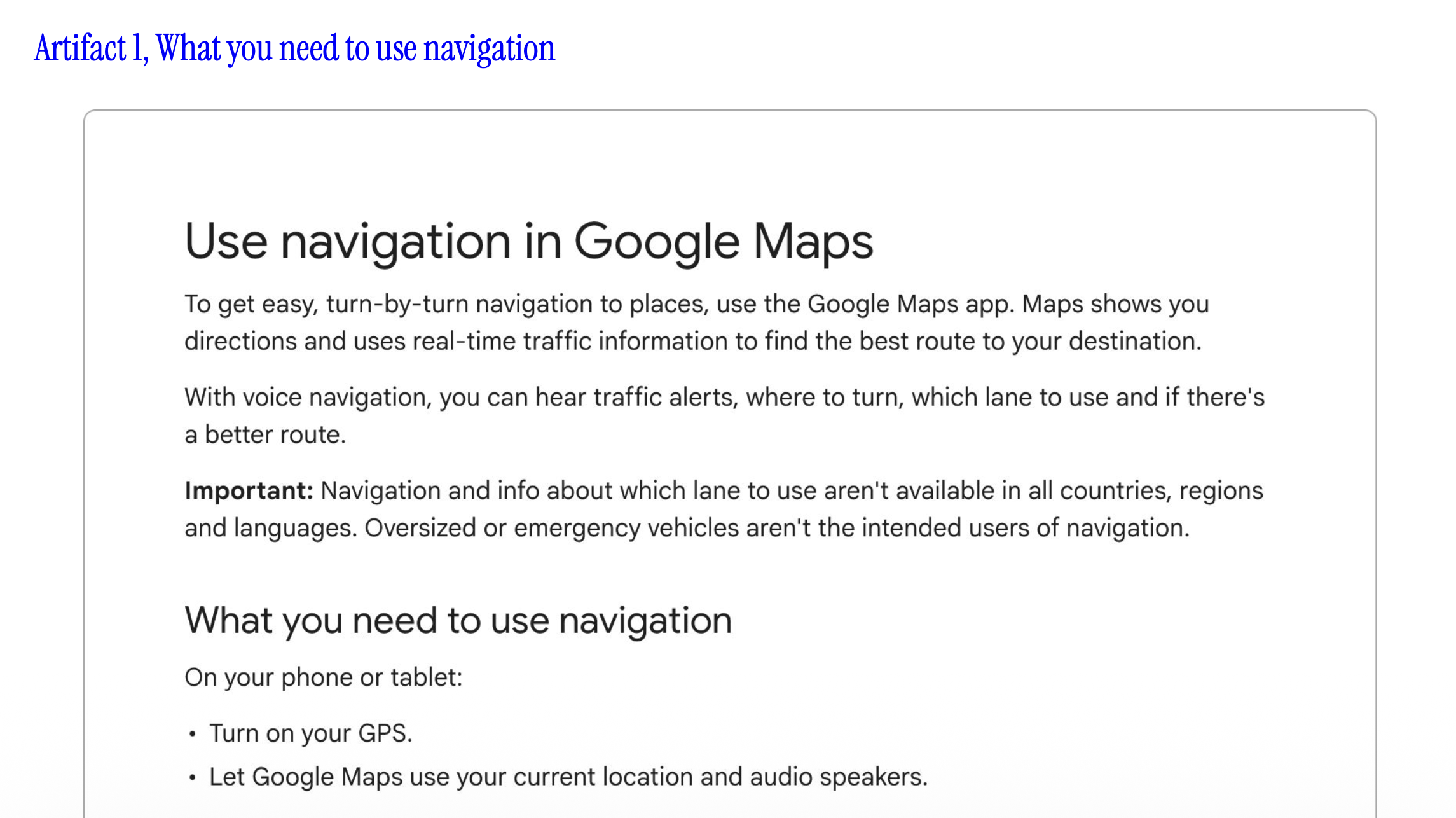
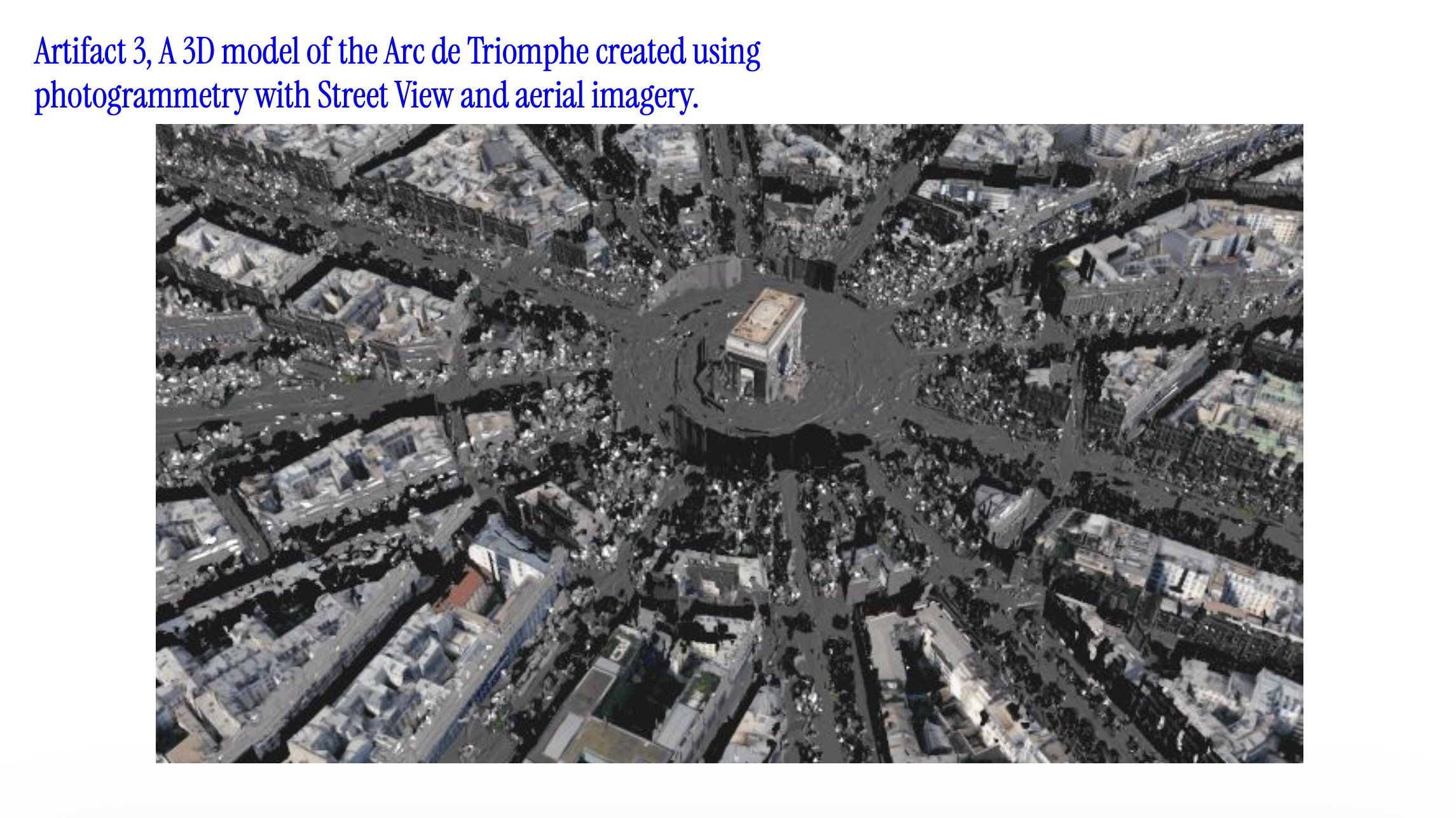
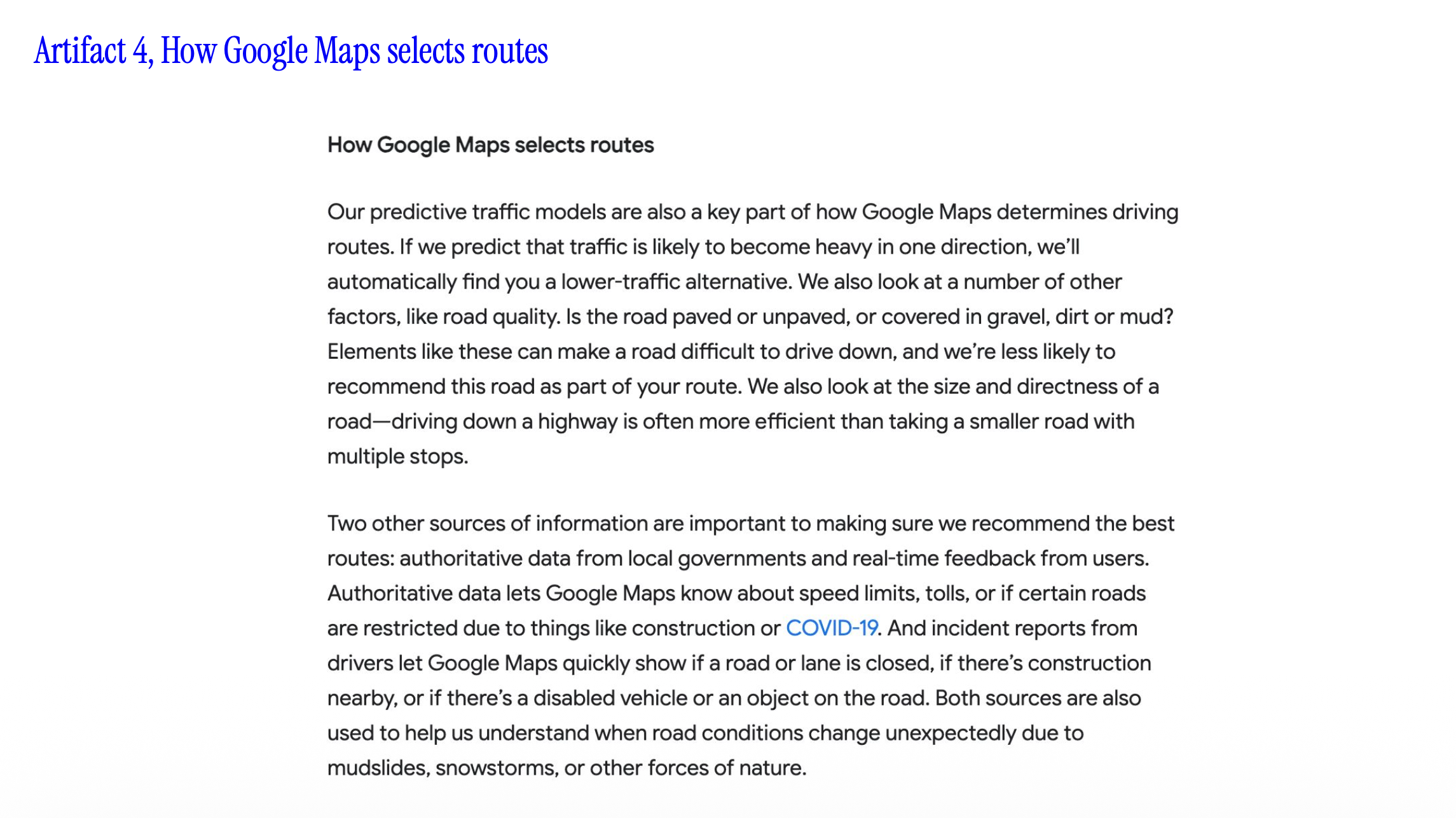
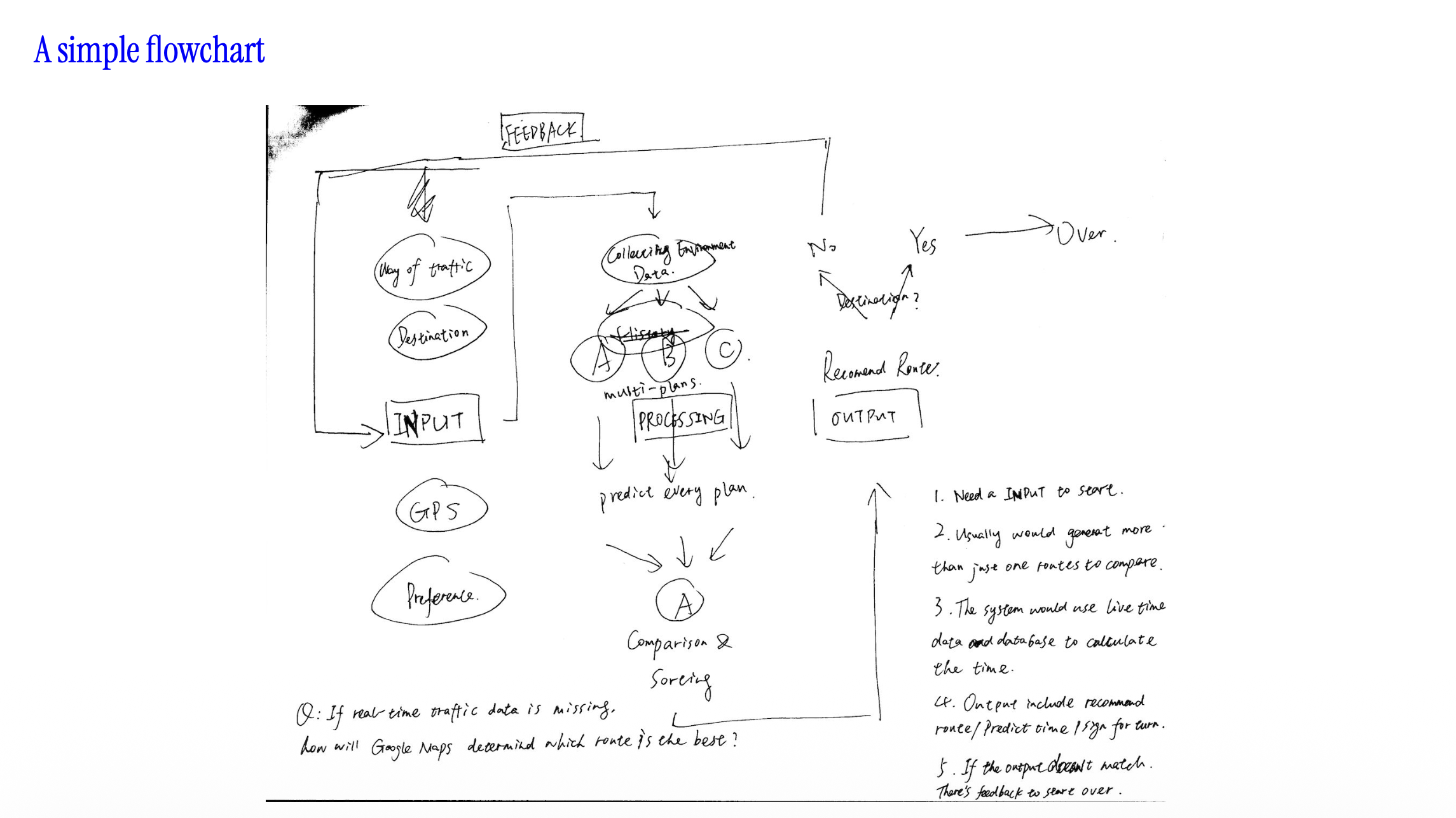
For this project, I was studying Google Maps’ route-planning and real-time navigation system. People may describe it as intelligent because it compares routes, predicts travel times, responds to traffic, and gives new directions. The system receives inputs such as location, destination, transportation method, and user preferences. It combines these with map data, historical traffic, live conditions, and road reports. It then recommends a route and continues updating it during the trip. I will collect five research materials and create an input-process-output flowchart.

Credits & References

Chatgpt, Rednot