Week 6

Project file 1
Project file 2
Project file 3
Project file 4
Project file 5
Live Demo

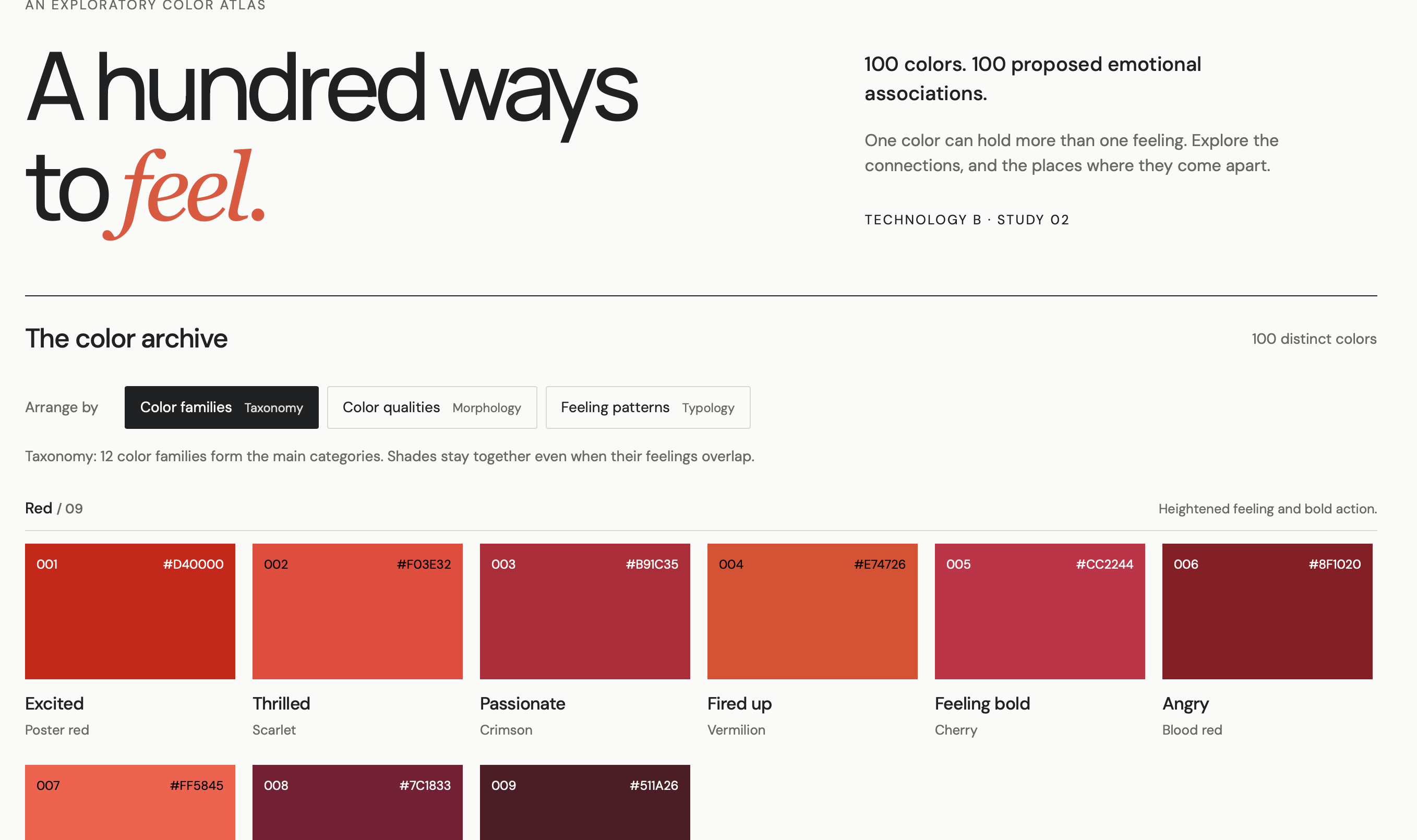
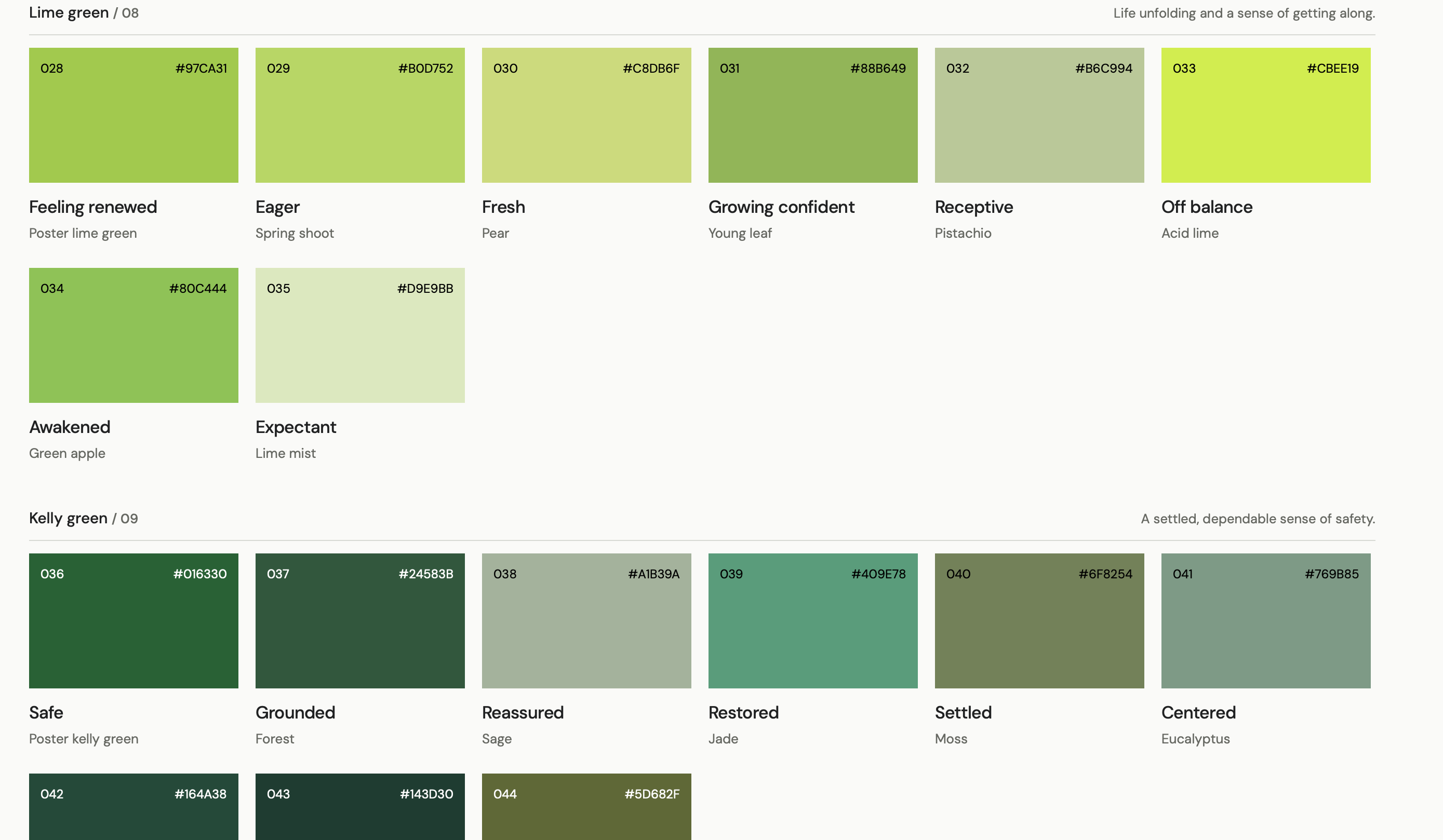
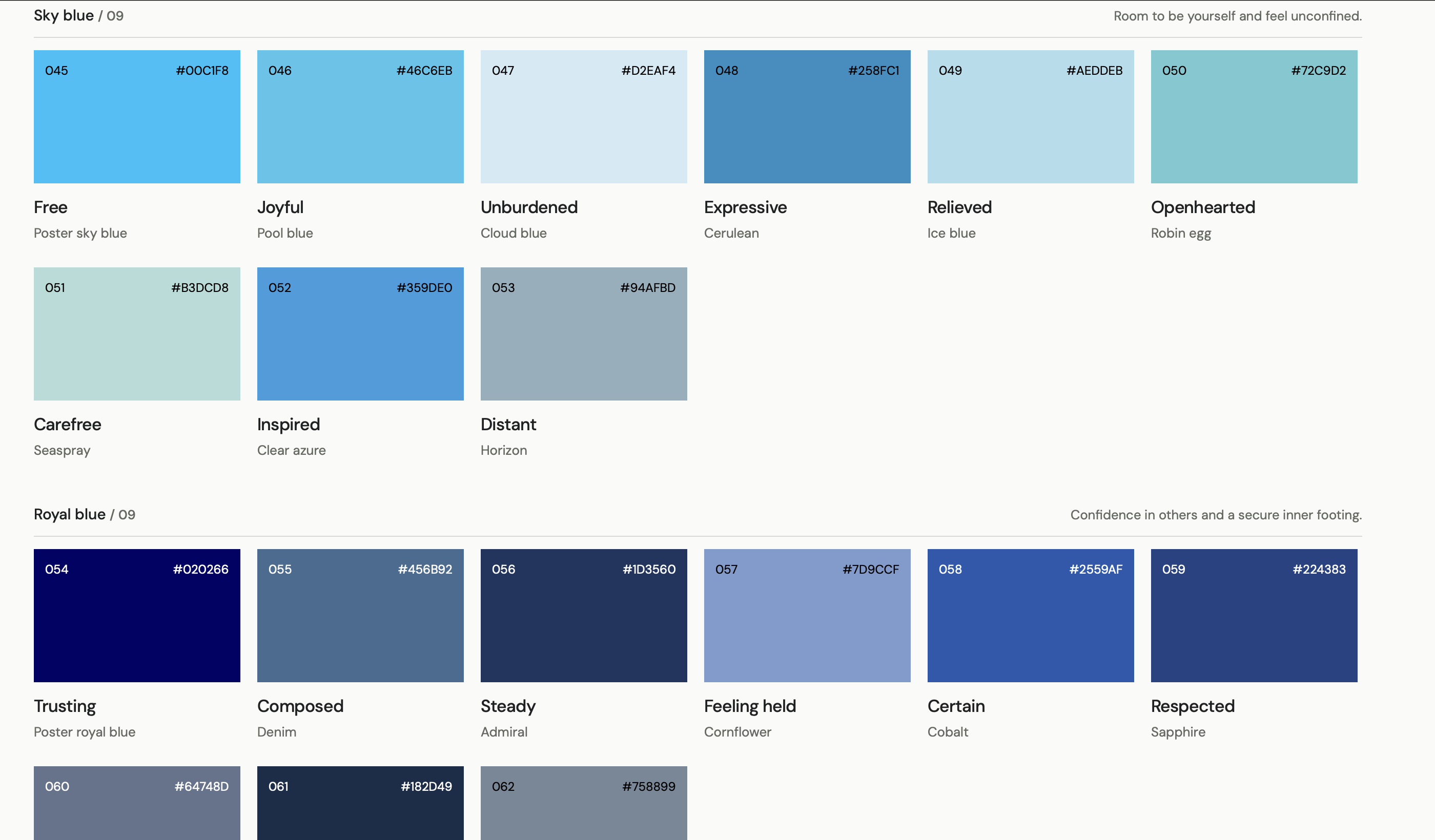
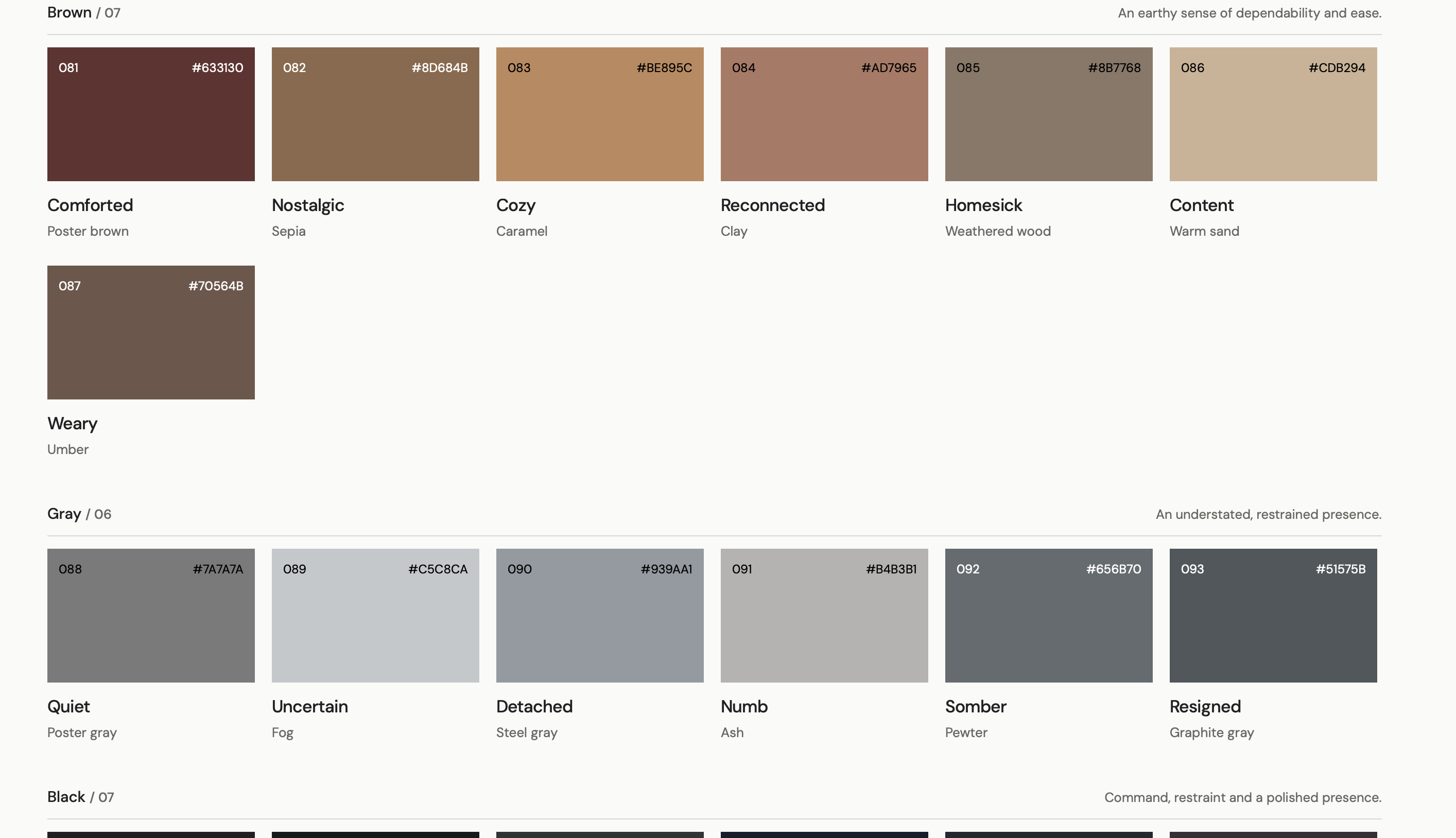
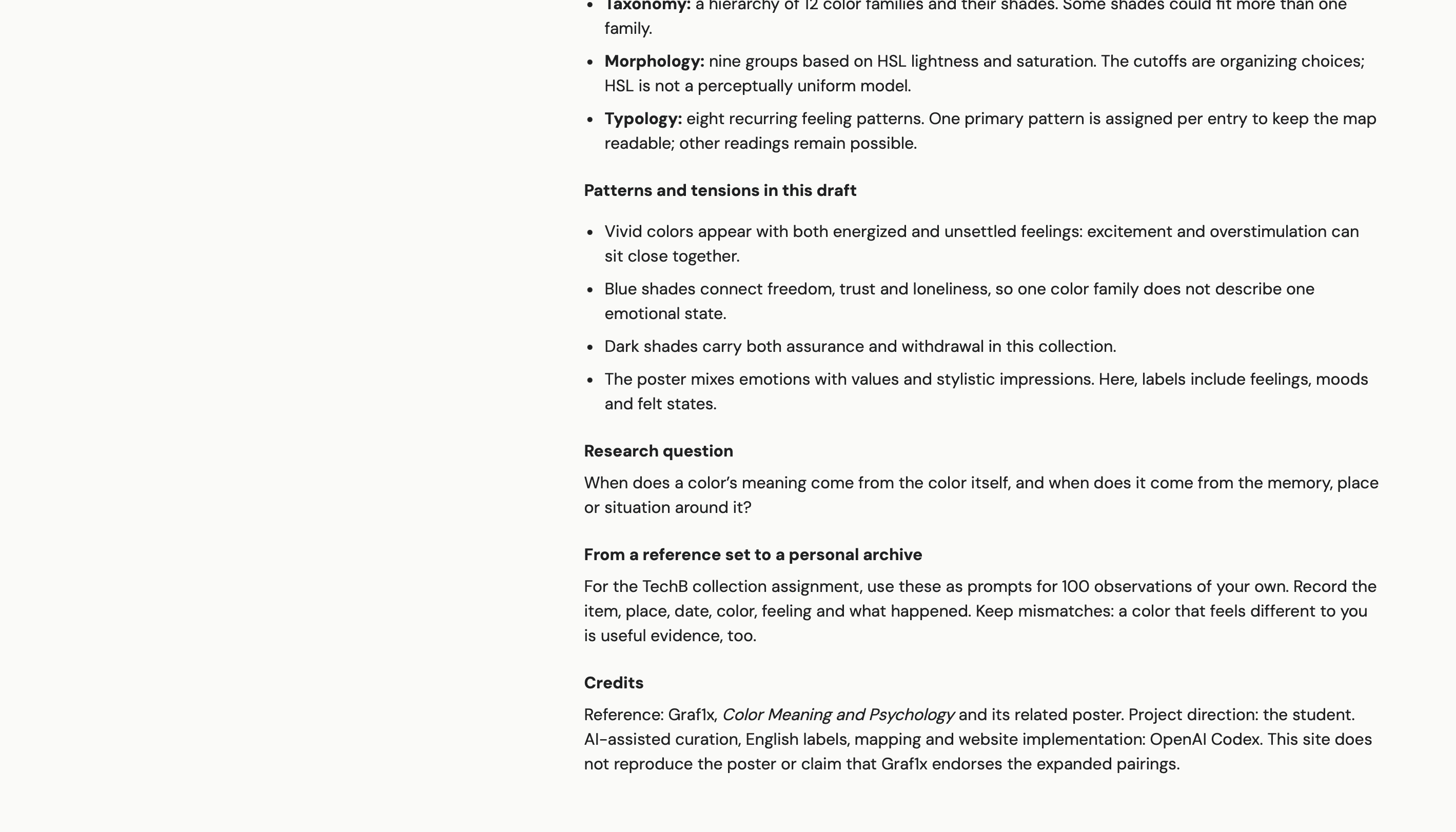
The Feeling of Color is an interactive website exploring 100 colors and their possible emotional associations. Each color includes an English feeling label, a name, and a HEX code. The collection can be explored through three maps: taxonomy groups colors into families; morphology organizes them by lightness and saturation; typology connects recurring feeling patterns across different colors. Inspired by Graf1x’s color psychology references, the project expands broad associations into proposed shade–feeling pairings. These are design interpretations rather than universal psychological facts. The collection provides a starting point for personal observations and asks how context, memory, and classification shape the meanings we give to colors.

Credits & References

Concept and creative direction: me. References: Graf1x’s Color Meaning and Psychology and related color psychology poster. AI assistance: OpenAI Codex for color curation, English labels, mapping, coding, and testing. Website: HTML, CSS, and JavaScript; hosted with Sites. Fonts: DM Sans and Manrope through Google Fonts.
Week 3

Project file 1
Project file 2
Project file 3
Project file 4
Project file 5
Live Demo

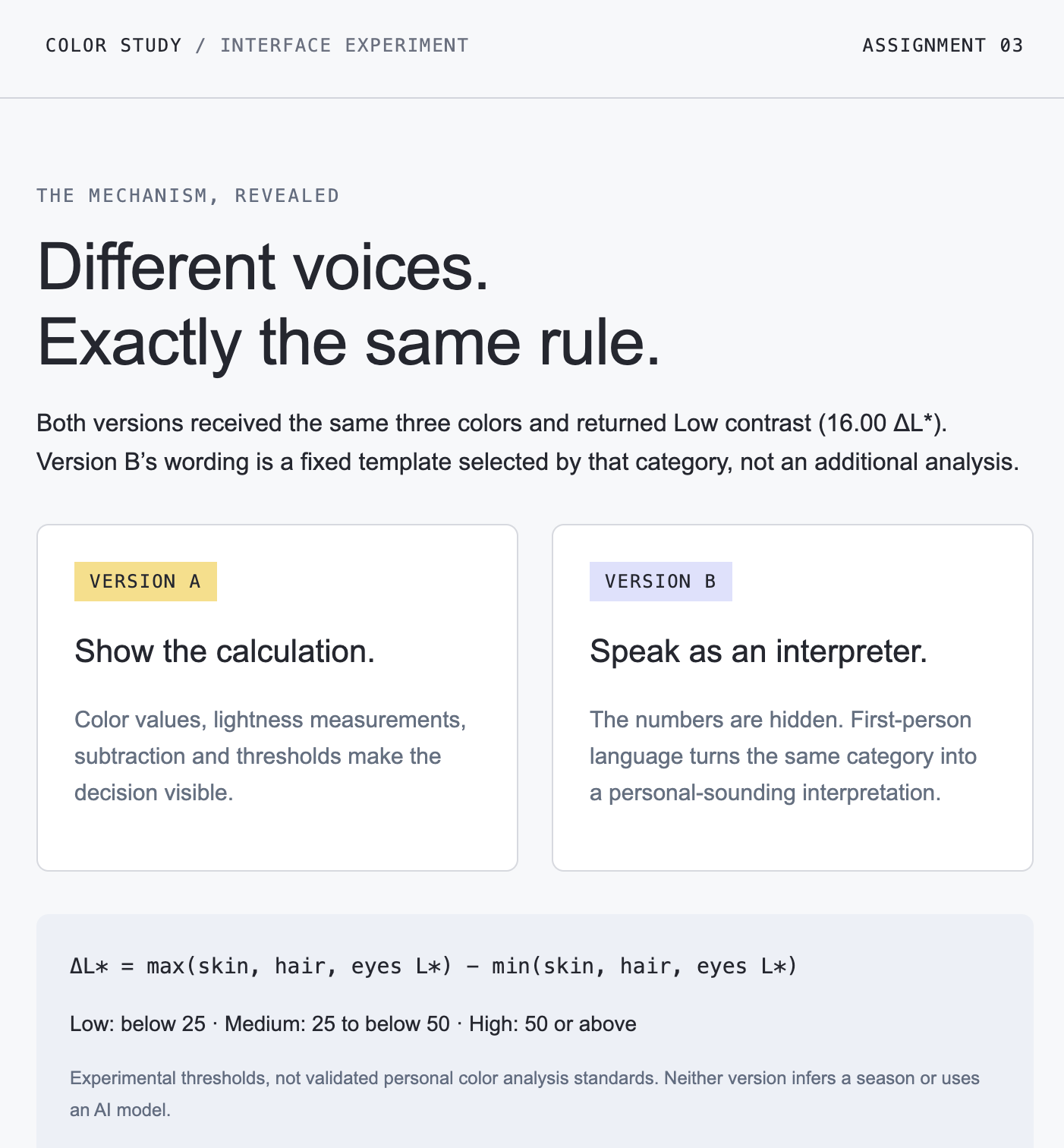
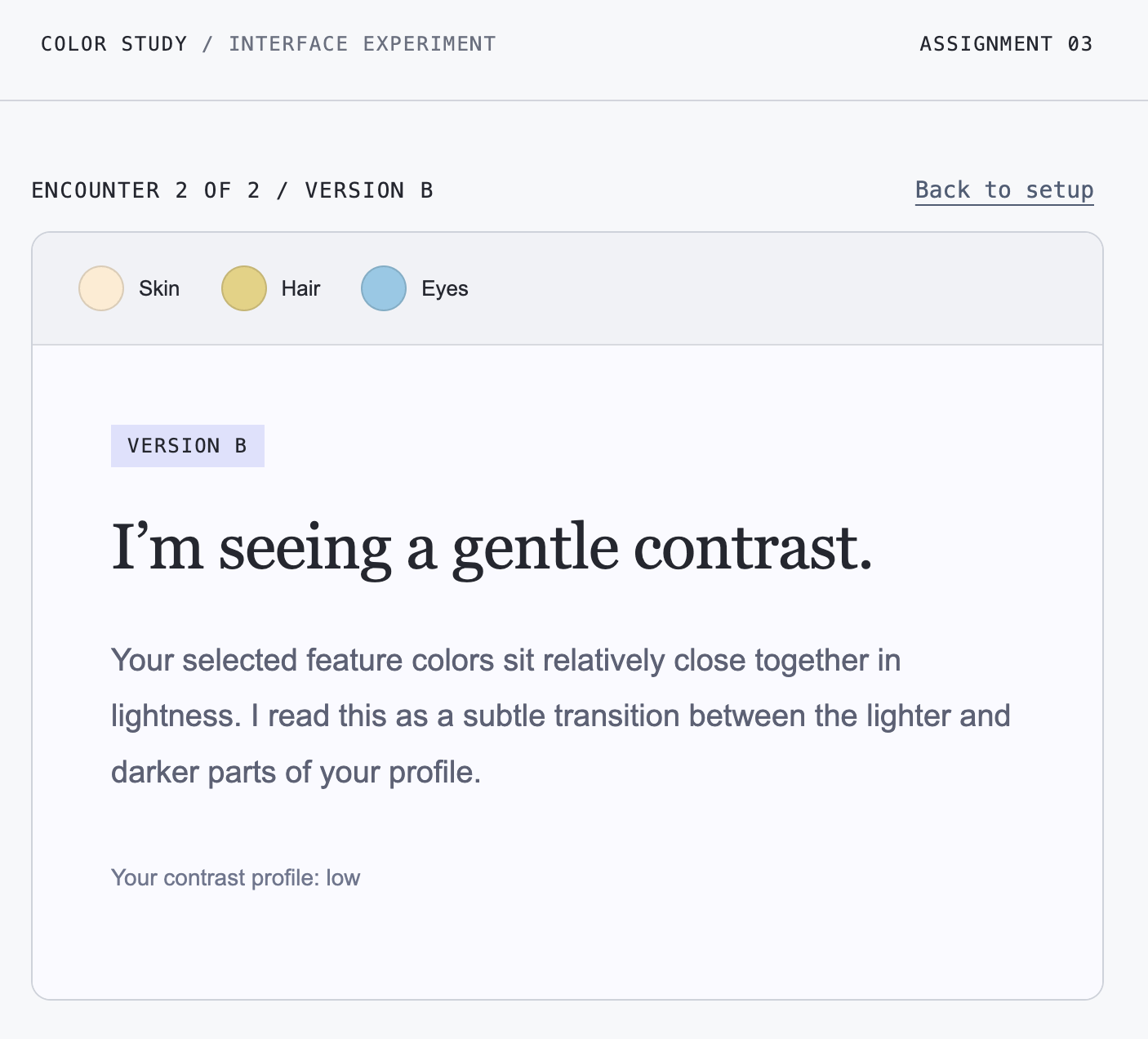
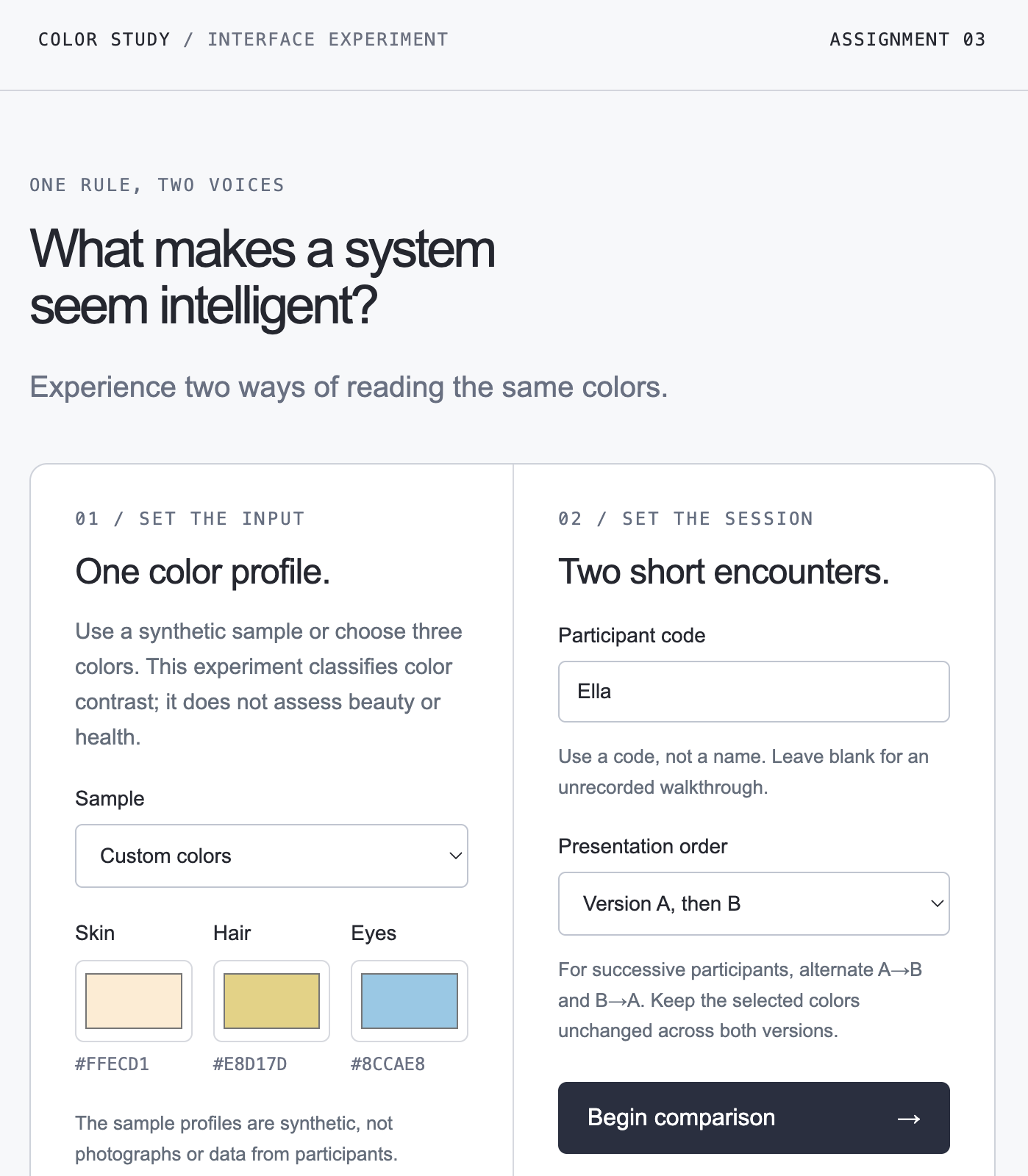
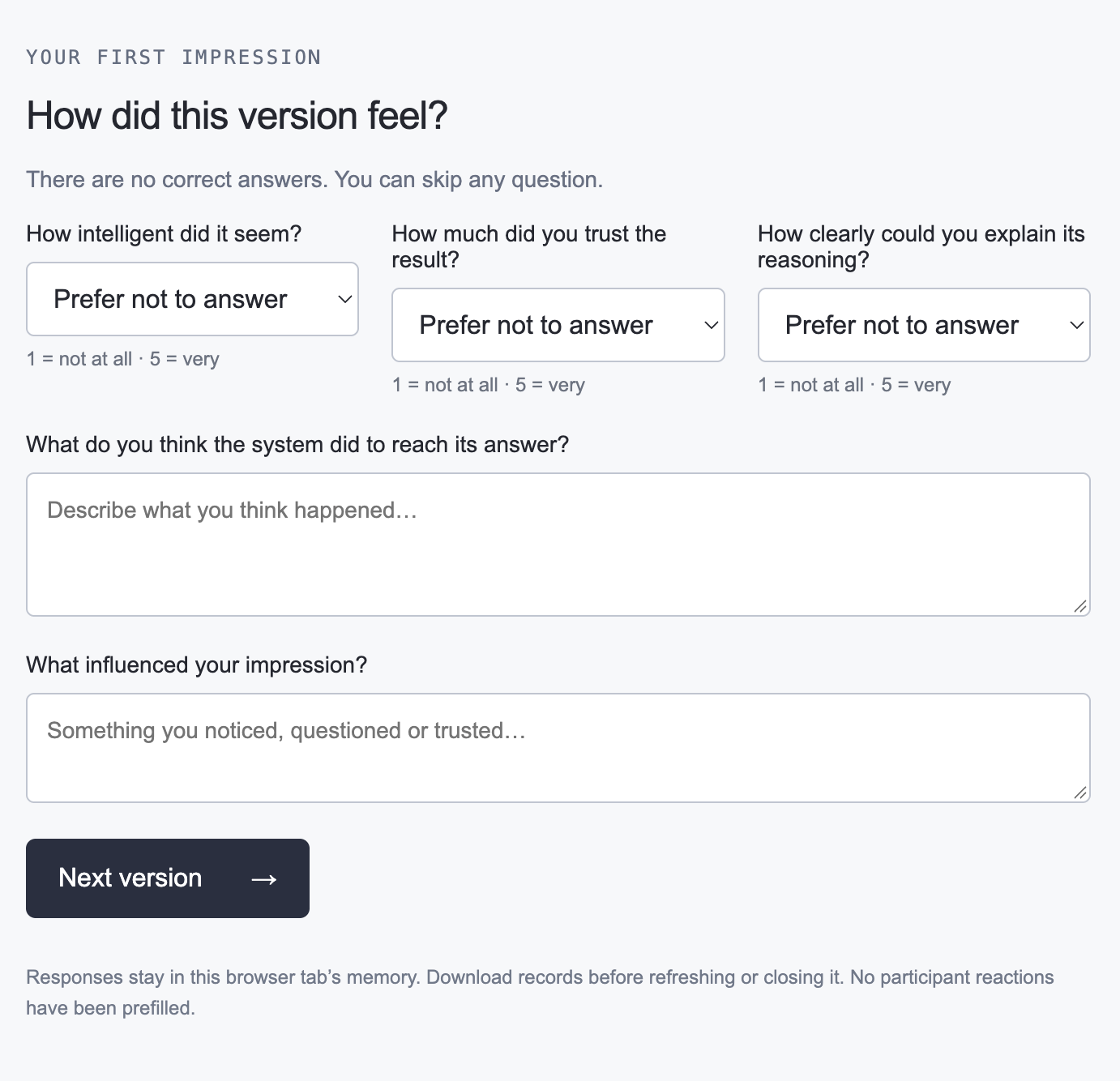
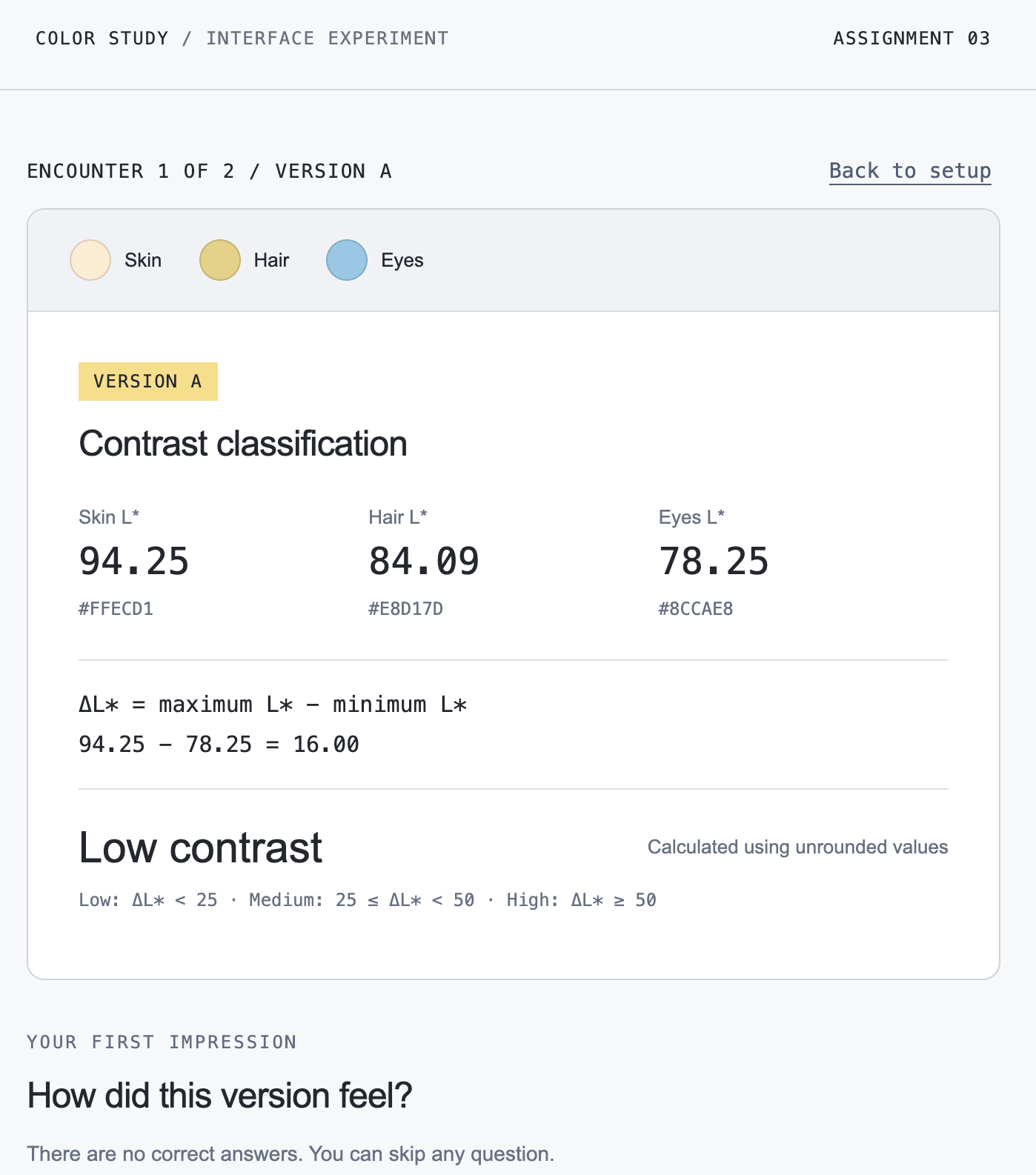
One Rule, Two Voices explores how interface presentation shapes perceived intelligence. Two versions use the same color contrast algorithm: one reveals measurements and classification rules, while the other hides calculations and communicates conversationally. Participants compare both versions, rate intelligence, trust, and clarity, then see the shared mechanism. The project asks whether changing representation can change how people interpret an identical computational result.

Credits & References

Concept: Personal color analysis research and Assignment 2 prototype. AI collaborator: OpenAI Codex—coding, interface design, automated checks, and documentation assistance. Technologies: HTML, CSS, JavaScript, and native browser controls; no external analysis libraries. References: sRGB, CIELAB L*, and the contrast rule reconstructed in Assignment 2.

Week 1

Project file 1
Project file 2
Project file 3
Project file 4
Project file 5

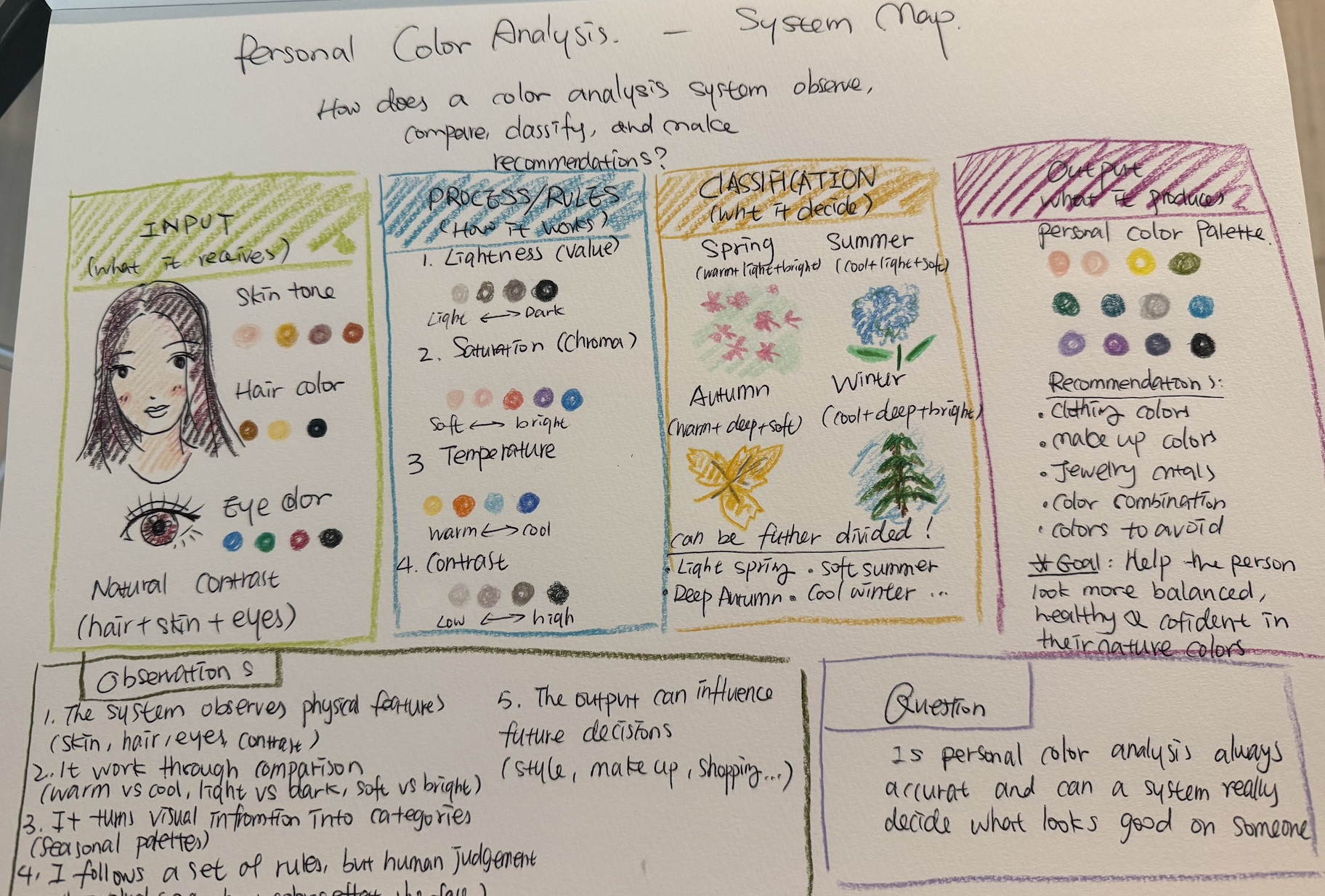
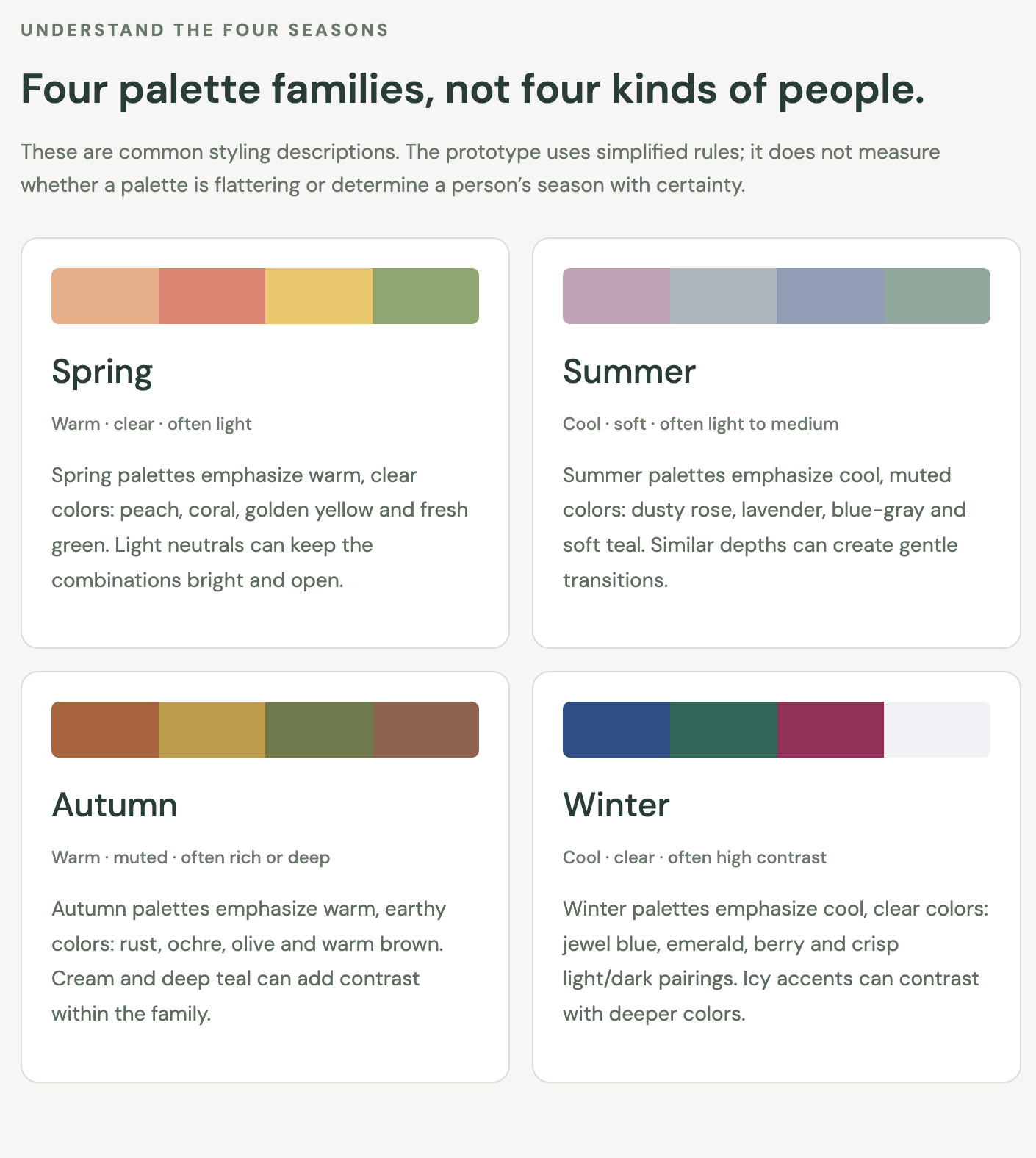
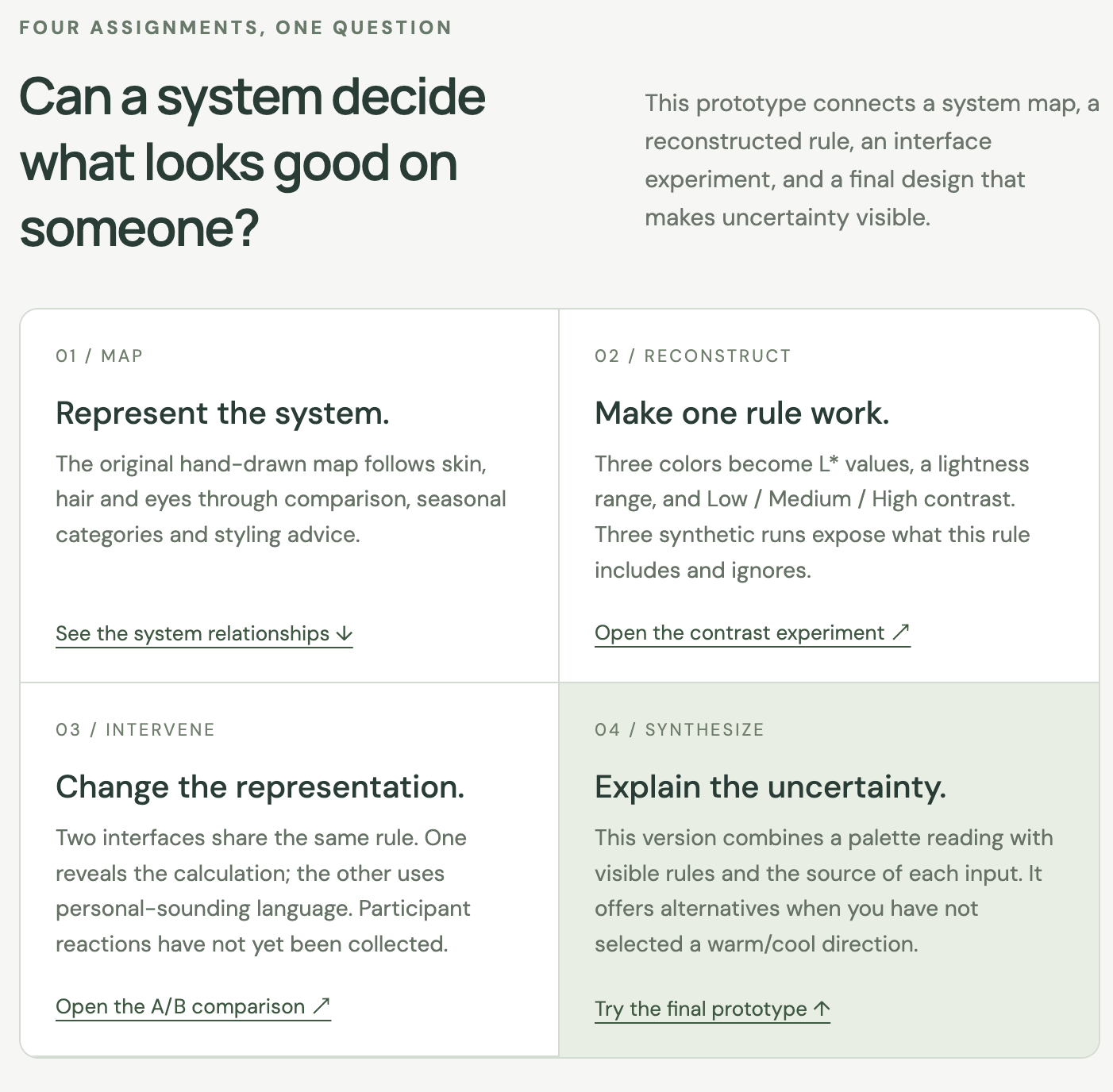
This project explores personal color analysis as a system. The system receives visual information such as skin tone, hair color, eye color, and natural contrast. It compares these features through four main rules: lightness, saturation, temperature, and contrast. Based on these comparisons, the system classifies a person into Spring, Summer, Autumn, or Winter and produces a personal color palette. The output can guide choices in clothing, makeup, jewelry, and color combinations. Through this system map, I also question how accurate these classifications are and how much human judgment influences the final result.

Credits & References

1. Concept, system map, illustrations, and drawings. 2. Research/References: Personal color analysis and seasonal color theory. 3. AI Agent: ChatGPT — used to help organize ideas, clarify terminology

Week 4

Project file 1
Project file 2
Project file 3
Project file 4
Project file 5
Live Demo

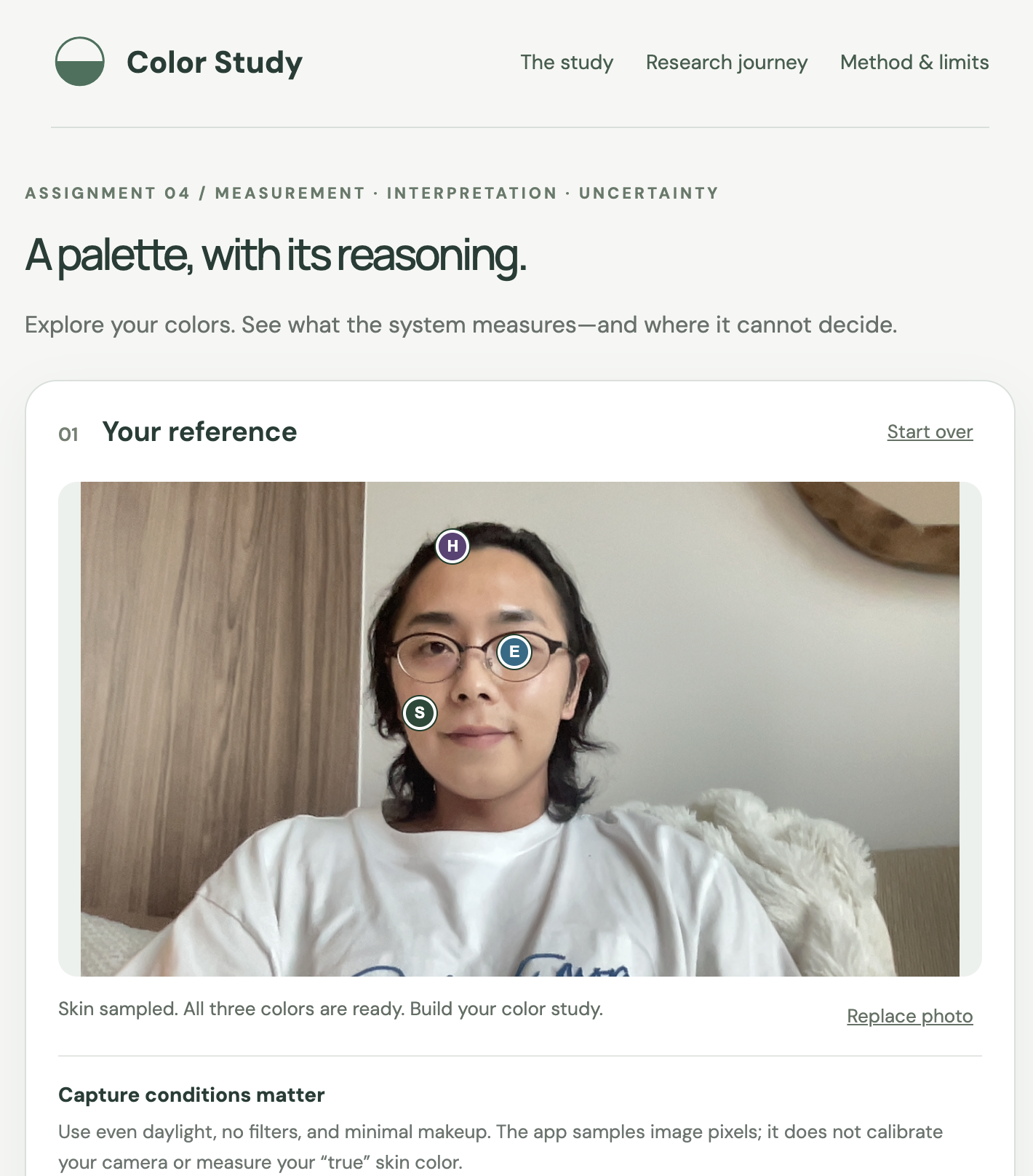
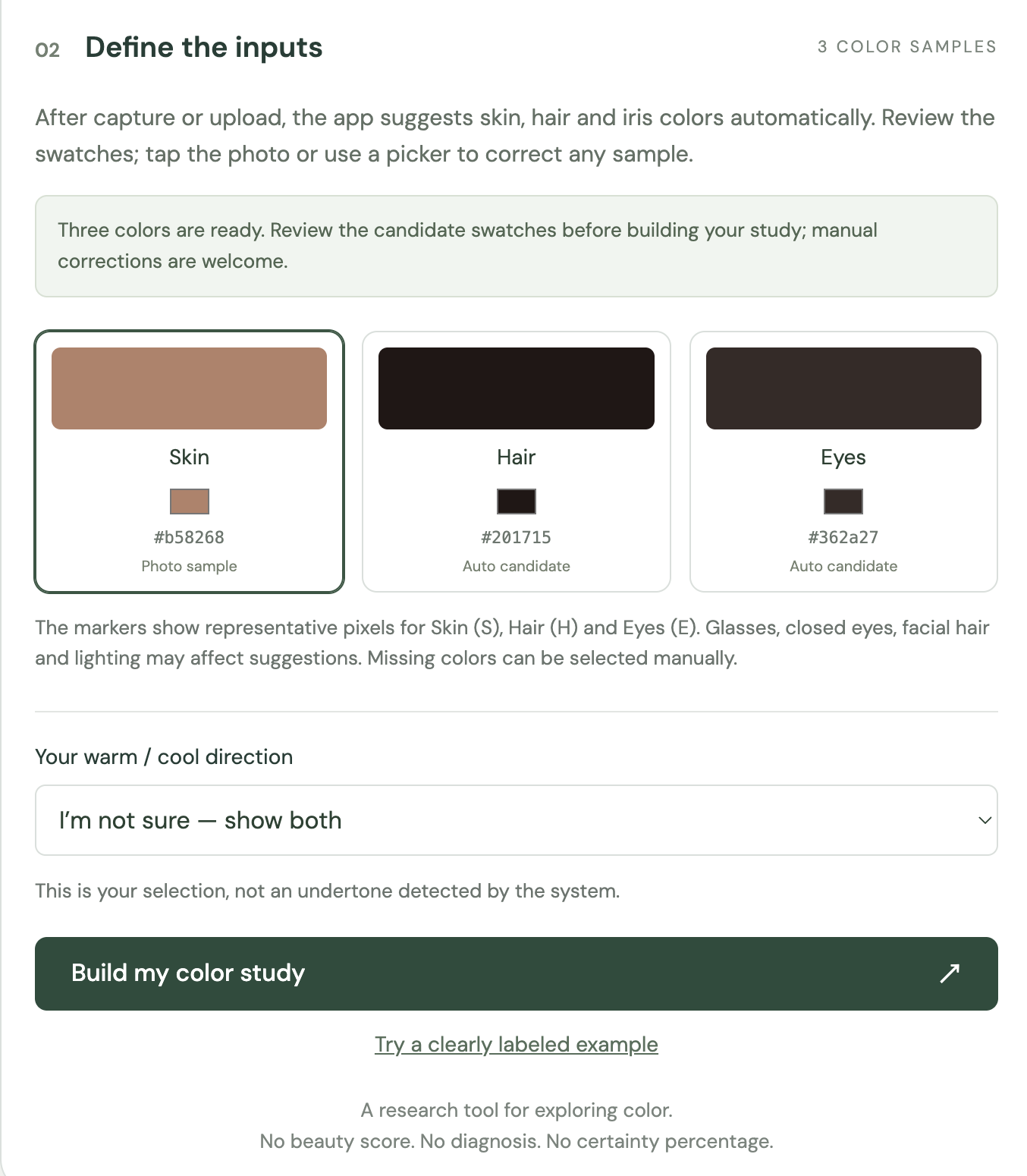
Color Study explores how a system turns appearance into recommendations. It automatically samples skin, hair, and eye colors from photos, then offers experimental seasonal palettes. Users can inspect calculations, correct samples, and compare alternatives. The project connects system mapping, rule reconstruction, and interface experiments through visible explanations and uncertainty.

Credits & References

Concept and research: Personal color analysis system map and Assignments 1–3. AI collaborator: OpenAI Codex—coding, interface design, testing, and documentation assistance. Libraries and models: Google MediaPipe Tasks Vision 1.0.1, Face Landmarker, and multiclass selfie segmentation. Technologies: HTML, CSS, JavaScript, Camera and Canvas APIs. References: Official MediaPipe documentation, sRGB/CIELAB color representation, and the four-season styling framework. Typography: DM Sans and Manrope through Google Fonts.
Week 2

Project file 1
Project file 2
Project file 3
Live Demo

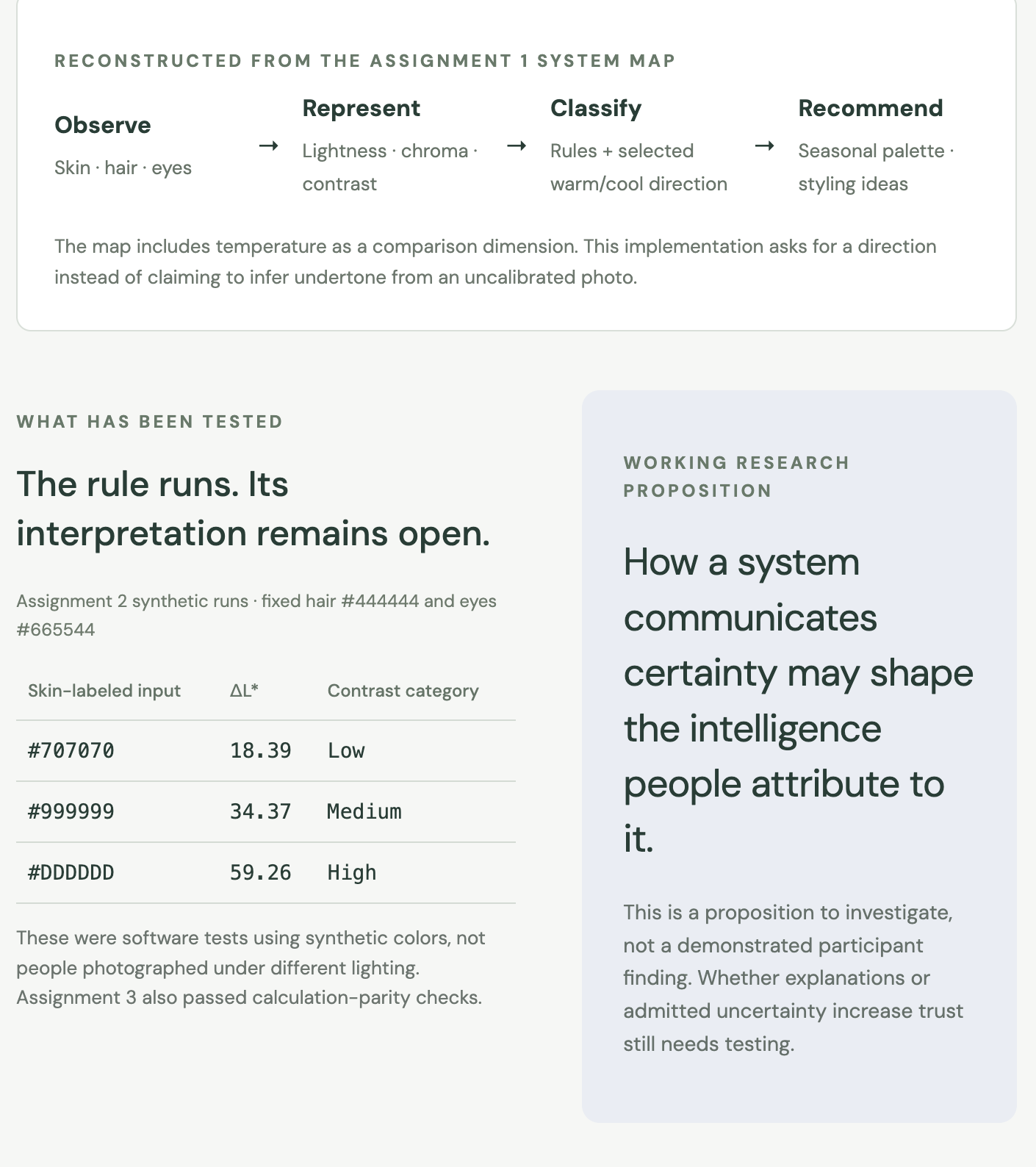
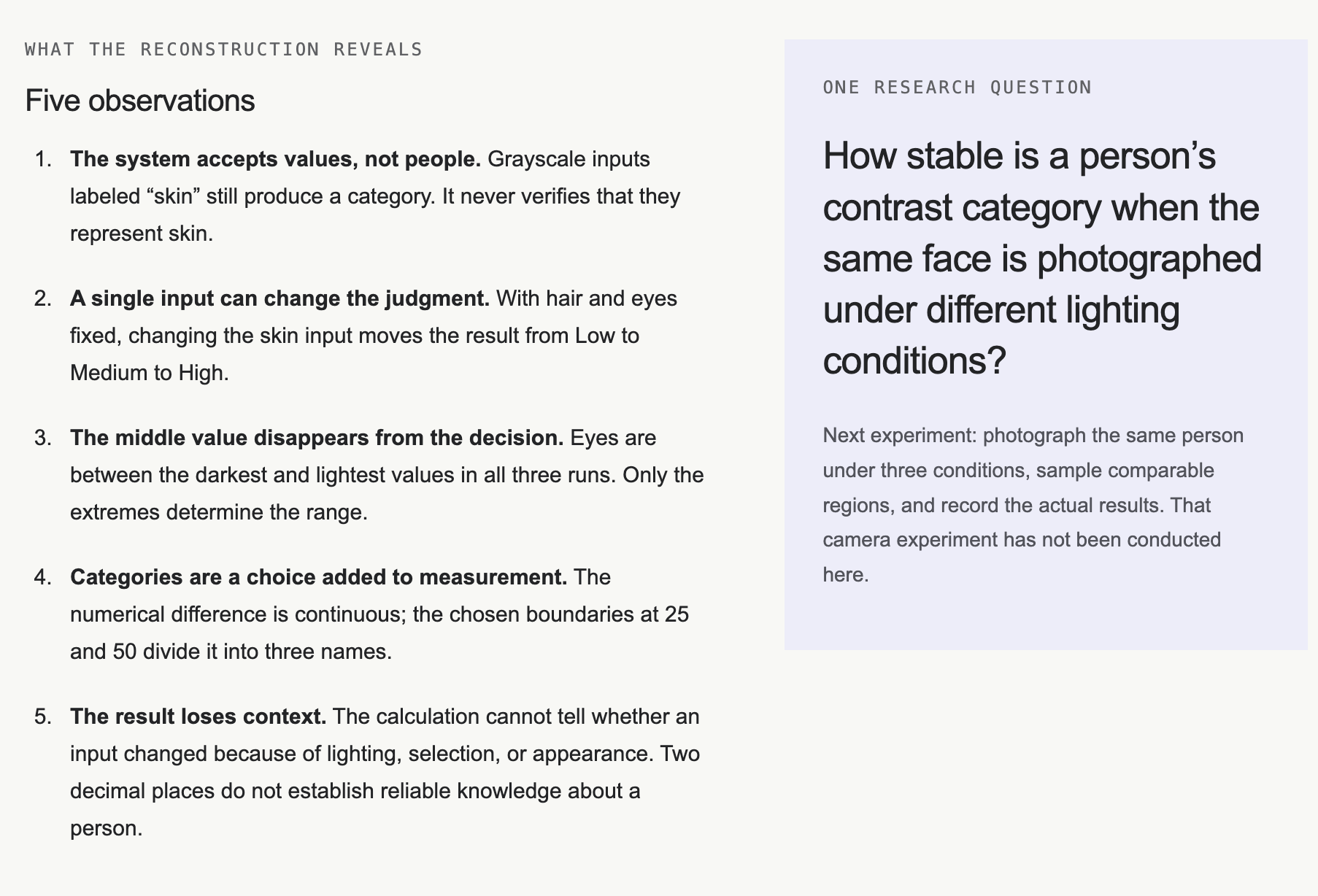
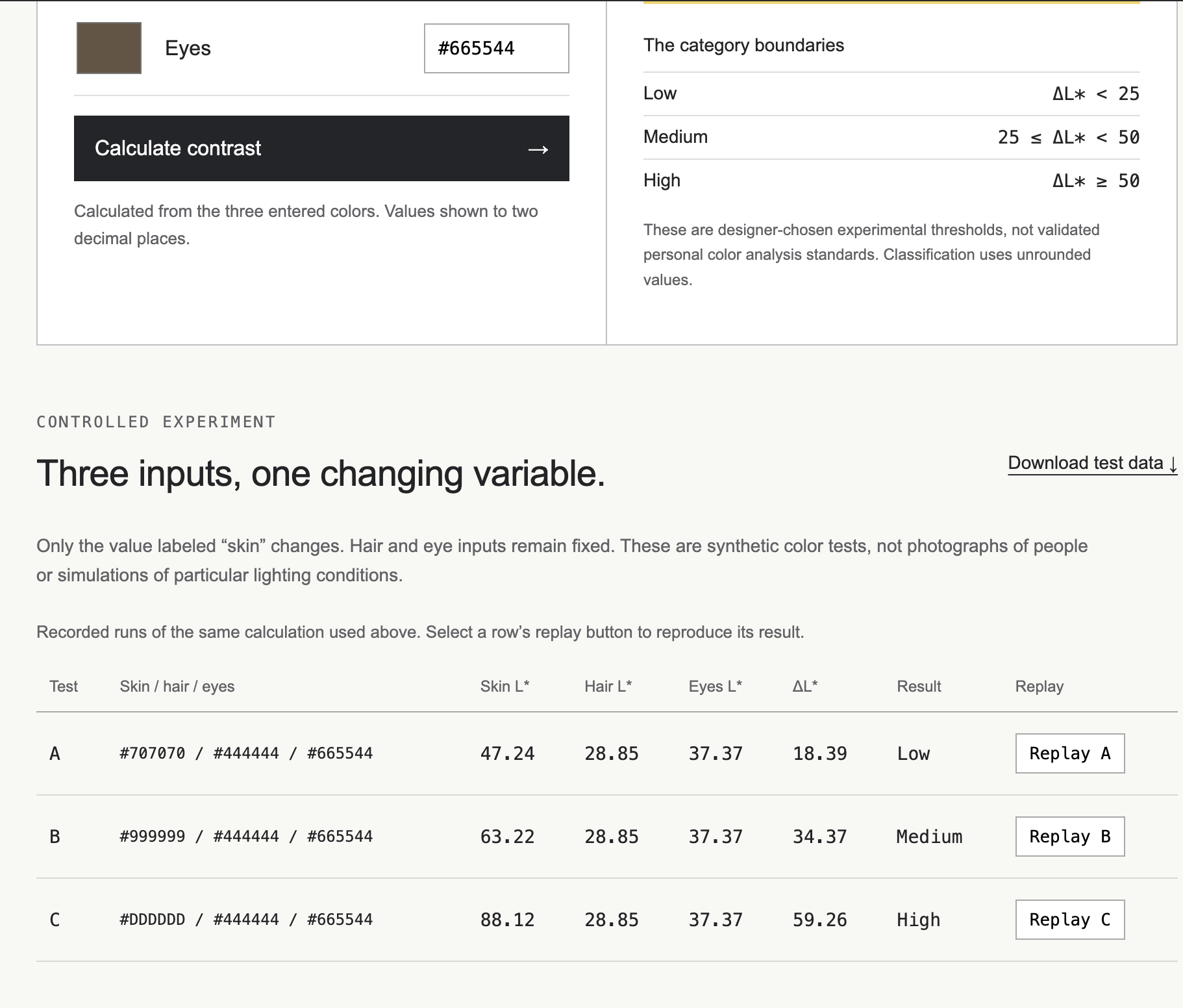
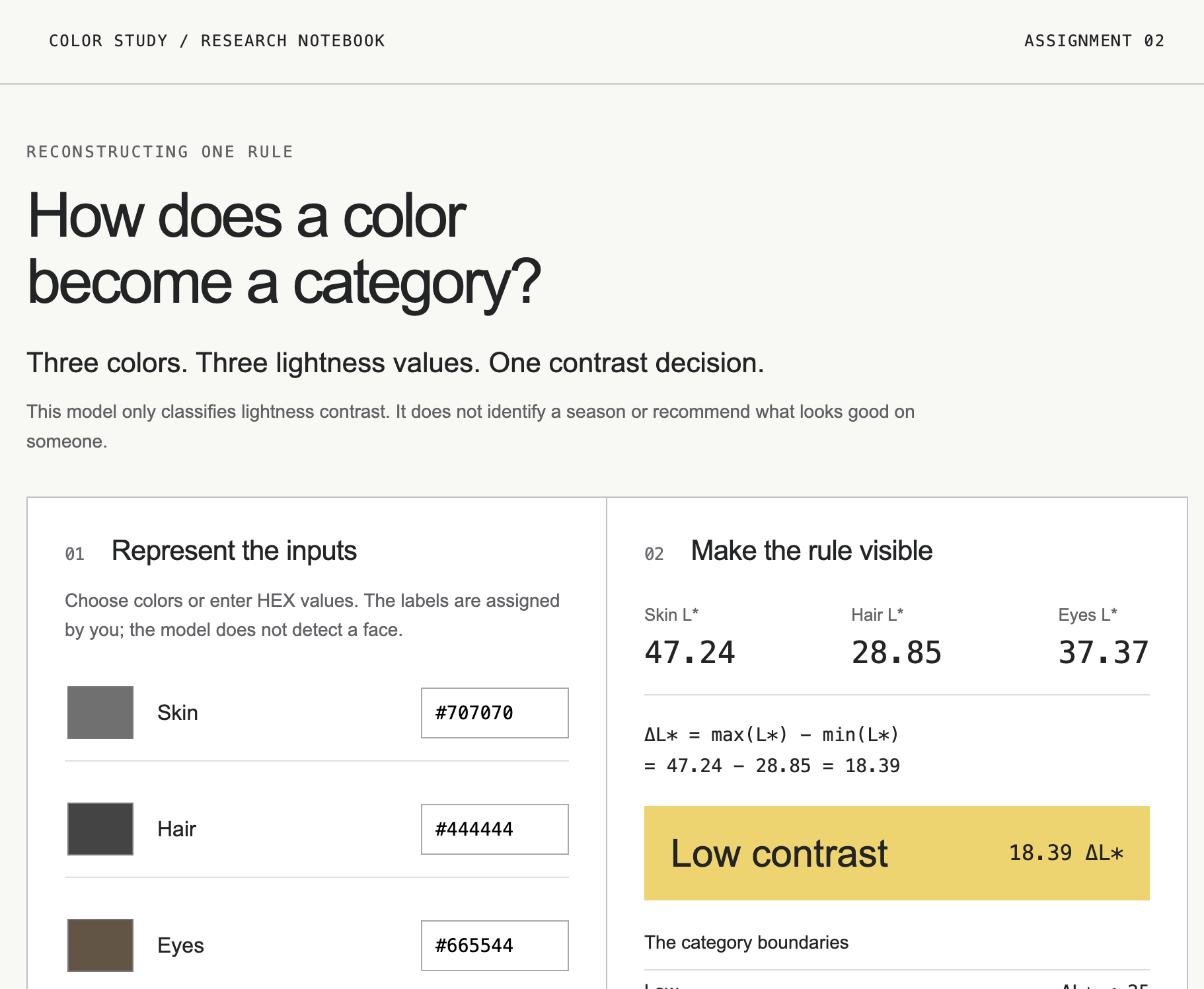
This project reconstructs one rule within personal color analysis: turning skin, hair, and eye colors into a contrast category. The model converts three selected colors into CIELAB lightness values, calculates their maximum difference, and applies explicit thresholds to classify contrast as Low, Medium, or High. Three synthetic tests change only the skin-labeled color while keeping the other inputs fixed. The experiment reveals how representation and designer-chosen boundaries shape the result. It asks what numerical classification can establish about a person when lighting, sampling conditions, and personal preferences are excluded.

Credits & References

Concept: My original Personal Color Analysis system map. AI collaborator: OpenAI Codex—coding, interface design, synthetic test execution Technologies: HTML, CSS, JavaScript, and native browser color inputs. No external analysis libraries. References: sRGB color representation and CIELAB L* using D65. Classification rules: Experimental thresholds of 25 and 50, chosen for this prototype.