Week 6

Project file 1
Project file 2
Project file 3
Project file 4
Live Demo

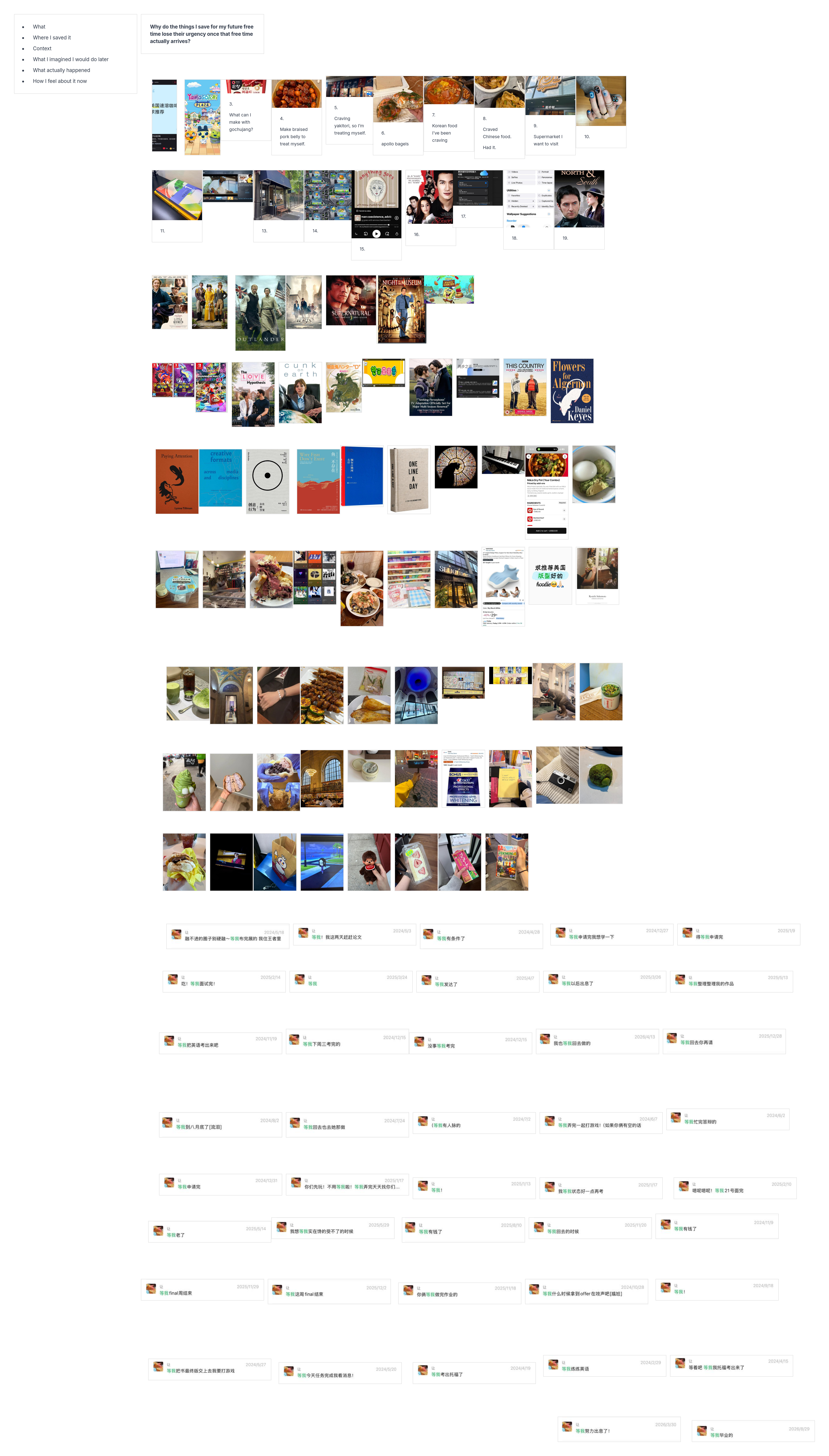
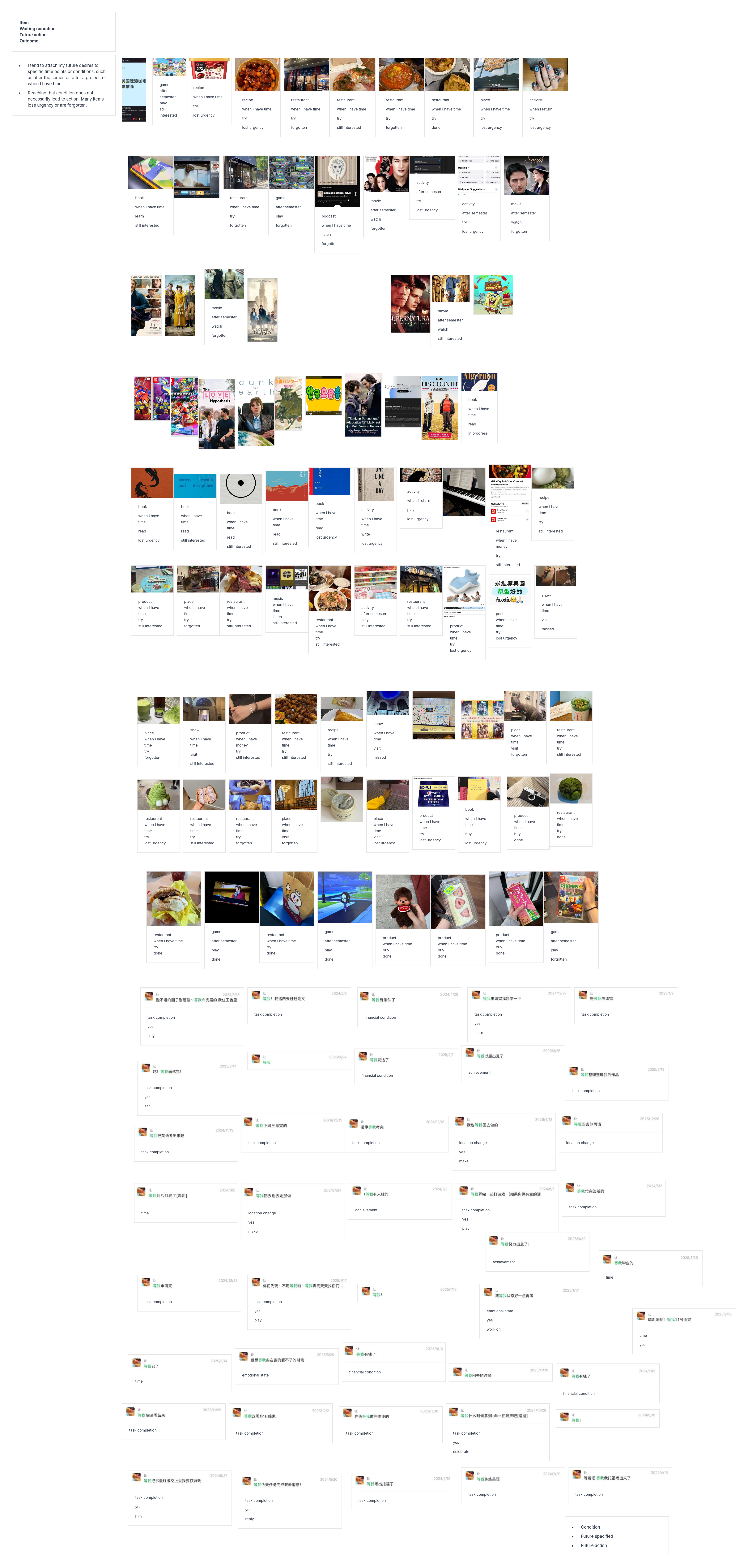

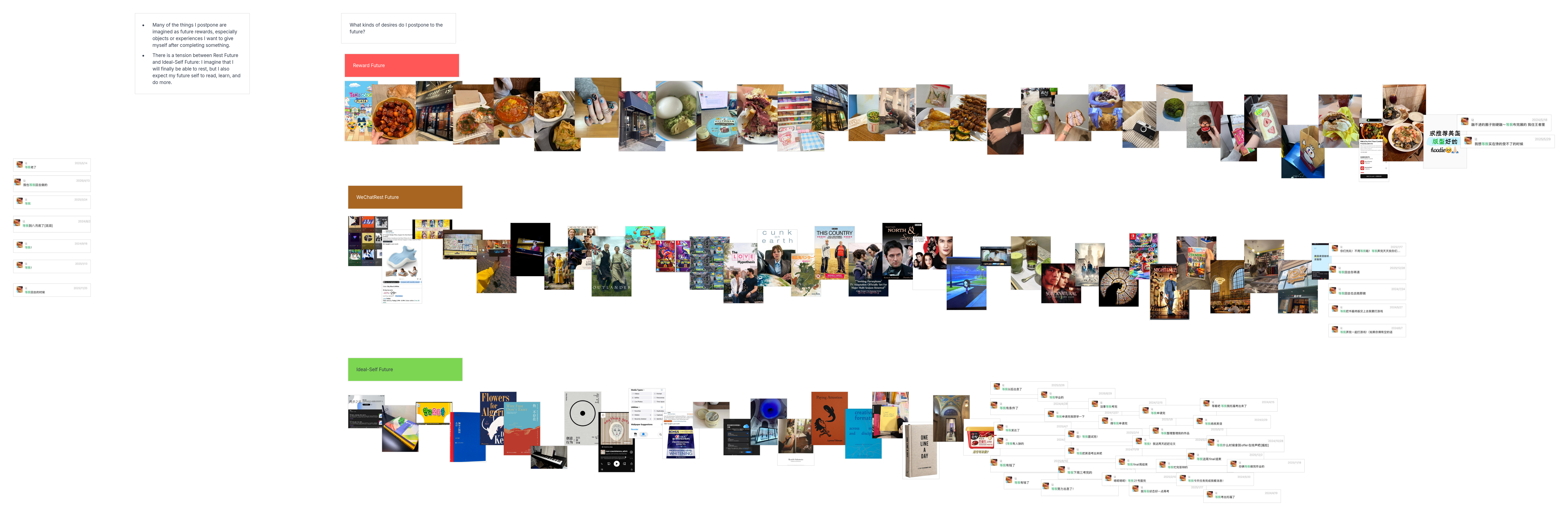
This project begins with a contradiction I repeatedly experience but cannot fully explain. During the semester, before exams, or close to project deadlines, I often save things I want to do “when I have free time,” such as books I want to read, games I want to play, movies I want to watch, and restaurants or exhibitions I want to visit. I also often say things in conversations like “after my exam,” “after I submit this project,” or “after the semester ends.” These things often feel especially appealing when I am busy, and I look forward to the free time when I can finally do them. However, once the task is finished and that free time actually arrives, I often lose the same sense of urgency, and some of these things are eventually forgotten. This led me to ask: Why do the things I save for my future free time lose their urgency once that free time actually arrives? To explore this question, I built an archive of more than 100 personal items, including saved posts, books, games, movies, podcasts, restaurants, activities, and WeChat messages beginning with phrases such as “after I…” or “when I…”. All of these materials come from my own digital records and daily experience. I reorganized the archive through three methods: Morphology, Taxonomy, and Typology. Morphology helped me break down the structure of each future desire, including what I was waiting for, what I wanted to do later, and what eventually happened. Taxonomy helped me trace where these desires came from, such as Rednote, TikTok, WeChat, friends, family, class, or offline encounters. Typology helped me distinguish different kinds of imagined futures, such as seeing the future as a reward, a time for rest, or an opportunity to become a better version of myself. So far, the mapping shows that I often attach these desires to specific future conditions or time points. Rednote appears frequently as a source of influence in my archive, and many postponed desires are imagined as rewards after completing a task. Through this project, I want to better understand how technology, saving practices, and imagined futures shape the way we organize desire, and why future free time often feels different from the way we imagined it.

Credits & References

ChatGPT
Week 3

Project file 1
Project file 2
Project file 3
Project file 4
Project file 5

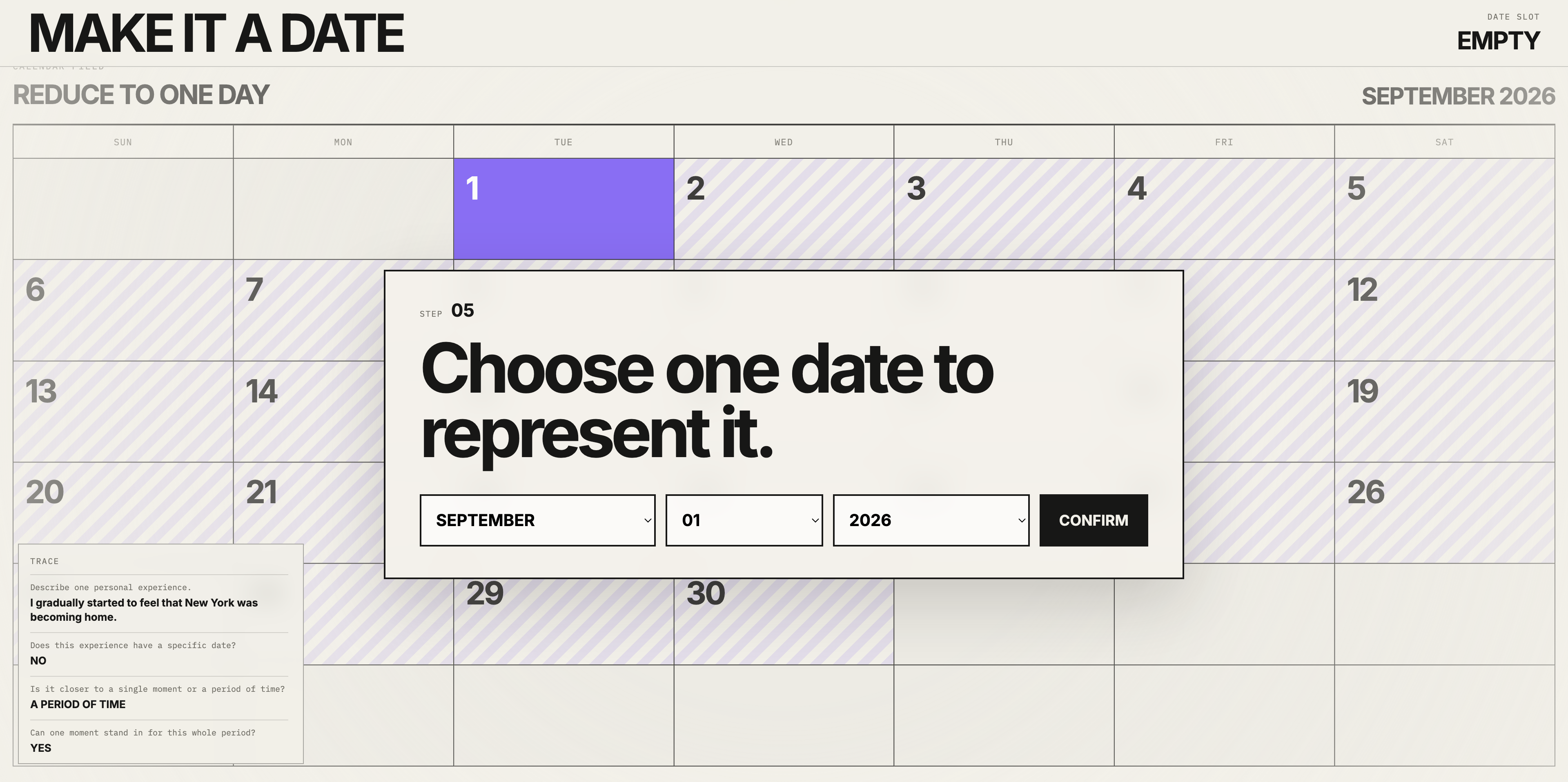
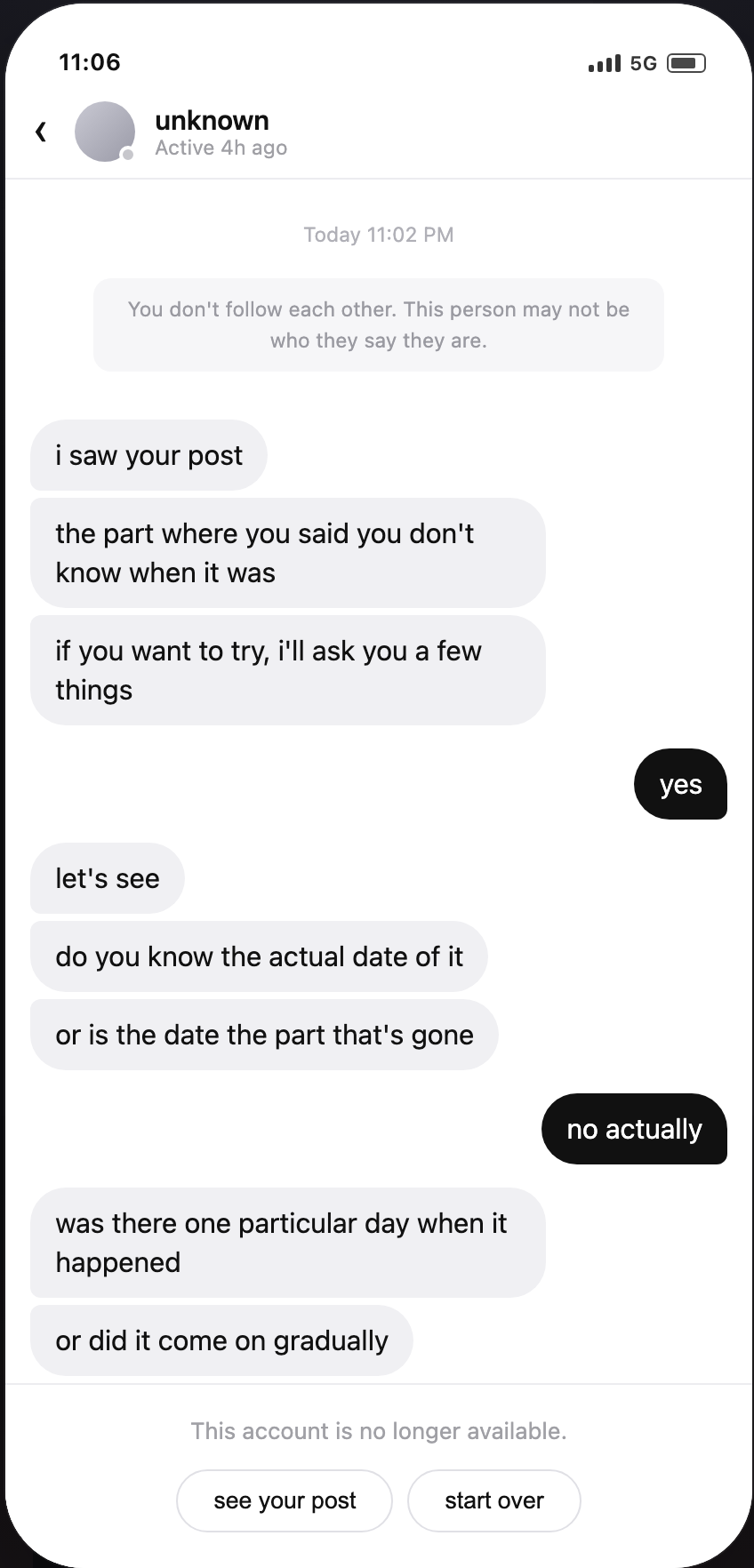
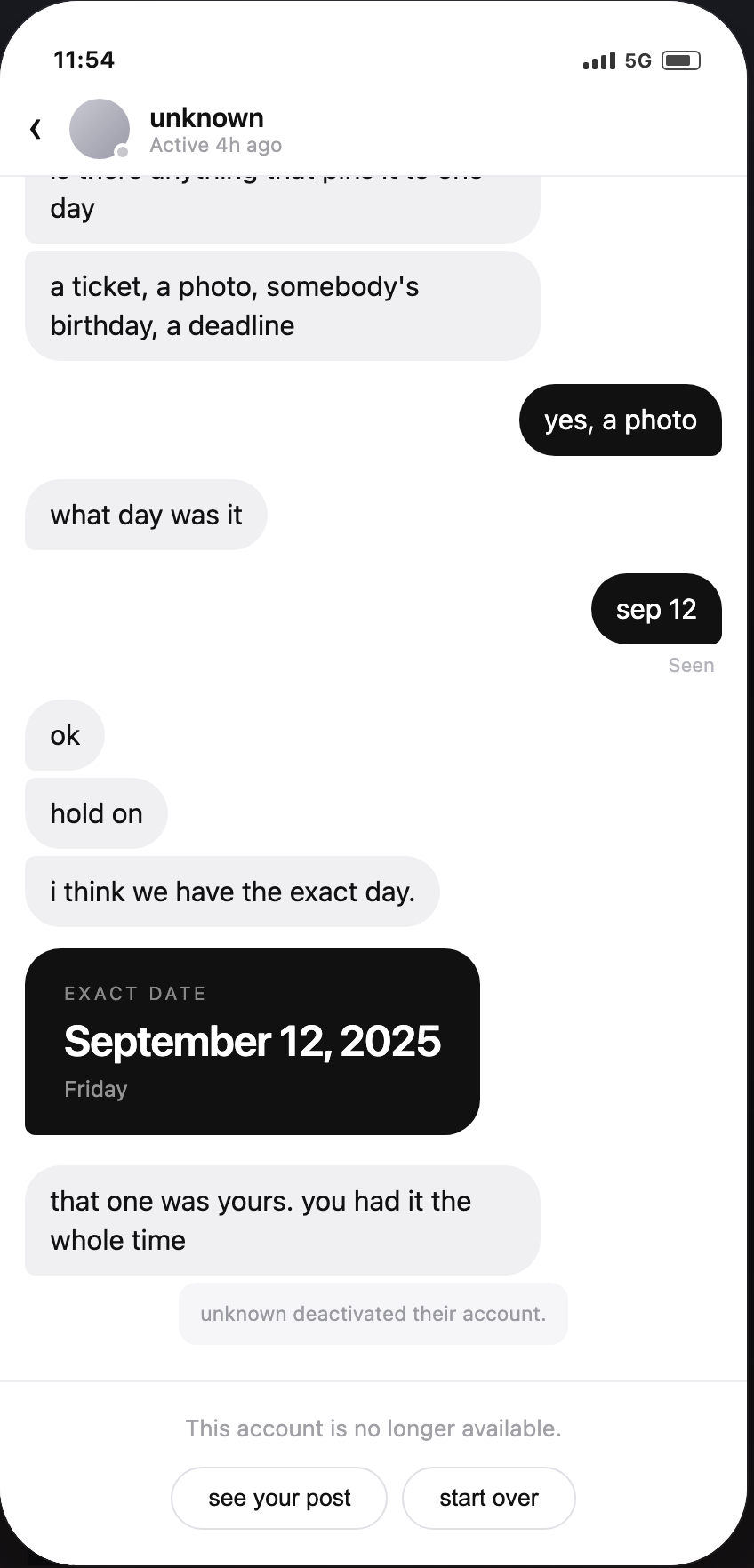
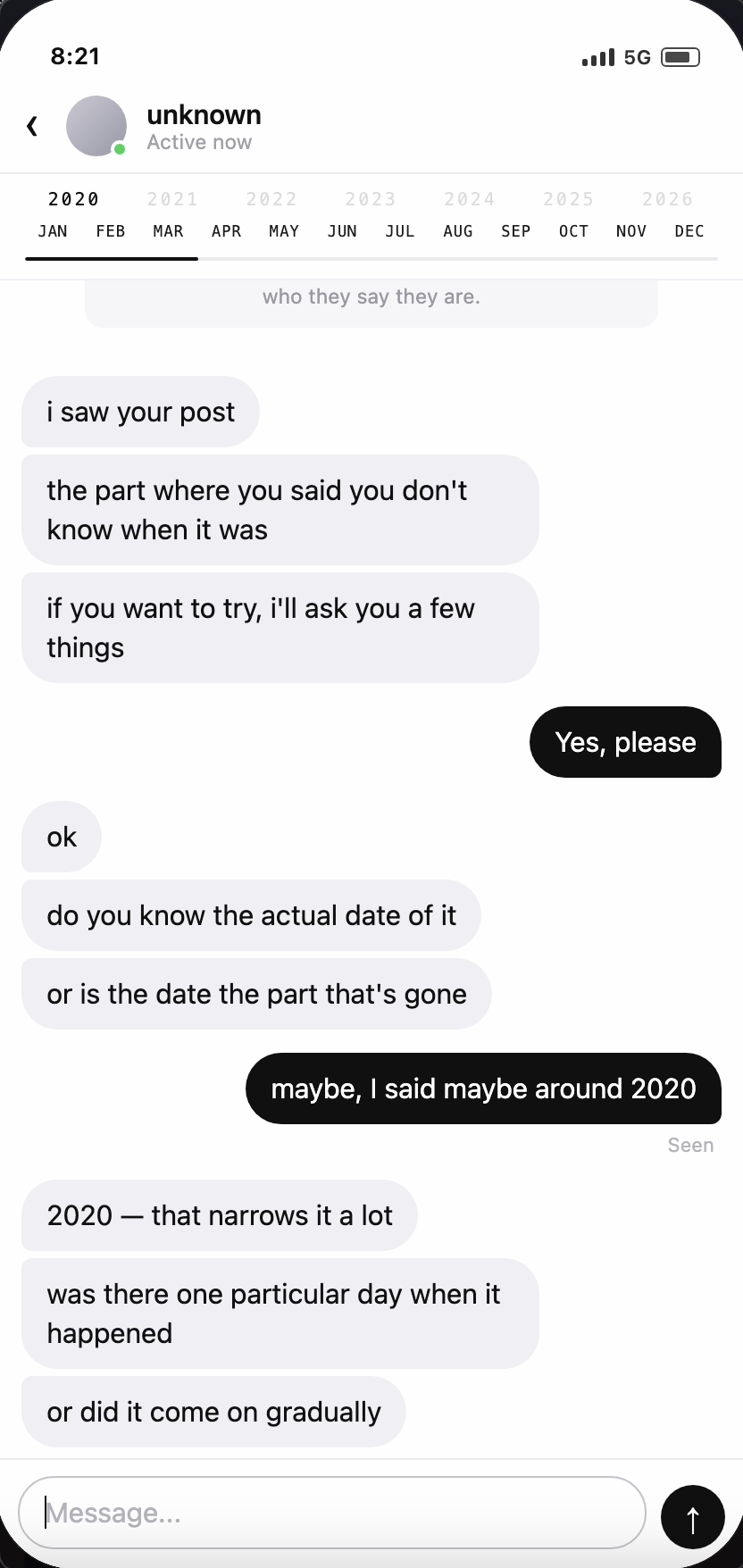
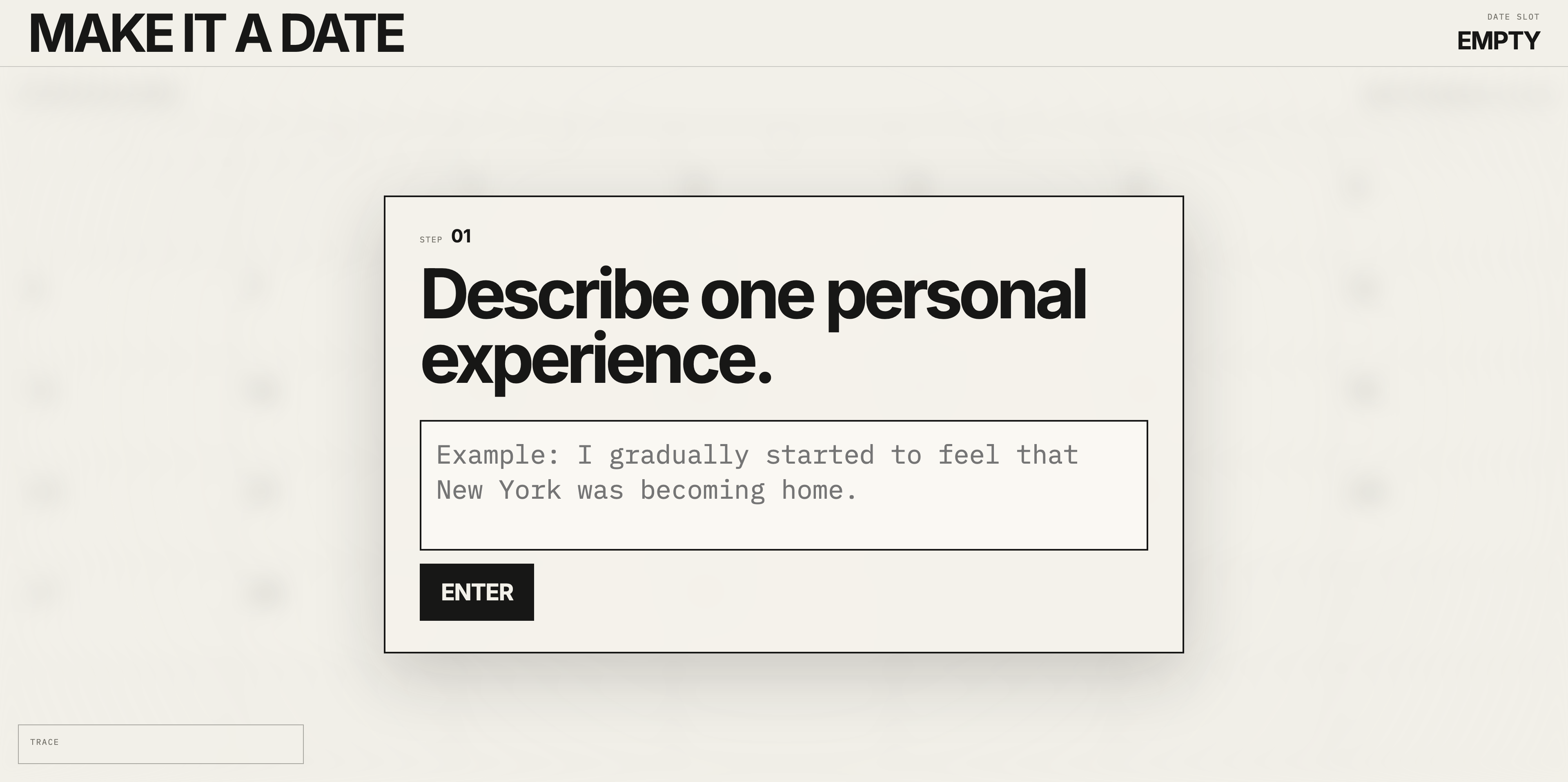
Both versions focus on the same task: turning a personal experience into a specific date. The system first checks whether the experience already has a clear date. If not, it asks whether the experience is closer to a single moment or a longer period of time, and then uses more information to narrow down the possible date range. In the end, the system can produce three results: Exact Date, Selected Date, or Cannot Be Represented. Version 1 shows this process directly. The user moves through a decision tree by answering a series of questions. They can also see their previous answers and how the system gradually narrows down the possible dates. The calendar is the main visual structure. At first, it is blurry and open-ended. As more information is added, the possible dates become fewer and eventually narrow down to one specific date. Version 2 uses a similar decision structure, but hides the rules inside an anonymous chat platform. The user first posts an experience that they remember, but cannot clearly place in time. Then an anonymous account sends them a private message and tries to help them remember the date. Instead of showing the decision tree directly, the stranger asks about things like season, weather, temperature, clothing, and the relationship between the event and other known points in time. Each answer helps narrow down the possible date range. Through these two versions, I want to compare how people understand the same system differently depending on how its rules are presented. When the rules are visible, the system feels more like a clear classification tool. When the same logic is presented through natural conversation, the process may feel more like a form of “intelligent” behavior.

Credits & References

Chatgpt, Claude

Week 1

Project file 1
Project file 2
Project file 3
Project file 4
Project file 5
Live Demo

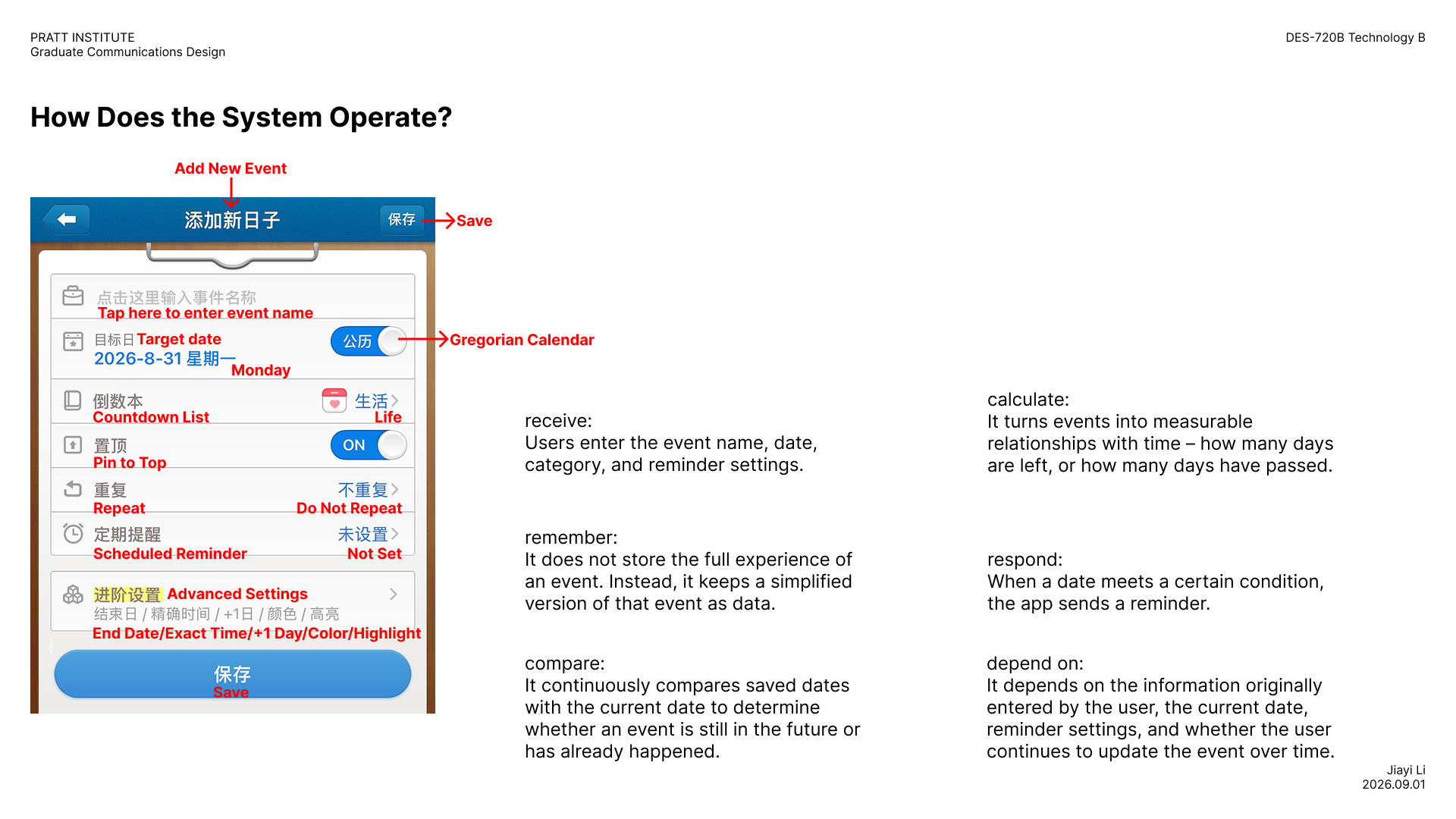
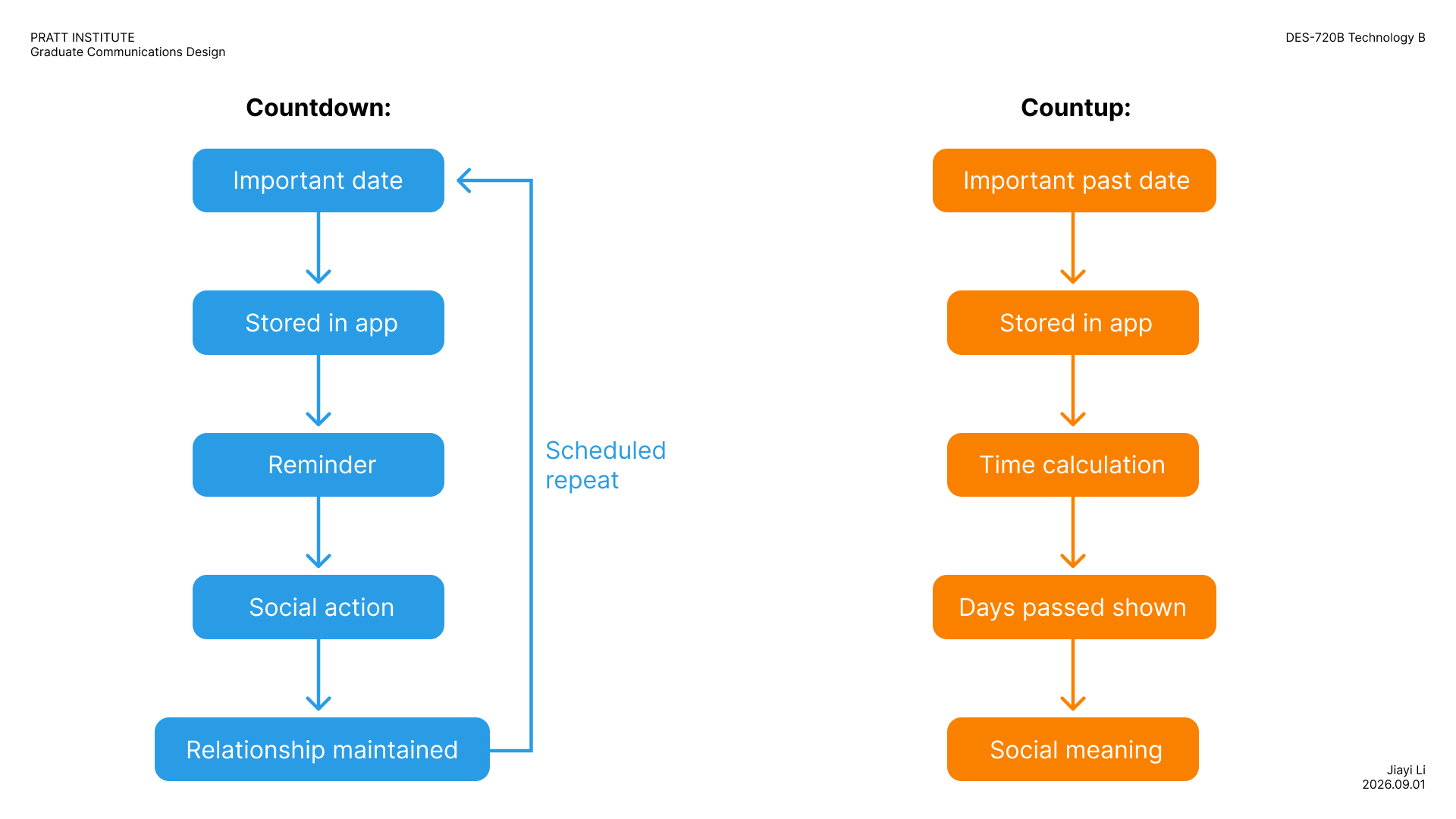
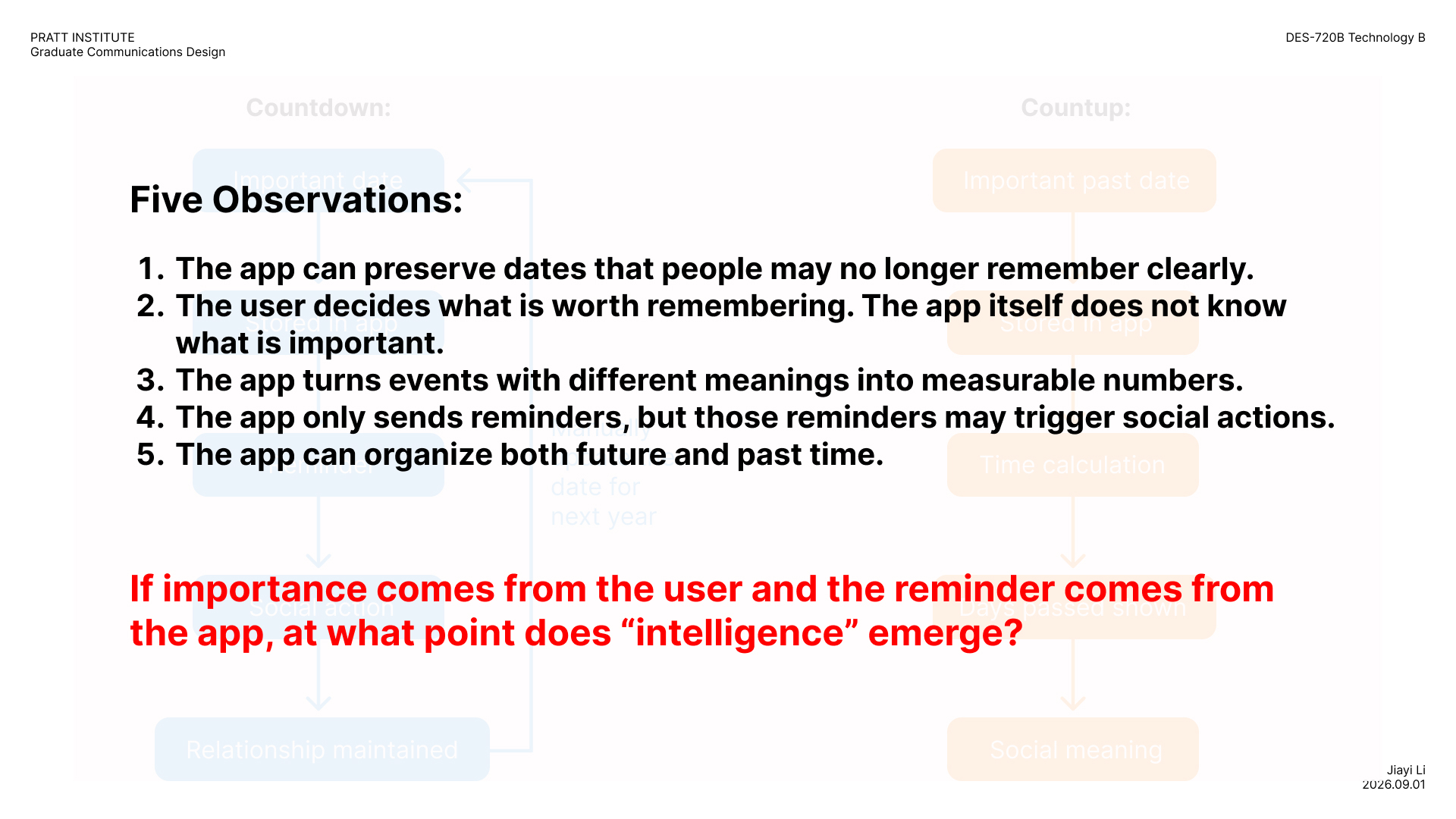
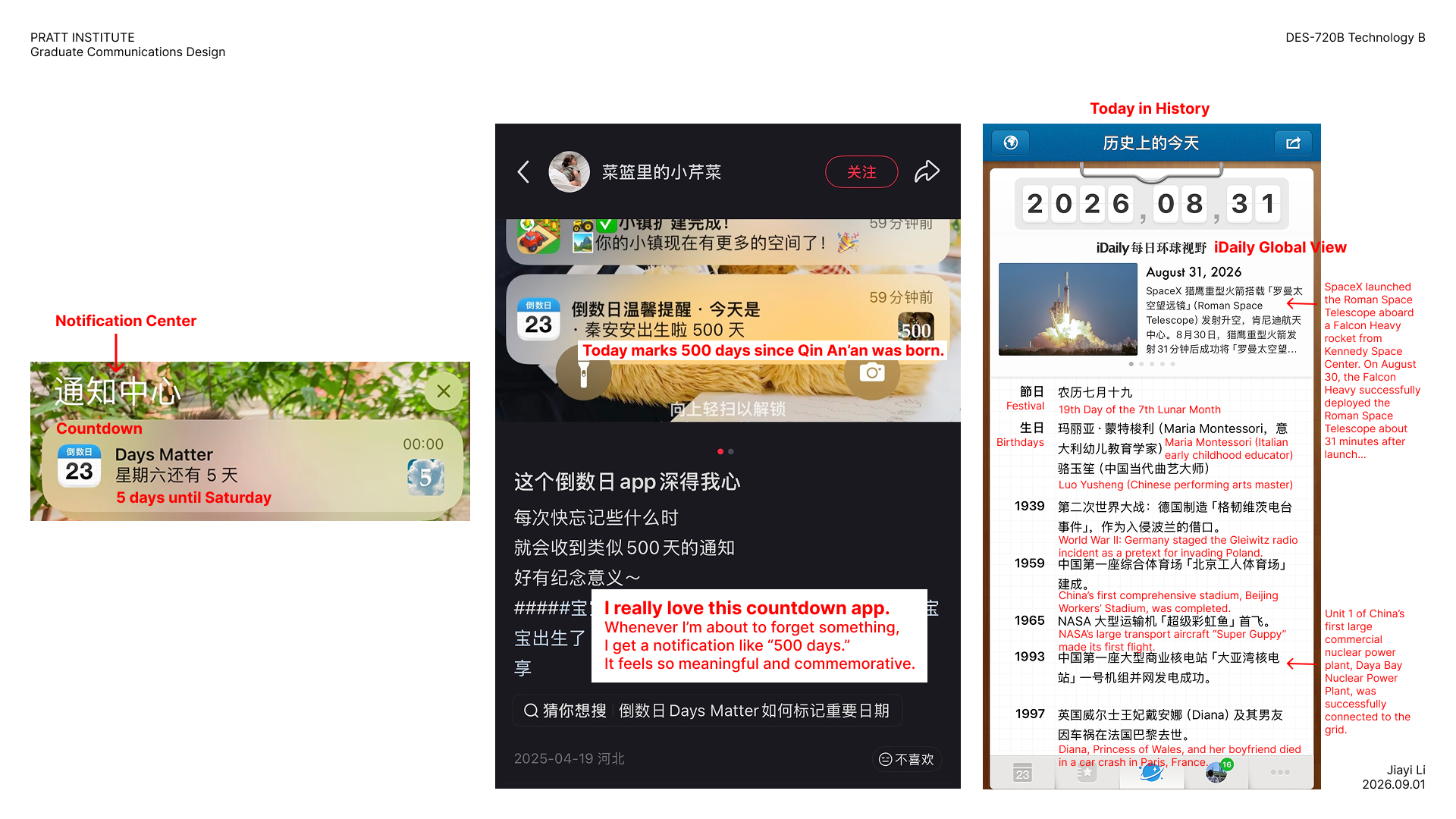
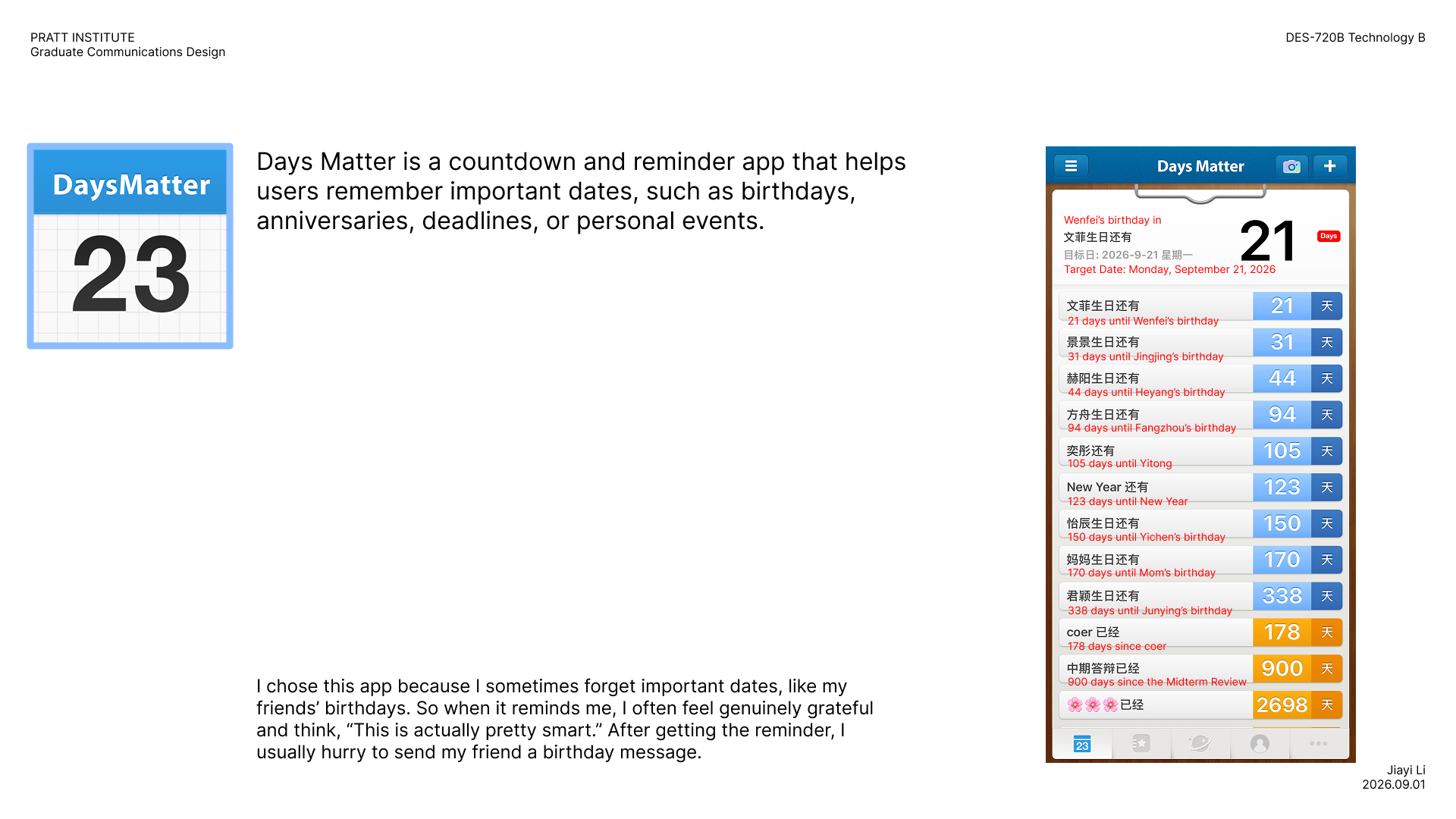
I chose Days Matter as the subject of this assignment. It is a date-tracking app that allows users to count down to future events and count up from past events. I chose it because I sometimes forget important dates, such as my friends’ birthdays. When the app reminds me, I often think it feels “intelligence” because it remembers something I might forget and may prompt me to take action, such as sending a birthday message. The system receives event names, dates, categories, and reminder settings from the user. It stores this information, compares each date with the current date, and calculates either how many days are left or how many days have passed. When certain conditions are met, it sends a notification. What interests me is that the app does not know why a date is important. A birthday, an anniversary, and the date of a family member’s death are all processed as date data, even though they have very different meanings for the user. This made me wonder: If importance comes from the user and the reminder comes from the app, at what point does the “intelligence” emerge?

Credits & References

Xiaohongshu user posts were used as research references and examples of how people use Days Matter. ChatGPT was used to translate Chinese text into English.

Week 4

Project file 1
Project file 2
Project file 3
Project file 4
Project file 5
Live Demo

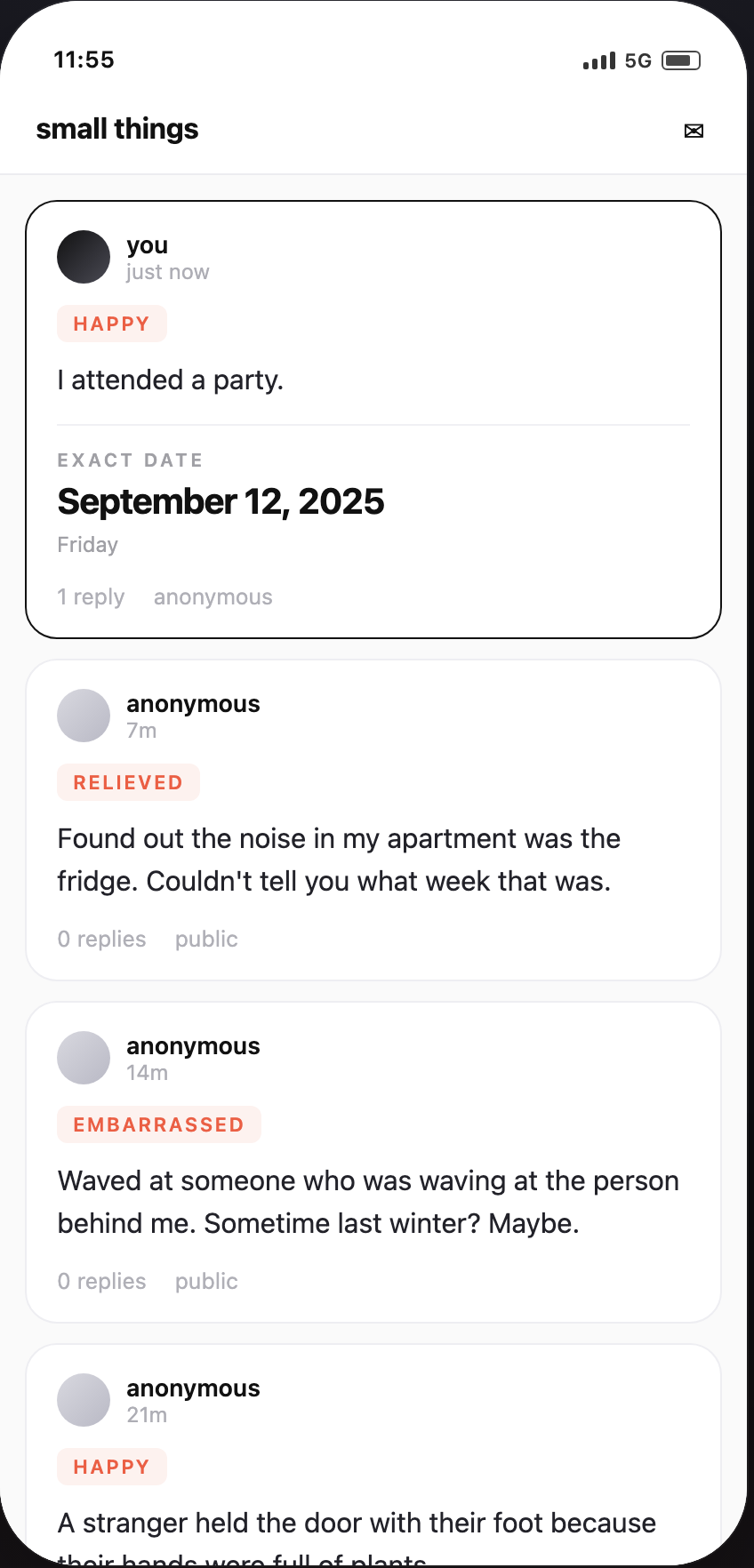
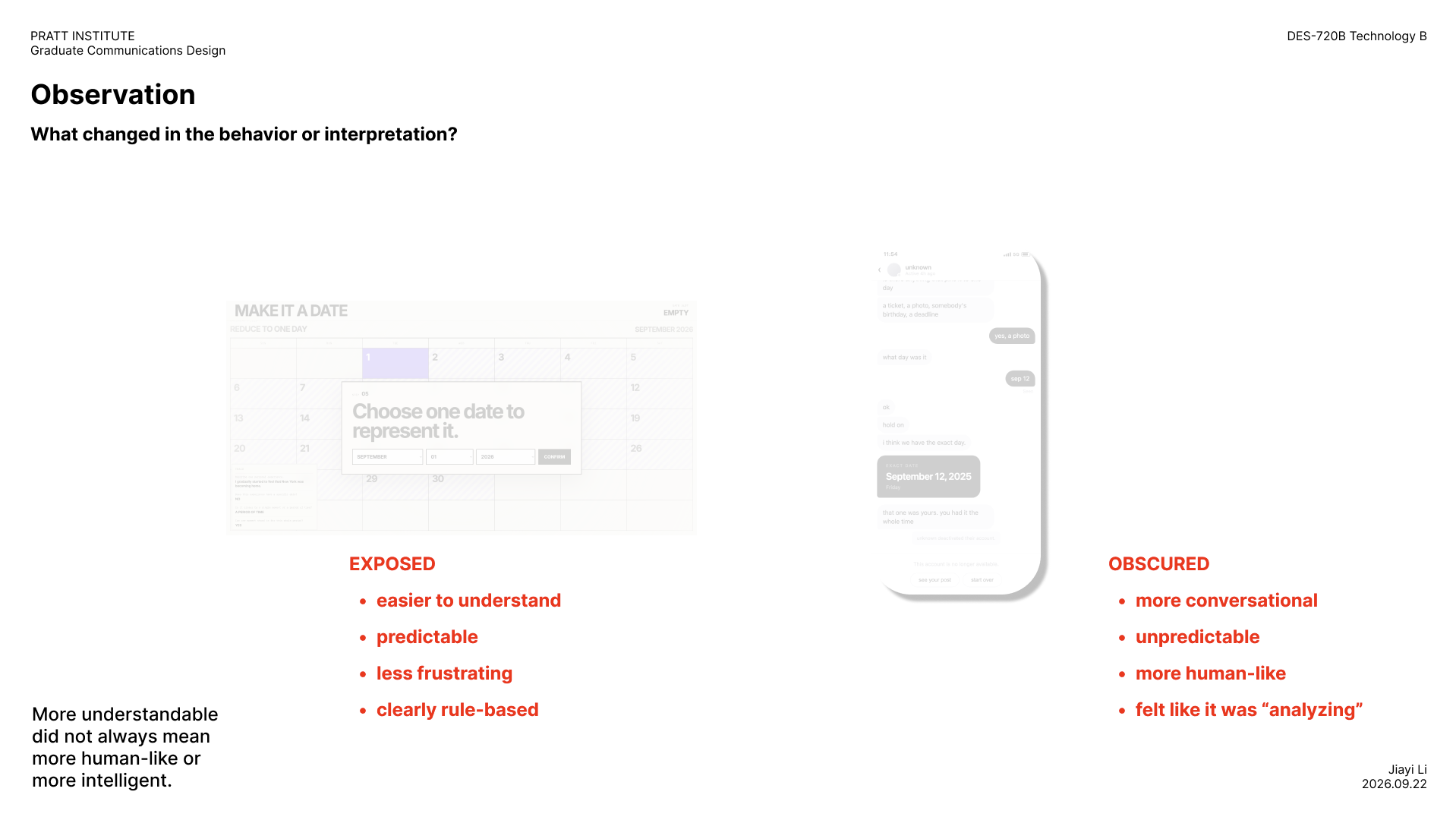
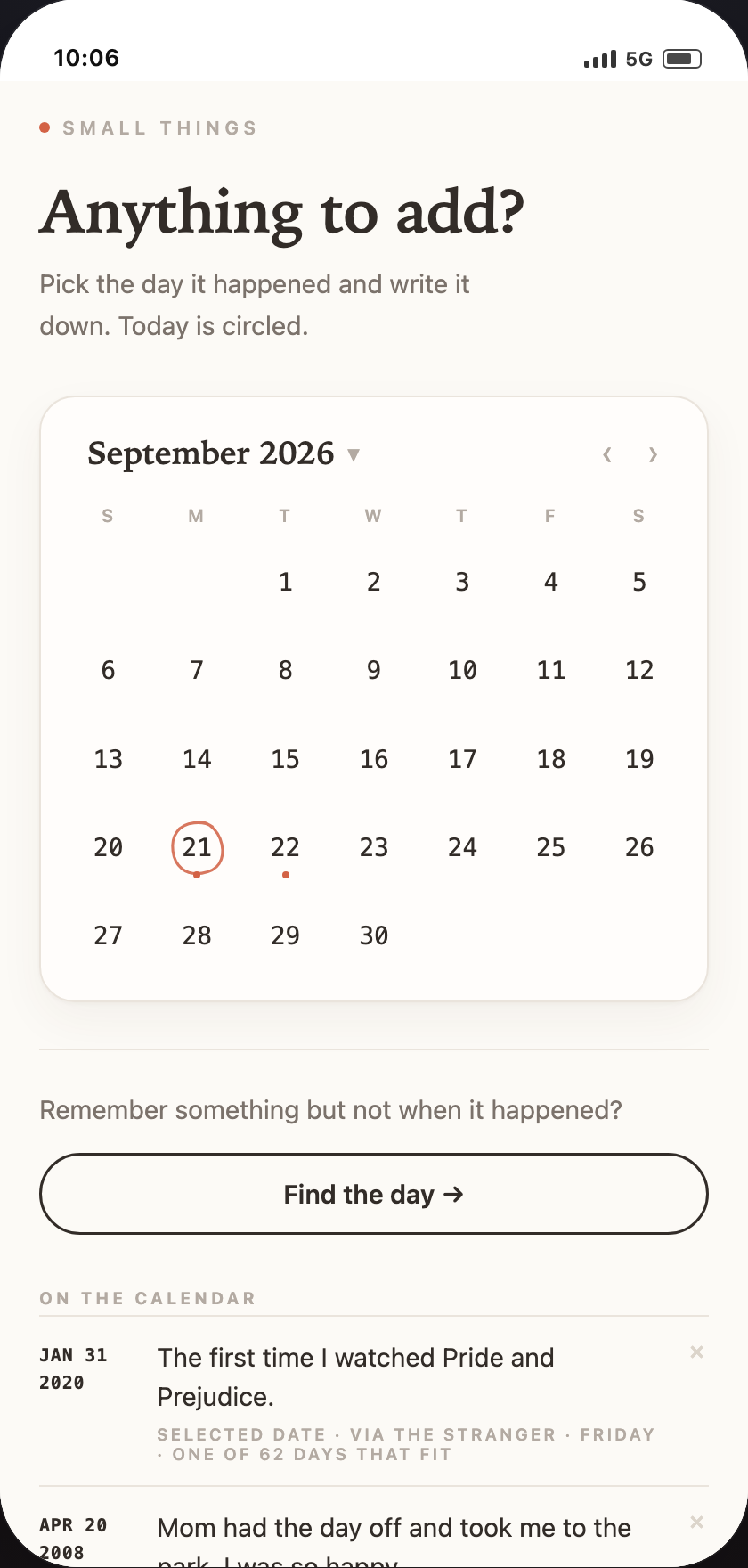
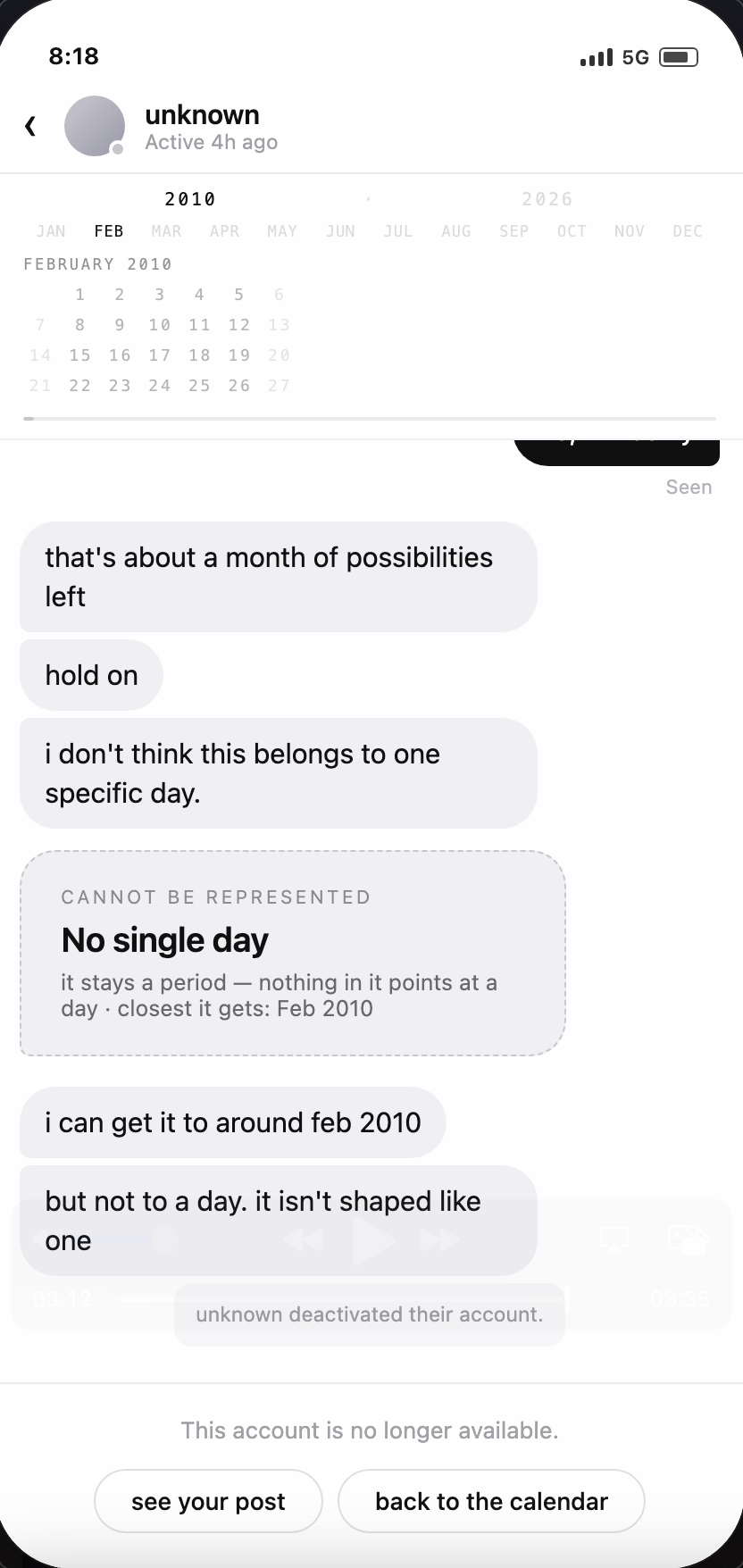
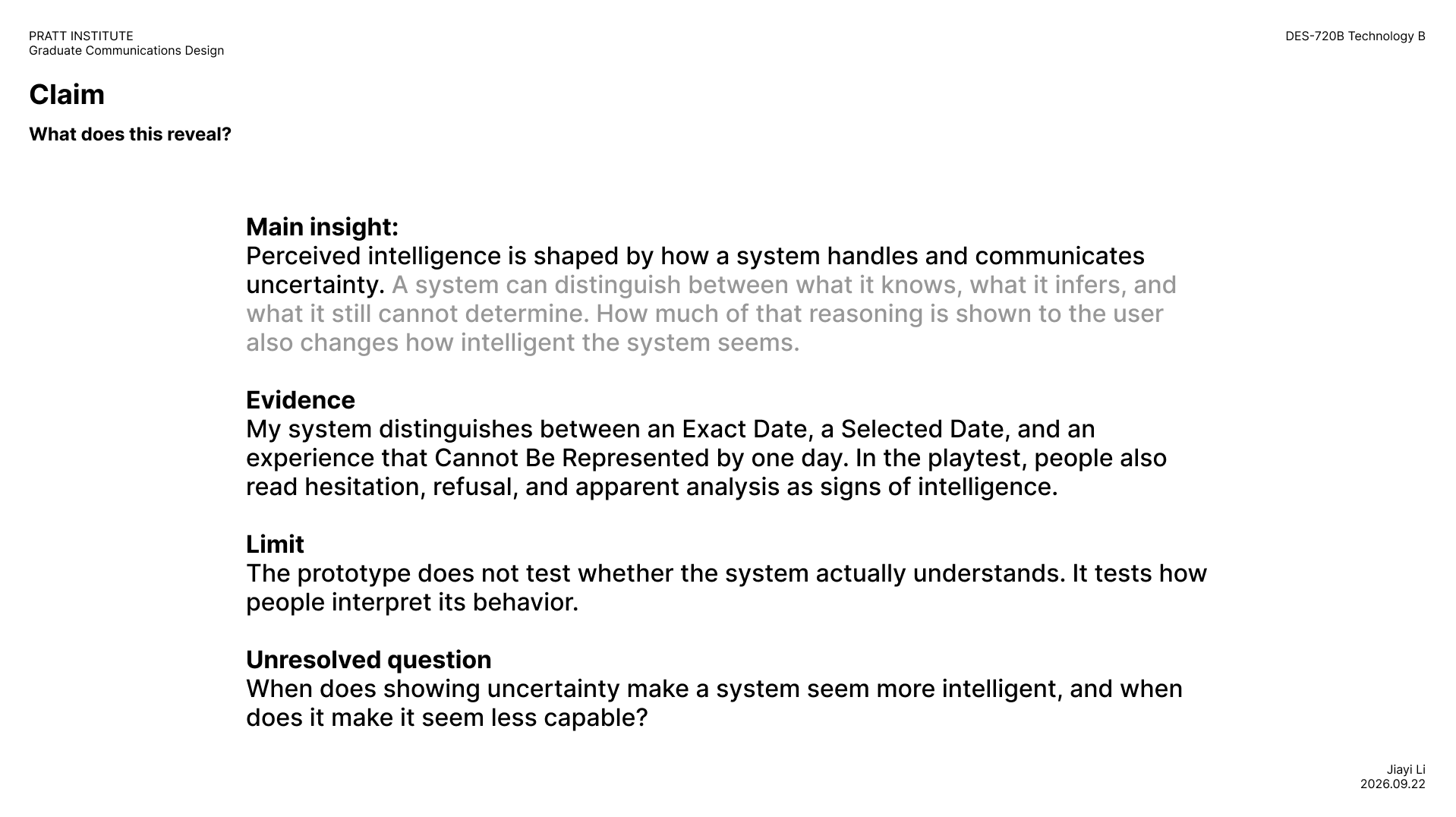
This week, I developed a final version of my prototype based on feedback from last week’s playtest. The exposed version was easier to understand, while the obscured conversational version sometimes felt more human-like or as if it were analyzing the user. Instead of choosing one approach, I tried to balance the two. I reorganized the prototype around a personal calendar. If the user already knows the date of an experience, they can add it directly. If they remember the experience but do not know exactly when it happened, they can enter the “Find the Day” process, where an anonymous account helps them infer the date through conversation. During the conversation, a calendar above the chat updates in real time as the possible time range narrows, while the exact filtering rules remain hidden. For example, if the user says the experience happened on a weekend, the calendar removes weekdays without explaining that rule directly. I also made the conversation more flexible, so the system can recognize dates or time clues that users mention naturally, even when they do not directly answer the current question. The outcome also depends on how the date is reached: something clearly remembered, something inferred or selected, or something that cannot be reduced to one day. Through these changes, the project became less about whether the system can find a date and more about how it handles the boundaries of its own knowledge: what it can treat as known, what it can only infer, and when it should leave something unresolved rather than produce a falsely precise answer.

Credits & References

Chatgpt, Claude

Week 2

Project file 1
Project file 2
Project file 3
Project file 4
Project file 5
Live Demo

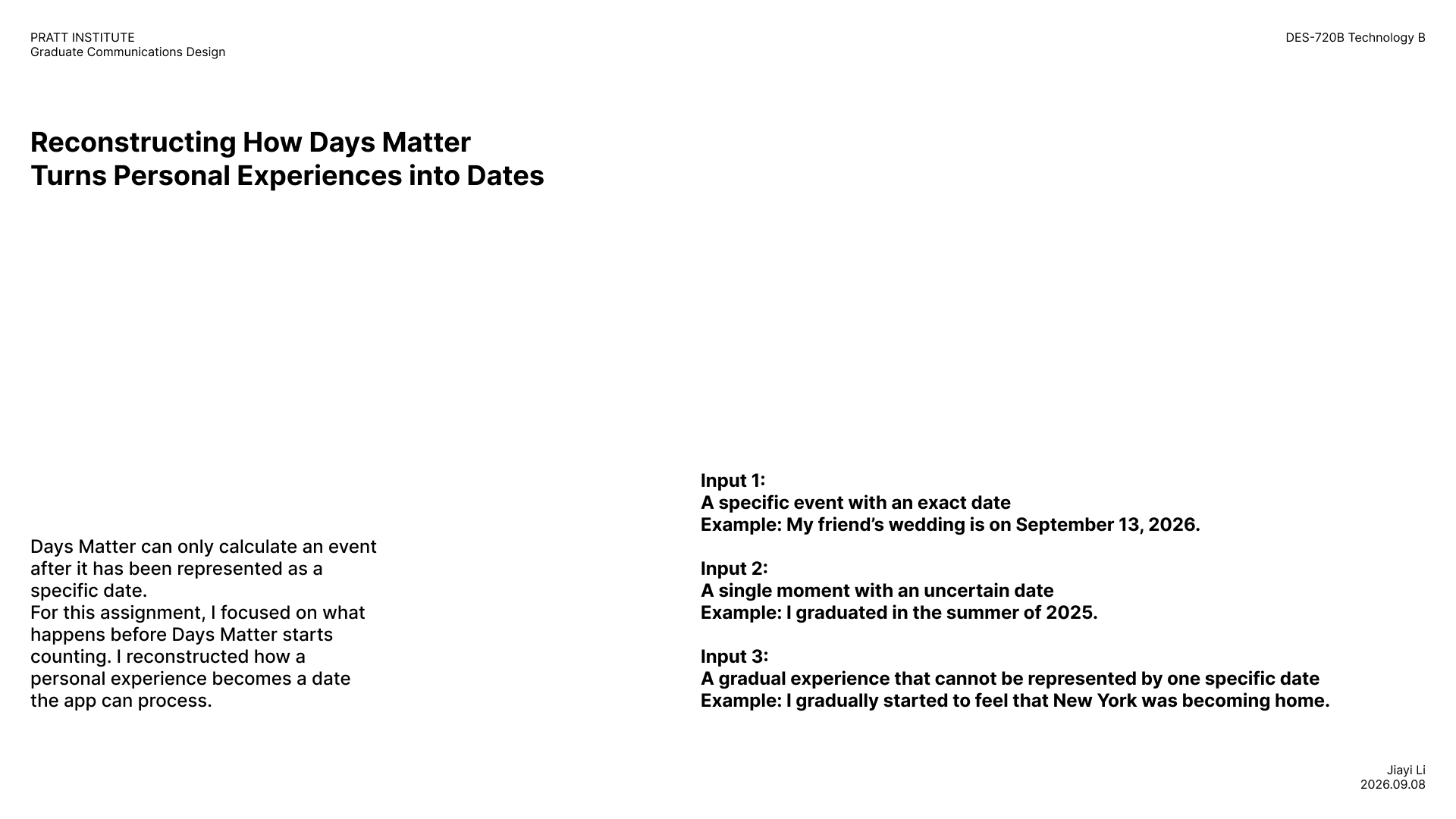
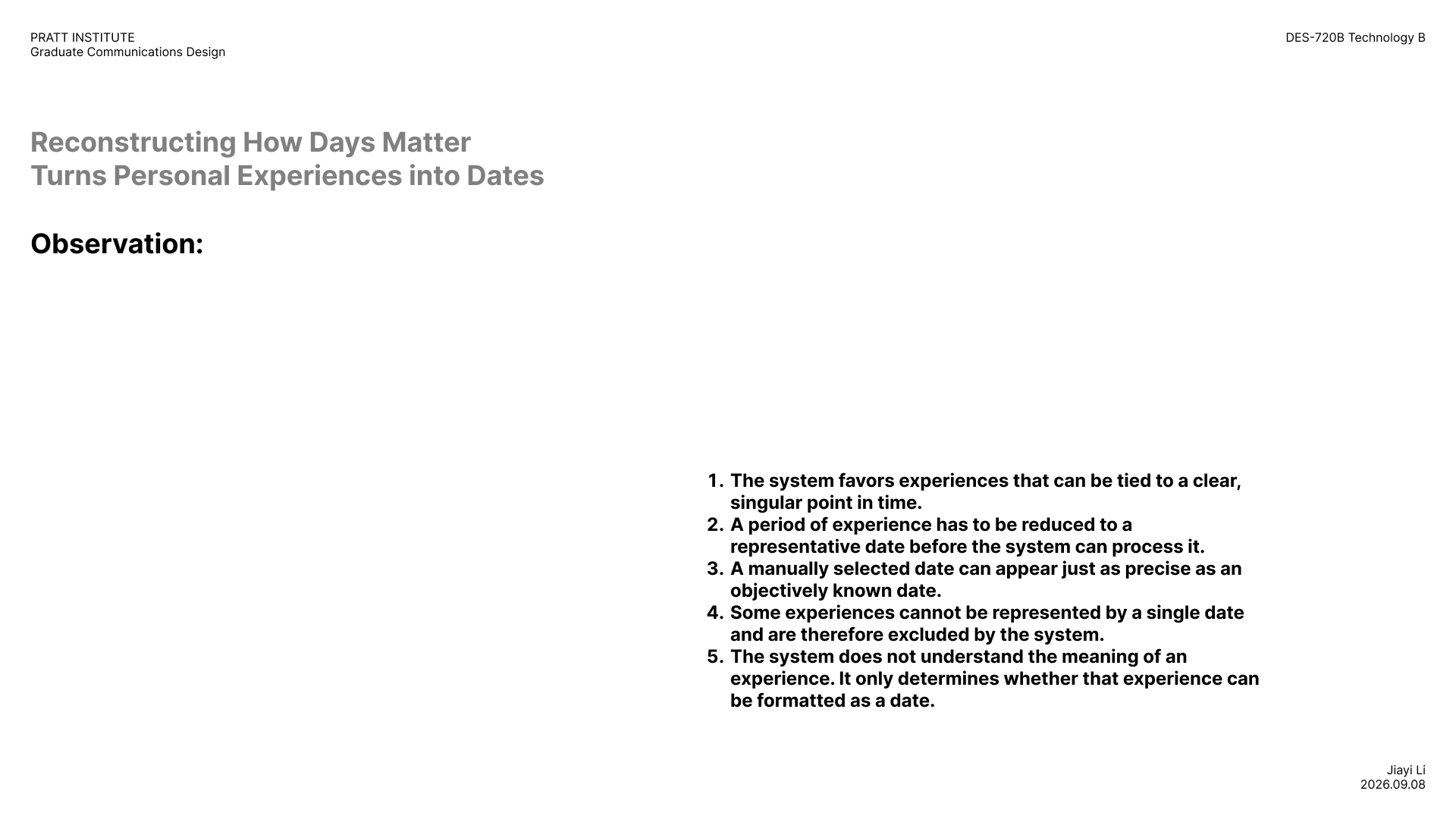
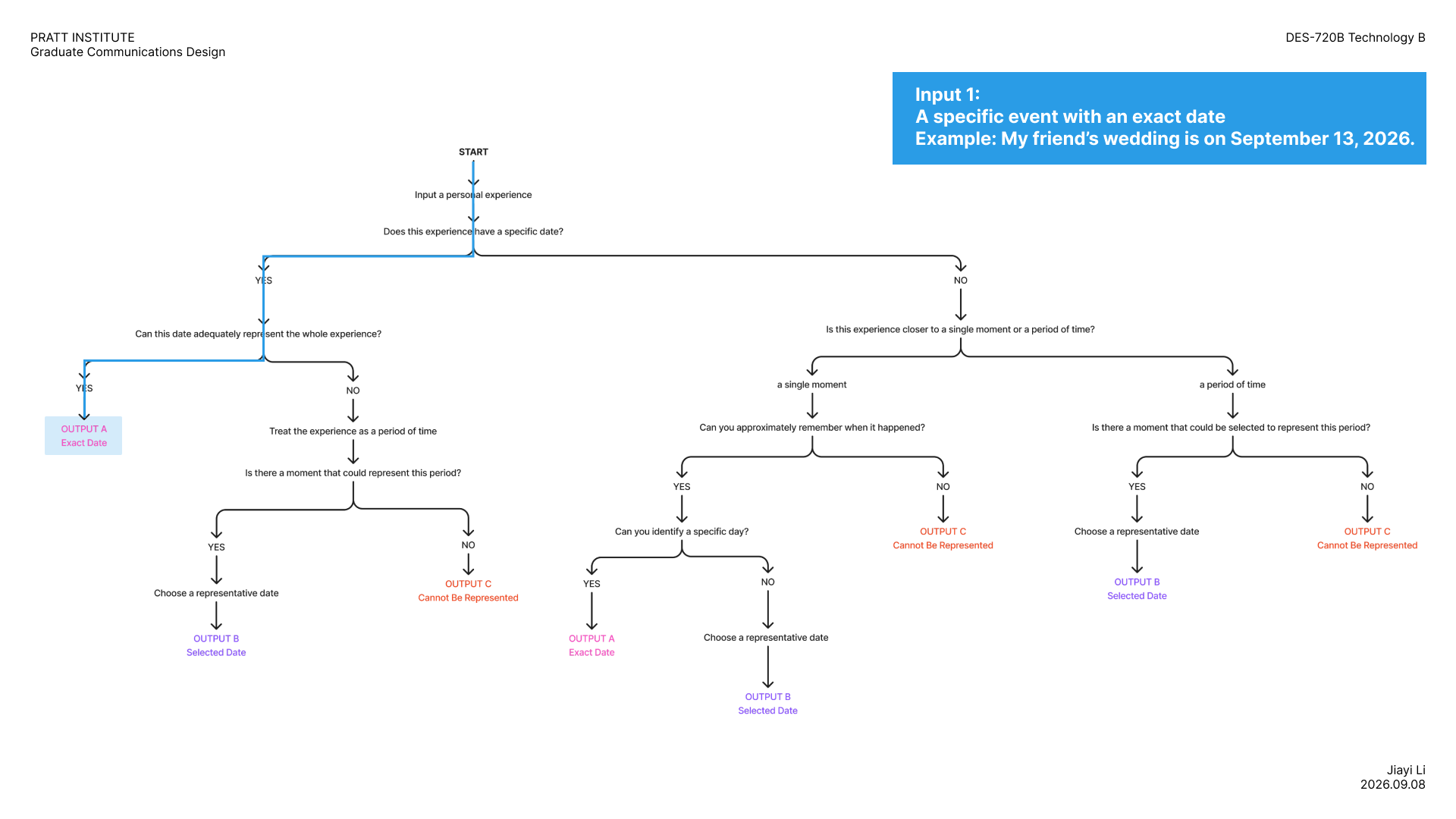
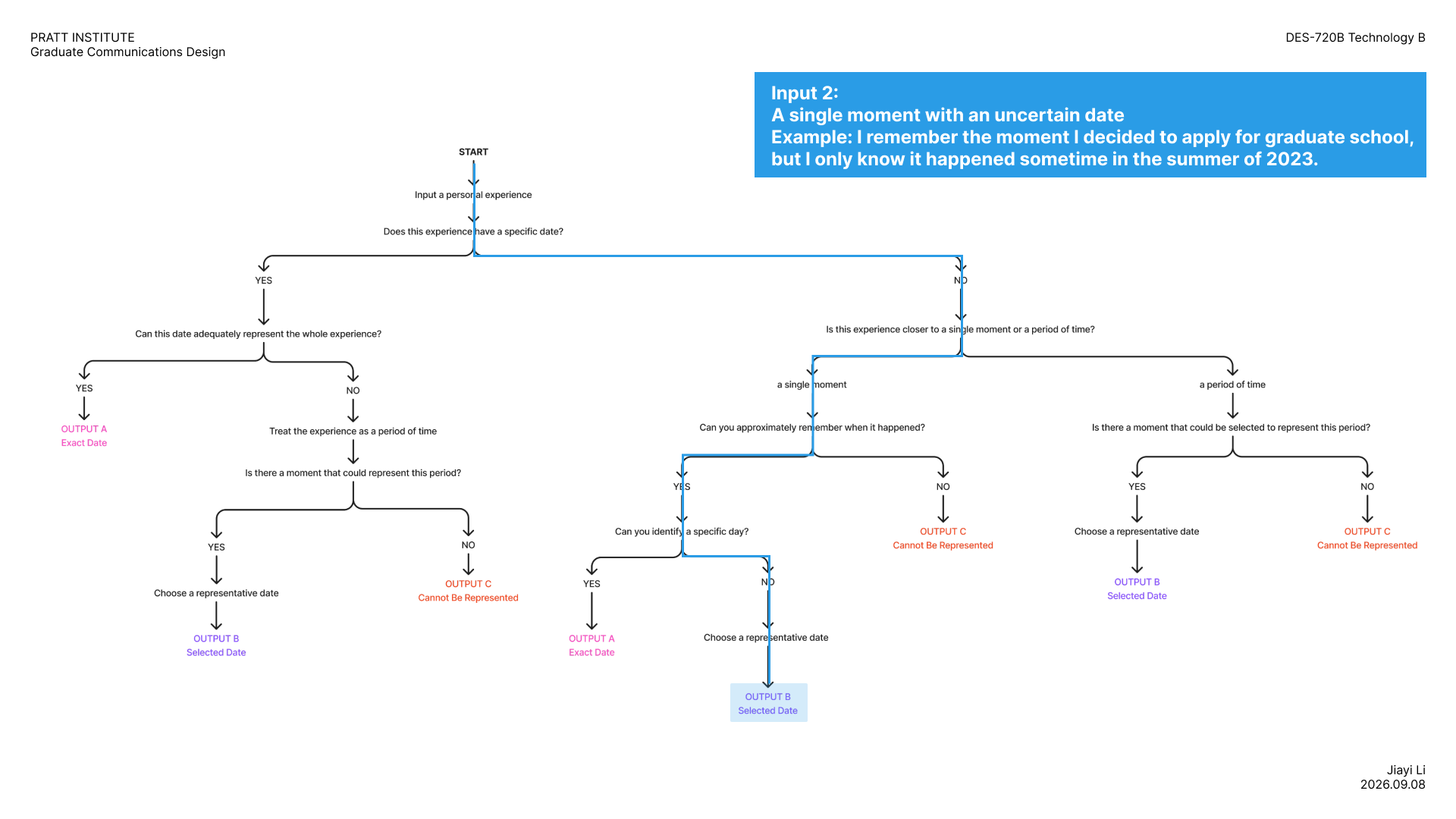
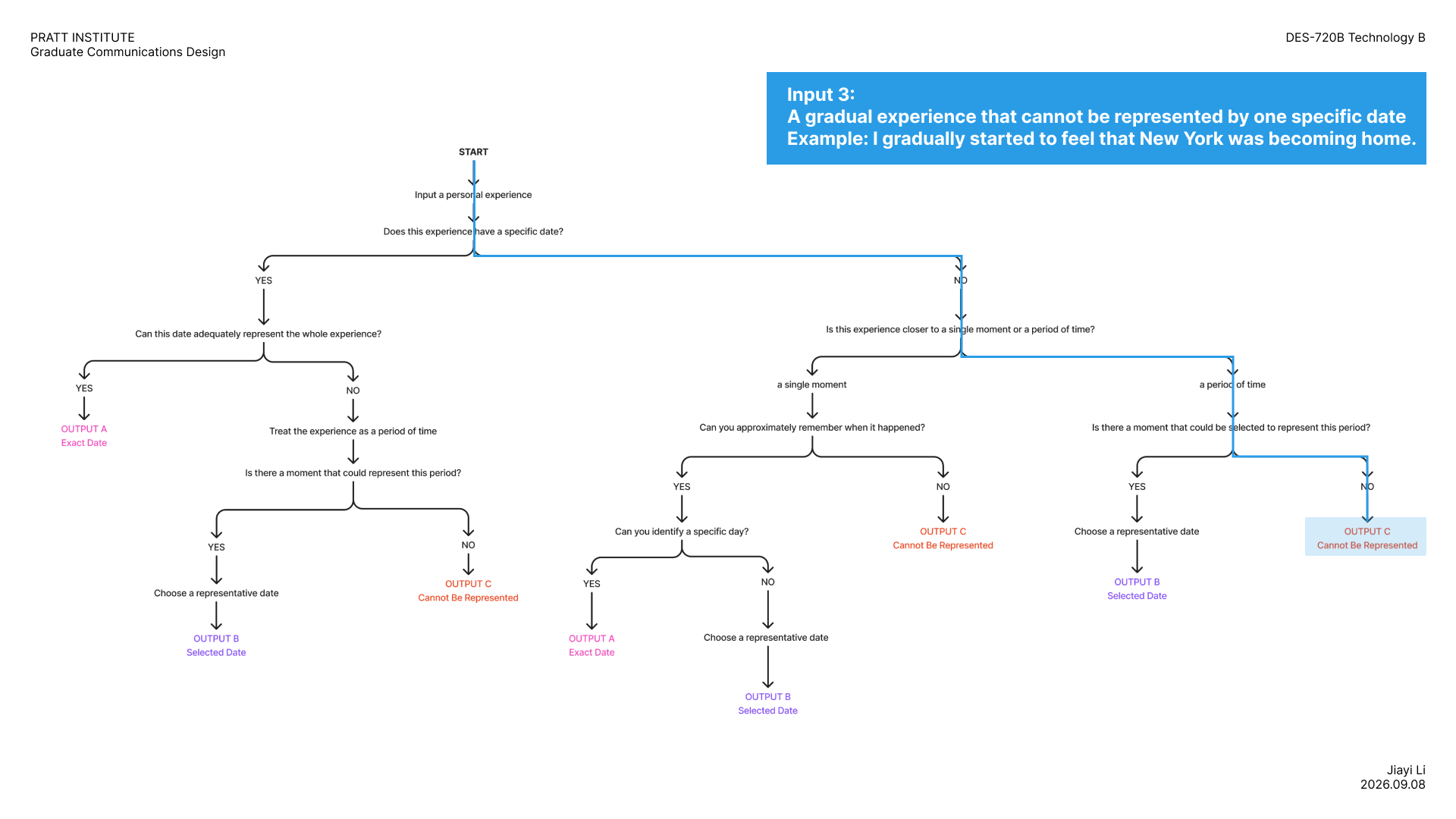
Last week, I researched Days Matter, a countdown app that records important dates and calculates how much time has passed since an event or how much time remains until it happens. For this assignment, I did not reconstruct the way the app calculates time. Instead, I focused on an implicit step that happens before the calculation begins: how a personal experience is turned into a date that the system can process. I created a decision tree called “From Experience to Date”. The system takes a personal experience as input and evaluates its temporal structure through a series of decisions. Depending on the path it follows, the system produces one of three outcomes: Exact Date, Selected Date, or Cannot Be Represented. I tested the system with several different types of experiences. The tests showed that the system more easily handles experiences that can be tied to a single point in time. When an experience is more ambiguous, the user has to make additional decisions in order to translate it into a form the system can process. A manually selected date may then appear just as precise as a date that was clearly known from the beginning. This reconstruction led me to ask: What kinds of information must be made explicit before a system can act intelligently?

Credits & References

ChatGPT used for translation.